01Which A/B Testing Platform Fits an Enterprise Online Shop in 2026?
- Sequential statistics, sample ratio checks and SDKs for web, backend, mobile and edge: Optimizely documents all of them and states a “99.9% uptime SLA” for Feature Experimentation.
- AI agents, server-side feature flags and an MCP server from a European vendor with ISO 27001 and SOC 2 Type 2: Kameleoon.
- Agents from research to rollout with approval gates and guardrails: VWO and AB Tasty, now under Wingify.
- A published price, hosting in Frankfurt and ISO 27001 plus SOC 2 Type 2: Convert Experiences.
- Analysis in your own data warehouse, or a self-hosted platform: GrowthBook, which is open source.
- Tests that keep coming back flat: Apex by DRIP gives every test idea a Likelihood to Win before launch, and tests are built, checked, launched and read together with the DRIP team.
Enterprise buyers tend to start from the requirements list: SDKs, certifications, an SLA, a DPA. Those decide whether a platform can be bought. Whether the program pays off depends on which tests you run.
If you do not need enterprise depth, our comparison of 15 A/B testing tools for online shops also covers Shopify apps and flat-price tools.
02Which Platform Fits Which Enterprise Use Case?
| Use case | Pick | Why | Entry price |
|---|---|---|---|
| Tests keep coming back flat | Apex by DRIP | Likelihood to Win from 4.3 million tests | Not published; free tier for one store |
| Tests built and read with a team | Apex by DRIP | Managed execution with the DRIP team | Not published; book a call |
| Sequential statistics across web and backend | Optimizely | Stats Engine, SRM detection, 20+ SDKs | On quote; Vendr median $81,447 a year |
| Agents and server-side flags, EU vendor | Kameleoon | PBX agents, MCP server, ISO 27001, SOC 2 | From $495 a month (PBX Starter) |
| Agents from research to rollout | VWO and AB Tasty (Wingify) | Wingz agents with approval gates, guardrails | On quote; mida.so reports $665 a month |
| Public prices with EU hosting | Convert Experiences | Frankfurt servers, ISO 27001, SOC 2 Type 2 | $299 a month, billed annually |
| Warehouse-native or self-hosted testing | GrowthBook | Open source; analysis in your warehouse | Free to self-host; Pro $40 per seat |
Third-party figures are reports, not list prices. Vendr’s Optimizely median covers the whole Optimizely portfolio across 126 purchases. The mida.so figure is the in-app price of VWO Testing on Growth at 100,000 monthly tracked users, billed annually (May 19, 2026).
03What Makes an A/B Testing Platform Enterprise-Ready?
- Server-side testing and feature flags: SDKs that test backend, edge or app code, and flags that roll a feature out in stages and switch it off when a metric breaks.
- A documented statistics engine: the method, the default threshold, sample ratio checks and outlier handling, written down so analysts can audit a result.
- Certifications you can request: ISO 27001 and SOC 2 Type 2 are the usual entry ticket for a security review. Ask for the reports, not the logo.
- Data location and a DPA: where event data and the application are hosted, which subprocessors touch them, and the contract that covers transfers.
- Support with stated terms: an uptime SLA, response times and a named contact. Few vendors here publish all three.
- A price model that fits your traffic: per tracked user, per tested user or per seat. At enterprise traffic, the billing basis matters more than the entry price.
Why choosing tests decides more than the requirements list
Industry data puts the share of experiments that win at 10 to 20 percent, per Ronny Kohavi. A platform that passes every security review still runs mostly flat tests if the backlog is chosen by opinion, and at enterprise traffic each flat test holds traffic a better idea could have used.
Most vendors here now help choose tests. Optimizely’s Idea Builder “generates experiment ideas based on your page, goals, and research”. Kameleoon’s Ideate is trained on past experiments. Wingify’s Hypothesis Agent “turns evidence into ranked, testable ideas”. For Convert and GrowthBook, idea ranking was not found on the pages we read. The question for every vendor is what evidence stands behind a ranking.
Apex scores each idea against 4.3 million observed A/B tests from 151,000 shops and shows how many tests back each score. The nearest published figure in this comparison is Kameleoon’s Ideate, trained on more than 20,000 experiments; Varify cites 10,000 or more test patterns; no other vendor in this comparison publishes a count of tests behind its recommendations (vendor pages checked October 2026).
04How Do the Platforms Compare, Fact by Fact?
| Platform | Server-side | Feature flags | Agents and MCP |
|---|---|---|---|
| Apex by DRIP | Server-side tracking via the Shopify app | Feature flags and staged rollouts | Apex chat; MCP for ChatGPT and Claude |
| Optimizely | 20+ SDKs: backend, mobile, edge | Rollouts 1% to 100%, kill switches | Opal agents; MCP server since April 2026 |
| Kameleoon | Feature experimentation through SDKs | Yes; PBX Ship moves winners behind flags | PBX 2.0 agents; MCP with 50+ tools |
| VWO and AB Tasty (Wingify) | Not covered in our research | Rollout Agent stages features out | Wingz agents; MCP to Claude, ChatGPT, Gemini |
| Convert Experiences | Full stack with 6 SDKs, from Pro | Yes, from the Pro plan | MCP server; assistant in beta |
| GrowthBook | 24+ SDKs, edge apps, self-hosting | Core product, unlimited on all plans | MCP server; AI mode in visual editor |
| Platform | Default method | Checks and safeguards | Also available |
|---|---|---|---|
| Apex by DRIP | Fixed-horizon with confidence | Guardian auto-stop at a revenue loss threshold | A/A tests, global holdout, profit per test |
| Optimizely | Sequential Stats Engine, false discovery rate control | Automatic sequential sample ratio detection | Bandits; Bayesian and fixed horizon in beta |
| Kameleoon | Frequentist, Bayesian or sequential | Real-time SRM detection; multiple testing correction | CUPED and bandits as add-ons; holdouts |
| VWO and AB Tasty (Wingify) | Bayesian SmartStats | Guardrail Agent reverses breaches; permanent holdout | Revenue projections with confidence intervals |
| Convert Experiences | Frequentist, Bayesian or sequential, switchable | Chi-square SRM check on every plan | Šidák correction; winsorizing for revenue outliers |
| GrowthBook | Bayesian by default; frequentist available | Automatic chi-squared SRM check; guardrail metrics | Sequential and CUPEDps on Pro; holdouts |
| Platform | Certifications | Data location | SLA and support |
|---|---|---|---|
| Apex by DRIP | ISO 27001 and SOC 2 in progress | EU plus UK; DPAs for US tools | Managed execution with the DRIP team |
| Optimizely | ISO 27001, 27017, 27018; SOC 2 Type 2 | EU data centers for “the majority” | “99.9% uptime SLA” (Feature Experimentation page) |
| Kameleoon | ISO 27001, SOC 2 Type 2, PCI DSS | Region not stated on pages read | Dedicated support on Enterprise; SLA not found |
| VWO and AB Tasty (Wingify) | Not covered in our research | Not covered in our research | Success manager on Enterprise; SLA not covered |
| Convert Experiences | ISO 27001, SOC 2 Type 2, HIPAA | Frankfurt by default; free signed DPA | SLA and account manager on Enterprise |
| GrowthBook | SOC 2 Type II; ISO 27001 not found | EU event region; app in US | 99.99% SLA on Enterprise |
| Platform | Entry price | Enterprise tier | Free option |
|---|---|---|---|
| Apex by DRIP | Not published | Not published; book a call | Card-free free tier for one store |
| Optimizely | Not published; on quote | “Individually packaged”, on quote | Free Feature Experimentation plan, one experiment |
| Kameleoon | From $495 a month (PBX Starter) | Custom; unlimited experiments and traffic | 30-day trial, no card |
| VWO and AB Tasty (Wingify) | Not published | On quote; unlimited concurrent campaigns | 30-day trial, no card; free plan gone |
| Convert Experiences | $299 a month, billed annually | On request, annual billing, 12M+ users | 15-day trial, no card |
| GrowthBook | Free Starter; Pro $40 per seat | Custom; SSO, holdouts, 99.99% SLA | Open source, free to self-host |
Where prices are on quote, third parties publish reports. Vendr reports a median of $81,447 a year for Optimizely across 126 purchases, with a range of $26,460 to $261,075, for the whole portfolio; ConversionWax, citing Vendr, puts Web Experimentation alone at $40K to $150K+ a year (2026). For VWO, mida.so reports $665 a month on Growth and $1,336 on Pro at 100,000 tracked users, billed annually (May 19, 2026). These are reports, not vendor prices.
05What Does Each Platform Document, in Detail?
Apex by DRIP: best for shops whose tests keep coming back flat
- Best for: shops whose tests keep coming back flat: the constraint is choosing which tests to run, not building them.
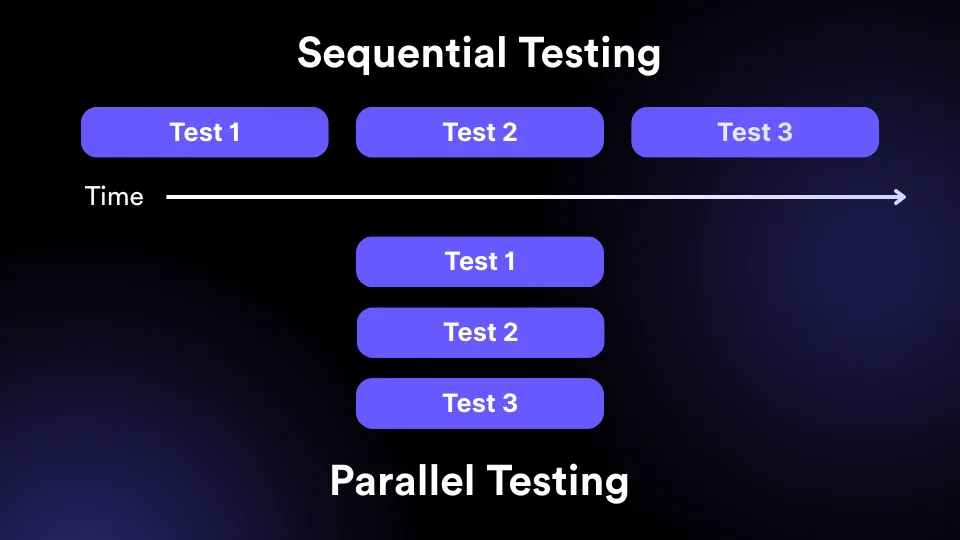
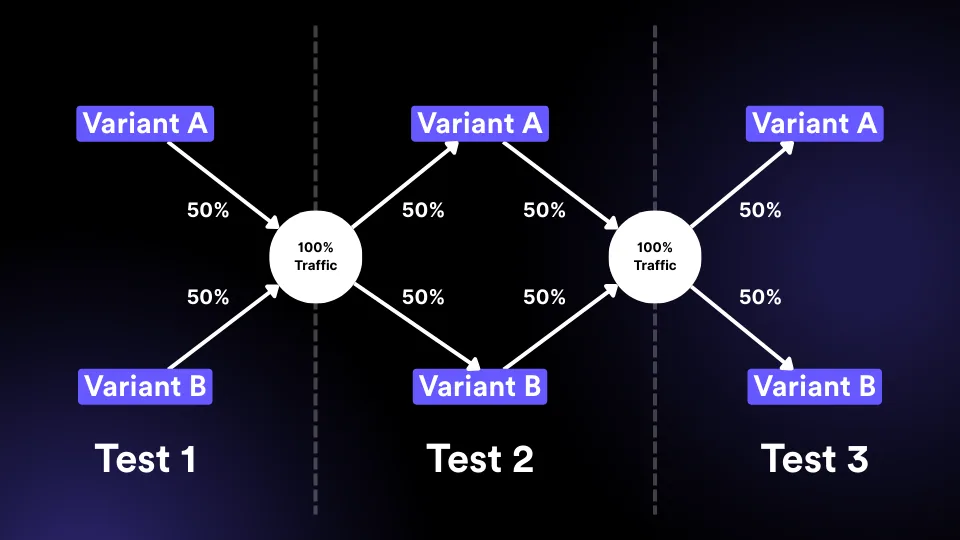
- Can test: pages and page elements, parallel tests on the same traffic with optional exclusion groups, A/A tests, redirect tests, global holdout, feature flags and staged rollouts.
- Shop systems: installs as a Shopify app (two-click install via link, server-side tracking, first-party data).
- Data location: GDPR in place; hosting in the EU plus UK; DPAs for US tools; ISO 27001 and SOC 2 in progress, with no certification yet; consent supported for most Shopify GDPR apps.
- Entry price: pricing is not published; a card-free free tier for one store exists; book a call.
- Main strength: the memory of millions of observed tests behind every idea, so selection improves before anything is built.
- Main limitation: the price is not published.
Documented capabilities. Apex by DRIP is an A/B testing platform for companies selling online that predicts which tests will win before they go live, built on one of the largest A/B test databases in e-commerce. It has three layers. The test memory holds 4.3 million A/B tests from 151,000 shops, collected since 2011, and every test idea gets a Likelihood to Win before launch: one percent figure per test idea, shown with how many tests back it. In a holdout check within a shop, the top third of ideas won 1.4 to 1.6 times as often (press release, September 29, 2026).
The testing tool builds, launches and evaluates tests directly in the shop: experiment config as code, a code editor, a visual builder called Operator, CLI preview links and QA via preview, plus an MCP connection so a shop owner builds and reads tests from ChatGPT or Claude without a terminal. Results use fixed-horizon statistics with confidence, with profit per test on Shopify, heat maps per variant, and Guardian, which stops a test automatically at a revenue loss threshold. The third layer is managed execution: tests built, checked, launched and read together with the DRIP team.
Limitations. The price is not published. If your procurement process needs a price list before any conversation, that is a real cost of choosing Apex.
Where Apex is not the right choice:
- A team that already picks winning tests well gets less from the prediction layer.
- A shop that cannot ship a test a week yet should build that habit on a lighter tool beforehand; buying prediction before you can execute is the wrong order.
- Anyone who needs a published price list before a conversation.
Optimizely: best for enterprise experimentation with deep statistics
- Best for: enterprise teams that test across web, backend, mobile and edge and need documented statistics and certifications.
- Can test: anything in the page DOM; server-side logic through 20+ SDKs; A/B, multivariate, multi-page and bandit tests; feature flags with progressive rollouts and kill switches.
- Shop systems: any site through a JavaScript snippet, including Shopify themes; no testing app on the Shopify App Store.
- Data location: “Your data will be stored in EU data centers”, for “the majority” of products; DPA with SCCs; public subprocessor list.
- Entry price: on quote: “Every Optimizely plan is individually packaged.” Free Feature Experimentation plan with one concurrent experiment.
- Main strength: a broad, documented statistics and agent stack in one product.
- Main limitation: no public pricing and a third-party median contract of about $81,000 a year.
Documented capabilities. Feature Experimentation offers 20+ SDKs with “sub-millisecond local evaluation”, and the plans page lists “A/B, multi-page, feature and server-side testing”. The default Stats Engine is sequential with false discovery rate control, so teams can “monitor results continuously”; fixed-horizon and Bayesian methods are in beta through a Customer Success Manager. Bandits, Stats Accelerator and automatic sequential sample ratio detection are documented. Opal agents generate ideas and build tests (Build agent, September 2026), and an MCP server connects Claude, Cursor and VS Code.
For procurement: ISO 27001:2022, ISO 27017, ISO 27018, a “SOC 2 Type 2 Attestation” and “PCI DSS v 4.0.1 QSA Audited”, with reports “available upon request”. The Feature Experimentation page states a “99.9% uptime SLA”. On G2, a reviewer calls it “robust but expensive, suited for larger organizations”.
Limitations. Prices are on quote. The snippet cannot run in Shopify’s checkout, grows with each running experiment, and is recommended synchronous in the head because async loading “increases the risk of flashing”. Price, shipping and discount tests have no dedicated feature.
Where Optimizely is not the right choice:
- Small budgets: Vendr’s logged contracts start at $26,460 a year.
- Shopify checkout tests, or teams that want an App Store install.
- Sites sensitive to page weight.
Head to head: Apex vs Optimizely.
Kameleoon: best for EU enterprise teams that want agents and server-side flags
- Best for: enterprise teams that want prompt-based building, server-side feature flags and an MCP server from a vendor based in Paris.
- Can test: any page element the snippet can change, plus server-side features through flags. Native price, shipping or checkout tests: none found.
- Shop systems: a JavaScript snippet and SDKs; the Shopify guide applies “exclusively to users with both a Shopify Plus and Kameleoon account”.
- Data location: region not stated on the pages read; subprocessors include OVHcloud, Hetzner, Cloudflare and OpenAI; a public DPA was not found.
- Entry price: PBX Starter “Starting from $495/month” with 50,000 monthly tracked users; Enterprise custom (checked October 2026).
- Main strength: client-side tests, server-side flags and an MCP server that turns winners into production code, with ISO 27001 and SOC 2 Type 2.
- Main limitation: the Shopify integration is documented for Shopify Plus, and the App Store listing has no reviews after more than five years.
Documented capabilities. PBX 2.0 (April 16, 2026) is “a suite of AI agents designed to support every stage of the experimentation process”. PBX Ship moves winning variations into server code behind feature flags through an MCP server with 50+ tools. Statistics cover frequentist, Bayesian and sequential methods with multiple testing correction and real-time sample ratio detection; CUPED and bandits are add-ons on Starter. Consent modes include IAB TCF 2.3. Certifications: ISO/IEC 27001:2022, SOC 2 Type 2, PCI DSS, HIPAA and CyberVadis Platinum. Enterprise includes dedicated support; a published SLA was not found.
Ideate is trained on past experiments, and the vendor gives two figures: “over 25,000 experiments” in the launch post, “20,000+ experiments” on the Ideate page. It states “63% accuracy on high-confidence predictions” (vendor-stated, without published method).
Limitations. Hosting region and DPA need asking. On Starter, the code editor, CUPED, bandits and feature flags are paid add-ons. Reviewers criticise that complex tests need developers.
Where Kameleoon is not the right choice:
- Shopify stores not on Plus.
- Teams that want native price, shipping or checkout tests.
- Teams without developer time for complex tests.
Head to head: Apex vs Kameleoon.
VWO and AB Tasty (Wingify): best for agents across the whole testing lifecycle
- Best for: enterprise teams that want agents from research to rollout, with human approval gates and guardrails.
- Can test: pages, and feature rollouts staged by a Rollout Agent. Price testing is “coming soon”; offer and checkout tests are not live (October 6, 2026).
- Shop systems: a Shopify app since March 2024 with zero reviews (September 3, 2026), script not on checkout pages. Other systems were not part of our research.
- Data location: not covered in our research; ask for certifications, hosting region and the DPA.
- Entry price: Growth, Pro and Enterprise without public prices, scaled by monthly tracked users; 30-day trial without card.
- Main strength: agents for research, ideas, build, QA, launch, rollout and guardrails in one platform.
- Main limitation: no public prices, and no price, offer or checkout testing live.
Documented capabilities. VWO and AB Tasty merged in January 2026 (“ARR surpassing $100 million”, “more than 4,000 customers”) and relaunched as Wingify on September 16, 2026; both stay as product brands. The Wingz agents cover research, ideas, building from text or Figma, launch and rollout, and “Nothing goes live without approval”. Autonomy is “a dial, not an all or nothing”, and “the safeguards never switch off: an approval gate, guardrail metrics, traffic caps, a kill switch, and a permanent holdout”. Statistics run on Bayesian SmartStats. Wingz connects via MCP to Claude, ChatGPT, Cursor and Gemini, and enterprise customers can bring their own model.
AB Tasty adds Evi, which turns prompts into HTML, CSS and JavaScript, and Wandz.ai, stated to process “3.7 trillion data points monthly”. For service, Wingify lists “200+ Customer Success Experts” and a dedicated success manager on Enterprise. On G2, VWO Testing holds 4.4 from 929 reviews; on Trustpilot, VWO holds 2.2 from 93, with complaints about renewal pricing (reported September 4, 2026).
Limitations. Existing contracts stay unchanged and the platforms converge “over time”; mida.so expects mid-market prices to rise. Our research did not cover certifications, hosting region, server-side SDKs or an SLA, so put all four on the security questionnaire. A managed service, where the vendor’s team builds and runs the tests, was not found.
Where VWO and AB Tasty are not the right choice:
- Teams that need a public price before talking to sales.
- Shops that want to test prices, offers or checkout now.
- Teams that want the vendor to build and run the tests.
Head to head: Apex vs VWO.
Convert Experiences: best for published prices with EU hosting and certifications
- Best for: teams that need a published price, EU hosting and ISO 27001 plus SOC 2 Type 2 before they sign.
- Can test: A/B and split URL on Growth; multivariate, multi-page, full stack and feature flags from Pro. On Shopify, prices through Cart Transform Functions, checkout-level prices on Plus.
- Shop systems: a Shopify app since October 2024 (no reviews yet), plus integrations for WooCommerce, BigCommerce, Magento and others.
- Data location: “EU-based servers in Frankfurt by default”; a free signed DPA with Standard Contractual Clauses; a subprocessor page: none found.
- Entry price: Growth $299 a month billed annually; Pro $420; Enterprise on request; annual plans “don’t auto-renew” (checked October 2026).
- Main strength: published flat pricing with Frankfurt hosting, ISO 27001, SOC 2 Type 2 and three statistics engines.
- Main limitation: full stack, feature flags and sequential testing start on Pro, and the Shopify app has no reviews yet.
Documented capabilities. Convert, founded in 2009 and bootstrapped since a 2012 seed round, sells a “full-featured experimentation tool without enterprise pricing or vendor lock-in”. Statistics switch between frequentist, Bayesian and sequential, with a “Šidák correction for multivariate tests” and “Chi-square Sample Ratio Mismatch detection at 99% confidence on every plan”. For larger teams it documents “Collision prevention”, a “Request Approval System”, staging environments and SSO on Pro. Certifications: ISO 27001, SOC 2 Type 2, HIPAA and CCPA. Enterprise adds an SLA, an account manager and data segregation at extra cost. An MCP server works with Claude, ChatGPT and Cursor.
Limitations. Convert’s July 2025 documentation says direct checkout A/B testing “isn’t currently possible” under Checkout Extensibility. OMR Reviews lists Pro at $700 a month, unlike the vendor page. The Enterprise SLA carries no published figure.
Where Convert is not the right choice:
- Stores that need checkout-level price tests without Shopify Plus.
- Teams that need flags or sequential testing on the entry plan.
- Teams that need a published subprocessor list before signing.
Head to head: Apex vs Convert.
GrowthBook: best for warehouse-native and self-hosted experimentation
- Best for: product and data teams that want analysis on their own warehouse, unlimited feature flags, or self-hosting.
- Can test: page content through the AI Visual Editor (Pro and up), full pages through URL redirects, and any code path through flags across 24+ SDKs.
- Shop systems: Shopify through a theme snippet and a Chrome extension, no App Store app; any stack through a script tag or SDK.
- Data location: since September 11, 2026 an EU region (Ireland) for event data, while “login, the UI, your configuration, and computed experiment results” stay in the US; or self-host.
- Entry price: Cloud Starter free for up to 3 users; Pro “$40 / seat / month” for up to 30 users; Enterprise custom (checked October 2026).
- Main strength: the full platform is open source and free to self-host with unlimited traffic.
- Main limitation: analysis needs an instrumented data warehouse, and Shopify checkout and price tests are not documented.
Documented capabilities. GrowthBook calls itself “The warehouse-native platform used by modern product teams for experimentation, feature flags, and product analytics.” Bayesian statistics are the default, with a frequentist engine; sequential testing, CUPEDps and bandits come on Pro, holdouts and post-stratification on Enterprise. An automatic chi-squared sample ratio check and guardrail metrics are built in. Enterprise adds SSO and SCIM, a 99.99% SLA and response times of “1 hour” for outages. Security: SOC 2 Type II; ISO 27001 was not found. An MCP server creates flags and experiments from Claude, Cursor and VS Code.
Limitations. Revenue and profit metrics depend on how well your warehouse is instrumented. Heat maps and session recordings were not found. A third-party review describes an “engineer-first UI that PMs and marketers need a guided tour for”.
Where GrowthBook is not the right choice:
- Shops without a data warehouse or analytics engineering.
- Teams that want Shopify price, discount or checkout tests without code.
- Teams that need heat maps inside the testing tool.
Head to head: Apex vs GrowthBook.
06What Does Managed Execution Add to an Enterprise Program?
Enterprise shops rarely lack a testing tool. They lack the hours to keep a program running: turning research into variants, checking them on every device, setting up targeting and tracking, and reading the result in revenue terms. When those hours are missing, the contract runs on and the test count stays low.
At Apex by DRIP, managed execution means tests built, checked, launched and read together with the DRIP team. Clients are shown four QA checks: all devices, tracking and targeting, responsive, and matches design. DRIP has run over 4,000 own tests and has served over 250 online shops, among them SNOCKS, AG1, Hornbach and KoRo.
What the other vendors document for service, as of October 2026:
- Optimizely: Customer Success Managers and a “9,000+ developers in Slack community”; an agency programme was not part of our research.
- Kameleoon: dedicated support on Enterprise; an agency program or managed service was not found.
- VWO and AB Tasty (Wingify): “200+ Customer Success Experts” and 600+ agency partners; a managed experimentation service was not found.
- Convert: an account manager and SLA on Enterprise, and a Certified Partner Program for agencies.
- GrowthBook: a dedicated team channel, onboarding and training on Enterprise; a managed service was not found.
Many enterprise teams pair a platform with an agency, and that works. The difference is where the learning sits. When execution and the test memory sit in one place, each result goes back to where the next idea is chosen, instead of into a slide deck.
07How Should an Enterprise Team Choose a Testing Platform?
- Can we see your certification reports? Optimizely says its reports are “available upon request”. Names on a trust page are a start, not a review.
- Where is our data stored, and who processes it? Answers here range from Frankfurt by default (Convert) to an EU event region with the application in the US (GrowthBook Cloud).
- What does the SLA cover? Ask for uptime, response times and credits. Optimizely and GrowthBook publish uptime figures; Convert names an SLA without one.
- How far does server-side testing reach? Ask which SDKs cover your stack, and whether edge and mobile are included.
- Which statistics method is the default? Defaults here range from sequential (Optimizely) to Bayesian (GrowthBook, Wingify) to fixed-horizon with confidence (Apex). Ask how sample ratio mismatch is caught.
- How are ideas ranked before launch? Ask what evidence ranks an idea and how many tests stand behind a recommendation.
- What are the contract terms? Ask for the minimum term, the renewal rule and the billing basis: tracked users, tested users or seats.
08What Is the Verdict for 2026?
| Constraint | Pick | Why | Watch out for |
|---|---|---|---|
| Choosing tests; results keep coming back flat | Apex by DRIP | Likelihood to Win per idea, managed execution | Price not published; book a call |
| Statistics depth across web and product | Optimizely | Sequential Stats Engine, SRM detection, 20+ SDKs | On quote; no Shopify testing app |
| Agents and flags from an EU vendor | Kameleoon | PBX agents, MCP server, ISO 27001, SOC 2 | Shopify guide written for Shopify Plus |
| Agents across the whole lifecycle | VWO and AB Tasty (Wingify) | Wingz agents with approval gates, guardrails | No public prices; platforms converge “over time” |
| Public prices and EU hosting | Convert Experiences | Frankfurt, ISO 27001, SOC 2 Type 2 | Flags, full stack, sequential start on Pro |
| Warehouse-native or self-hosted testing | GrowthBook | Open source; analysis in your warehouse | Needs an instrumented data warehouse |
Not sure which constraint you have? Look at the last twelve months. If tests ran but few won, it is choosing. If security review held up the contract, it is compliance. If analysts did not trust the results, it is statistics.
If your constraint is choosing tests, Apex by DRIP was built for it. The price is not published, a card-free free tier for one store exists, and the next step is to book a call.