01Which A/B Testing Tool Should an Online Shop Choose in 2026?
Most tool roundups for online shops rank software as if every shop had the same problem. They do not. A shop with three developers and no test ideas has the opposite problem of a shop with a full backlog and no one to build variants. The same tool is the right answer for one and the wrong answer for the other, so we rank by constraint instead of by feature count.
The list below is platform neutral. Every third-party tool in it works on Shopify, Shopware, a custom shop system, or a headless storefront, either through a script tag or through server-side SDKs; Apex is built for online shops and installs as a Shopify app, a Shopware 6 private app, a WooCommerce plugin, or a script on Centra and custom storefronts. Shopify-only apps get their own section further down, because a platform lock is a real cost that belongs in the decision rather than in the footnotes.
| Tool | Constraint it removes | Published pricing | Public rating |
|---|---|---|---|
| Apex by DRIP | Choosing which tests are worth running | Book a call | Not publicly documented |
| ABlyft | Developer-led execution at minimal page weight | From €79/mo, free plan available | OMR 4.9/5 (109 reviews) |
| Varify.io | Shipping tests without developers, on a fixed budget | €149/mo Growth, €249/mo Pro | OMR 4.8/5 (92 reviews), G2 4.9/5 |
| VWO | Testing, heatmaps, and recordings in one contract | Free tier to 50,000 monthly users, then $139 to $775/mo | G2 8.8/10 (990 reviews) |
| Kameleoon | AI personalization with EU data processing | Not published, market data suggests €25,000 to €50,000/yr | G2 4.5/5 |
| AB Tasty | Marketing-led testing through a strong visual editor | Visitor credits from roughly €15,000/yr | G2 4.5/5 (330+ reviews) |
| Optimizely | Enterprise feature depth and full-stack experimentation | Not published, contracts typically $36,000 to $50,000+/yr | G2 4.3/5 (400+ reviews) |
| GrowthBook | Full data control without a third-party processor | Free self-hosted, cloud from $99/mo | Open-source project |
Two cells deserve a note before anyone calls foul. Apex has no public review profile yet, and we say so rather than filling the gap with marketing language. Apex pricing is set in a call because Apex is sold with managed execution, and managed scope is not a per-seat number. ABlyft, Varify.io, VWO, and GrowthBook publish prices you can read today, which is a genuine advantage over both Apex and the enterprise tier.
02What Is the Real Constraint on Your Testing Program?
Before any tool question, answer this one: what stops your shop from getting value out of A/B testing right now? In our experience there are four honest answers, and they are not equally common.
- Selection: you ship tests every month and most of them come back flat or inconclusive. The tool works. The ideas were the problem.
- Execution: you have a backlog you believe in, and nothing gets built because every variant needs a developer who is committed to product work.
- Budget: the platforms you like start in five figures per year, and your traffic cannot generate enough decisions to justify that yet.
- Compliance: your legal team or data protection officer blocks tools that set their own cookies or process visitor data outside the EU.
Here is the part only volume can tell you. DRIP has run 4,000+ experiments for 50+ e-commerce brands. In 2024 our win rate was 27%, not far above the industry pattern where about 1 in 5 tests produces a real winner. In the most recent quarter it was 55%. We did not switch testing tools to get there, and we did not double our test volume. The lift came from the ideas we rejected before anyone built them.
The practical test: look at your last ten tests. If most were implemented cleanly and still came back flat, you have a selection constraint and a cheaper editor will not help. If most were never implemented at all, you have an execution constraint and predictive scoring is premature.
03Which Tools Win on Each Constraint?
Apex by DRIP: best when the wrong tests are the problem
Apex is our A/B testing platform for online shops, and it has one argument: it predicts which tests win before they go live. Every idea is scored against a test memory of 4.3 million A/B tests from 151,000 shops, collected over eight years, which is one of the largest A/B test databases in e-commerce. On top of that memory sits a testing tool that builds, launches, and evaluates tests directly in the shop, plus managed execution where tests are built, QA’d, launched, and analyzed with the DRIP team. Limits worth knowing: pricing is not published, there is no public review profile yet, and if your team already picks tests well, the prediction layer is worth much less to you. Pricing: book a call.
ABlyft: best for developer-led shops that guard page speed
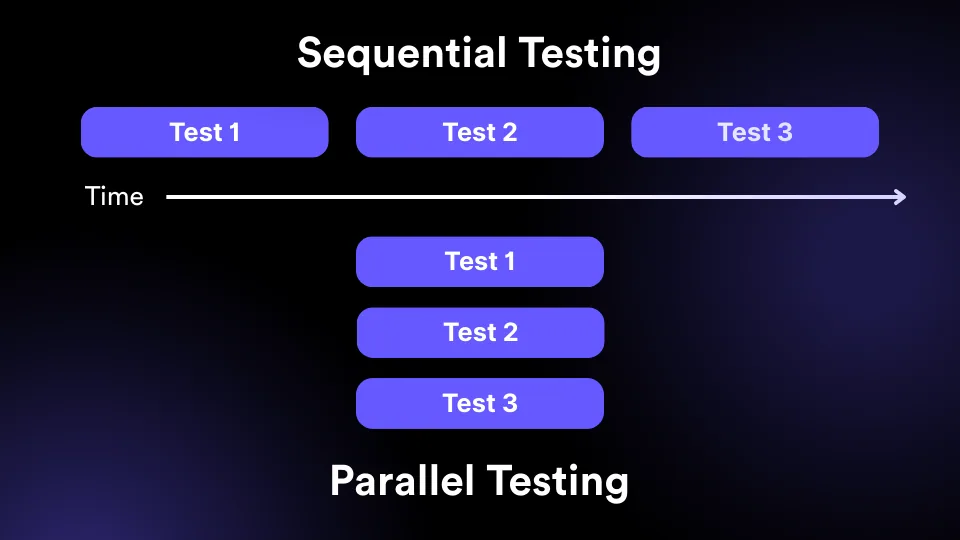
ABlyft is a German-built, developer-first platform and the lightest tool in this comparison, with a client-side script under 5 KB. It runs cookieless by default, processes data on German servers, version-controls experiment code through GIT, and supports mutual experiment exclusion so parallel tests do not contaminate each other. The visual editor runs as a Chrome extension, so no editor runtime loads on your storefront. Limits: the visual editor is basic by design, there are no built-in heatmaps or session recordings, and marketing-only teams find the learning curve steep. Pricing: from €79 per month, with a free plan and custom pricing at higher volumes. Rated 4.9/5 on OMR from 109 reviews.
Varify.io: best on a fixed budget without developers
Varify.io is a German no-code tool built so a marketing team can ship tests alone. After a one-time snippet install, variants are built in a browser-based visual editor by editing the live page. It deliberately runs no tracking of its own and reads results from Google Analytics 4, Matomo, or Piwik Pro, which means no extra consent category and no second source of truth for conversions. Limits: less capable than code-first tools for complex or deep DOM experiments, no built-in behavioral analytics, and a shorter track record than the established platforms. Pricing: €149 per month for Growth, €249 for Pro, unlimited traffic and experiments, 30-day free trial. Rated 4.8/5 on OMR from 92 reviews and 4.9/5 on G2.
VWO: best when you want one contract instead of four tools
VWO is the broadest platform here: A/B and multivariate testing, heatmaps, session recordings, on-site surveys, personalization, and server-side testing through VWO FME, all in one dashboard. Its Bayesian SmartStats engine reports a probability to beat baseline, which non-statisticians read more easily than a p-value. A free tier covers up to 50,000 monthly tracked users. Limits: the script is heavier than ABlyft’s because of the editor and behavioral analytics, EU data residency is a data center option rather than the default, and if you already run Hotjar or Microsoft Clarity you are paying twice for heatmaps. Pricing: $139 to $775 per month, scaling with traffic. Rated 8.8/10 on G2 from 990 reviews.
Kameleoon: best for AI personalization with EU processing
Kameleoon is a French-built experimentation and personalization platform with EU data processing and a design aligned to CNIL guidance. Its AI Copilot generates hypotheses from analytics data, and its predictive targeting engine scores conversion probability in real time. Server-side testing runs through SDKs in more than ten languages, and feature flags support progressive rollouts across markets. Limits: pricing is not published, the AI features need substantial traffic before the models are useful, deployment realistically takes four to eight weeks, and total cost of ownership sits well above developer-focused tools. Pricing: quote only, with market data pointing to €25,000 to €50,000 per year. Rated 4.5/5 on G2.
AB Tasty: best visual editor for marketing-led teams
AB Tasty, also French, is built around accessibility: its drag-and-drop editor genuinely handles non-trivial layout, copy, and UI experiments, which removes the engineering-ticket bottleneck for marketing teams. It is ISO 27001 certified, runs on European infrastructure, offers server-side testing through Flagship with nine or more SDKs, and adds EmotionsAI audience segmentation on top of standard targeting. Limits: the client-side script is heavier than ABlyft’s and measurable in Core Web Vitals, code-first workflows feel like an afterthought, and visitor-credit pricing escalates at high traffic. Pricing: visitor-credit model starting around €15,000 per year. Rated 4.5/5 on G2 from more than 330 reviews.
Optimizely: best enterprise feature depth
Optimizely has the deepest feature set in experimentation: full-stack server-side testing, feature flags, multi-armed bandits, edge delivery, and content management in one platform. It is SOC 2 Type II certified and offers Standard Contractual Clauses plus a comprehensive Data Processing Agreement for European buyers. Limits: it is US-headquartered, so EU compliance runs through legal agreements and configuration rather than architecture, per-impression billing makes budgets move with traffic spikes, the client-side snippet is the heaviest here at roughly 80 KB, and implementation typically takes three to six months before the first test. Pricing: not published, with enterprise contracts typically $36,000 to $50,000 and up per year. Rated 4.3/5 on G2 from more than 400 reviews.
GrowthBook: best when the data must never leave your stack
GrowthBook is an open-source feature flagging and A/B testing platform, built by former Airbnb engineers, that you can self-host on EU infrastructure. It supports both frequentist and Bayesian engines and reads directly from your warehouse, whether that is BigQuery, Snowflake, Postgres, or ClickHouse, so no experiment data is duplicated into a vendor’s analytics layer. With no third-party processor, there is no Data Processing Agreement to negotiate. Limits: there is no visual editor, so every experiment is a code change; you own deployment, upgrades, and troubleshooting; and community support replaces a vendor SLA. Pricing: free self-hosted, cloud plans from $99 per month.
04How Does Your Shop Platform Change the Shortlist?
Platform-neutral tools attach with one script tag, so Shopify, Shopware, WooCommerce, a custom shop system, and a headless storefront all look similar from the tool’s side. What changes is how deep the tool can reach, and that is where the platform question becomes real.
If you are on Shopify and want deeper access
Two Shopify-native apps do things generic tools cannot. Shoplift tests entire theme sections, page layouts, and mini-cart variations, with AI Lift Assist suggesting tests from your store data, priced from $74 per month up to $699. In our implementations it consistently costs 2 to 4 points on PageSpeed Insights, which matters if your Core Web Vitals are already borderline. Intelligems is the only tool here purpose-built for pricing, discount, and shipping-threshold tests at checkout, priced from $49 to $999 per month, and it reports a 33x average ROI and a 6% median profit lift across its customer base.
If you run Shopware, a custom shop, or headless
Here the client-side editor matters less and the server-side story matters more. ABlyft offers server-side tests and basic feature flags through its Feature Experimentation API. Kameleoon ships SDKs in more than ten languages, AB Tasty covers it through Flagship, VWO through FME, Optimizely through full-stack and edge delivery, and GrowthBook is server-side by nature. Apex works the same way across platforms, because the prediction layer scores ideas independently of where the shop is built.
05What Do These Tools Cost, and What Does the Price Buy?
The entry price tells you very little. The pricing model tells you what happens in year two, when your traffic has grown and your test volume has tripled. Five models are in play in this list, and they behave very differently.
| Model | Tools | Behavior as you scale |
|---|---|---|
| Flat rate | Varify.io (€149 or €249/mo) | Predictable. Traffic growth costs nothing extra. |
| Traffic tiers | ABlyft (from €79/mo), VWO ($139 to $775/mo) | Rises in steps with tracked users. Forecastable if you know your sessions. |
| Visitor credits | AB Tasty (from roughly €15,000/yr) | Consumption-based. More predictable than pure traffic pricing, expensive at volume. |
| Per impression | Optimizely (typically $36,000 to $50,000+/yr) | Traffic spikes move the bill. Budget with headroom. |
| Self-hosted | GrowthBook (free, cloud from $99/mo) | Licence cost stays flat. Engineering time becomes the real cost. |
| Quote and scope | Kameleoon, Apex by DRIP | Priced against your program. Requires a conversation before you can compare. |
One number belongs next to every price: the cost of a test that does not win. A single experiment consumes design time, developer time, QA, and two to four weeks of traffic on a page you could have been fixing instead. At the industry base rate of about 1 in 5, four of every five of those cycles return nothing. Measured against that, the gap between a €149 tool and a €15,000 tool is smaller than the gap between a program at the base rate and one above it.
06Our Verdict: Which Tool Fits Which Constraint?
We sell Apex, so read this with that in mind. The reasoning is short enough to check: if about four of five tests fail industry-wide, then picking better tests is the highest-leverage improvement available to a shop, and picking better tests needs outcome data at a scale no single shop can generate. That is the case for Apex, and it is the only case we make for it. On editor quality, published pricing, review depth, and self-service convenience, other tools on this list are ahead of us today.
| Your constraint | Our recommendation | Why |
|---|---|---|
| Tests keep coming back flat | Apex by DRIP | Ideas scored against 4.3 million past tests before anyone builds them |
| Developers are the bottleneck, page speed is a KPI | ABlyft | Script under 5 KB, GIT workflow, cookieless by default, from €79/mo |
| No developer time and a fixed budget | Varify.io | Browser editor, €149/mo flat, unlimited traffic, 30-day trial |
| You want testing plus heatmaps in one tool | VWO | Testing, heatmaps, recordings, surveys, free tier to 50,000 users |
| EU processing plus AI personalization | Kameleoon | French-built, CNIL-aligned, AI Copilot, 10+ server-side SDKs |
| Marketing team runs the program alone | AB Tasty | Strongest visual editor here, ISO 27001, EmotionsAI targeting |
| Enterprise scope, full-stack and bandits | Optimizely | Deepest feature set, SOC 2 Type II, SCCs and DPA available |
| Data must never leave your infrastructure | GrowthBook | Self-hosted, warehouse-native, no third-party processor |
| Shopify theme or pricing tests specifically | Shoplift or Intelligems | Native depth, at the cost of a platform lock and page weight |
These choices are also sequential rather than exclusive. Plenty of shops should start with a low-cost no-code tool, build the habit of shipping tests every week, and only move to predictive selection once the constraint has visibly shifted from “we cannot get tests live” to “our tests keep coming back flat”. Buying prediction before you can execute is the wrong order, and we will say so on the call.
One last honest note on friction. ABlyft, Varify.io, VWO, and GrowthBook let you read a price and start today. We ask you to book a call. If you want to buy software without talking to a human, that preference is legitimate and those tools respect it.
Want Apex to score your test ideas before you build them? See if your shop is a fit→