
€8.2M+additional revenue
350+ · A/B tests run

Most A/B tests lose because the idea was a guess. We research your visitors, put odds on every idea with a database of 4.3 million A/B tests, and run six to ten tests at once. That's why more than 50% of our tests win.
For online shops from €100k a month. A free 30-minute call with the team.
















Sound familiar?
The idea came from a competitor's screenshot, or from whoever argued loudest in the meeting. It looked good, everyone had a good feeling about it. Then it lost. Again.
And when a test does win, it's one of three or four a month. At the industry's hit rate of about 1 in 5, that's a handful of small wins a year. Not enough to make the shop more profitable while your ads keep getting more expensive.
We call it Prediction-Based Experimentation: every idea gets its odds before it gets built. Four steps, repeated every month.
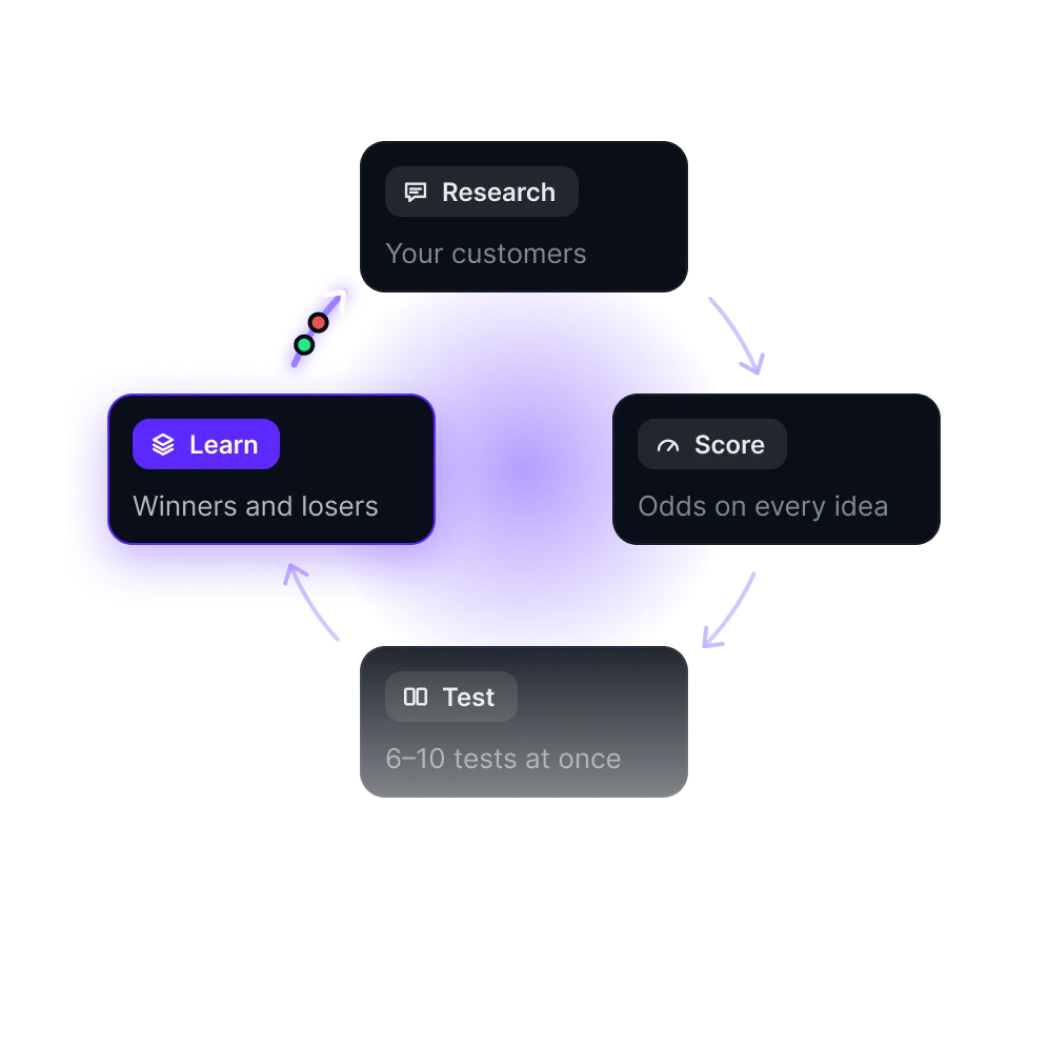
The first month is research. We read your reviews, surveys, support tickets and your competitors' reviews, and put 40+ hours into session recordings and heatmaps. Our behavioural psychologists turn it into a 20+ page report on why your visitors buy, and why they don't. Every test idea starts there, written as if, then, because.
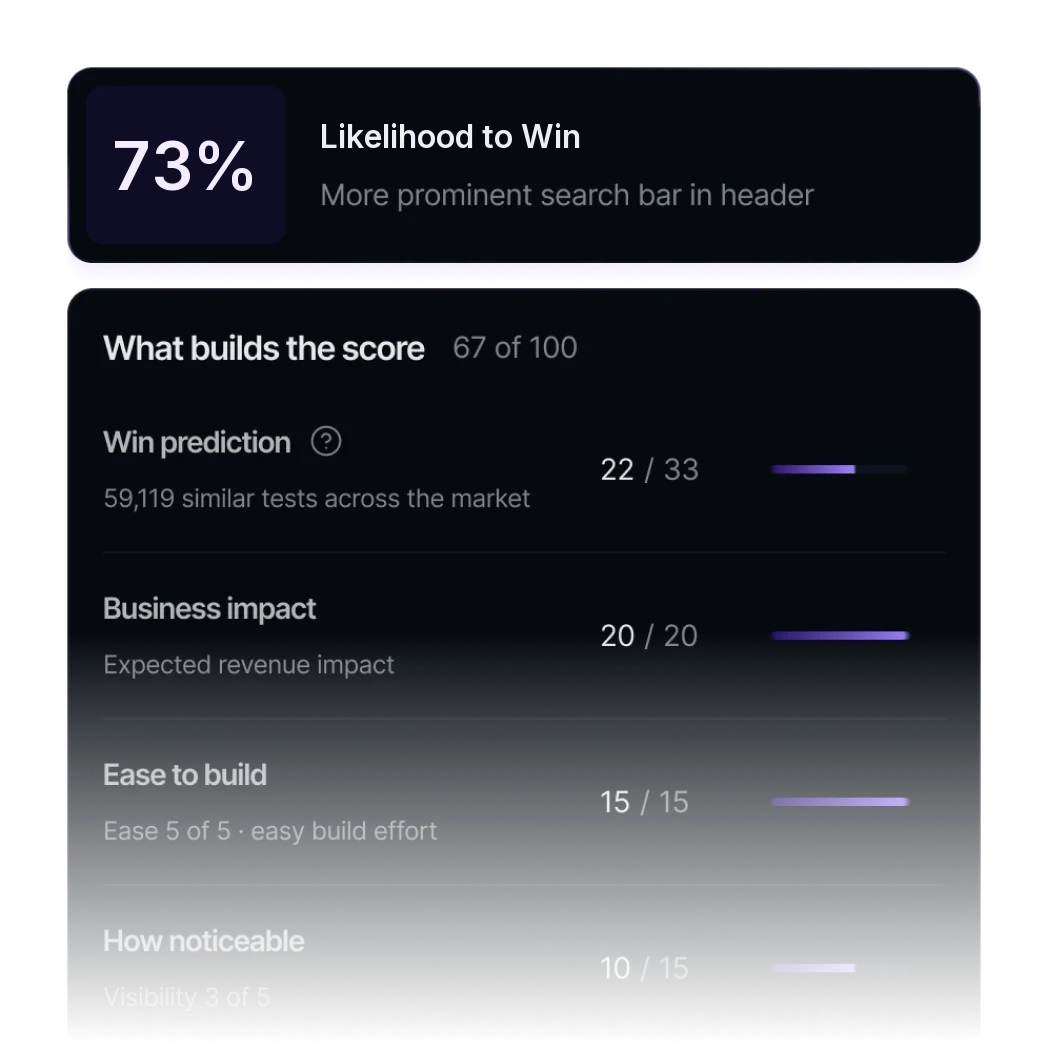
Before anything gets built, Apex, our own testing tool, gives every idea a Likelihood to Win, based on the 4.3 million tests in our database, the 4,000+ we ran ourselves and what the research says about your shop. Weak ideas die on the list, not on your traffic.
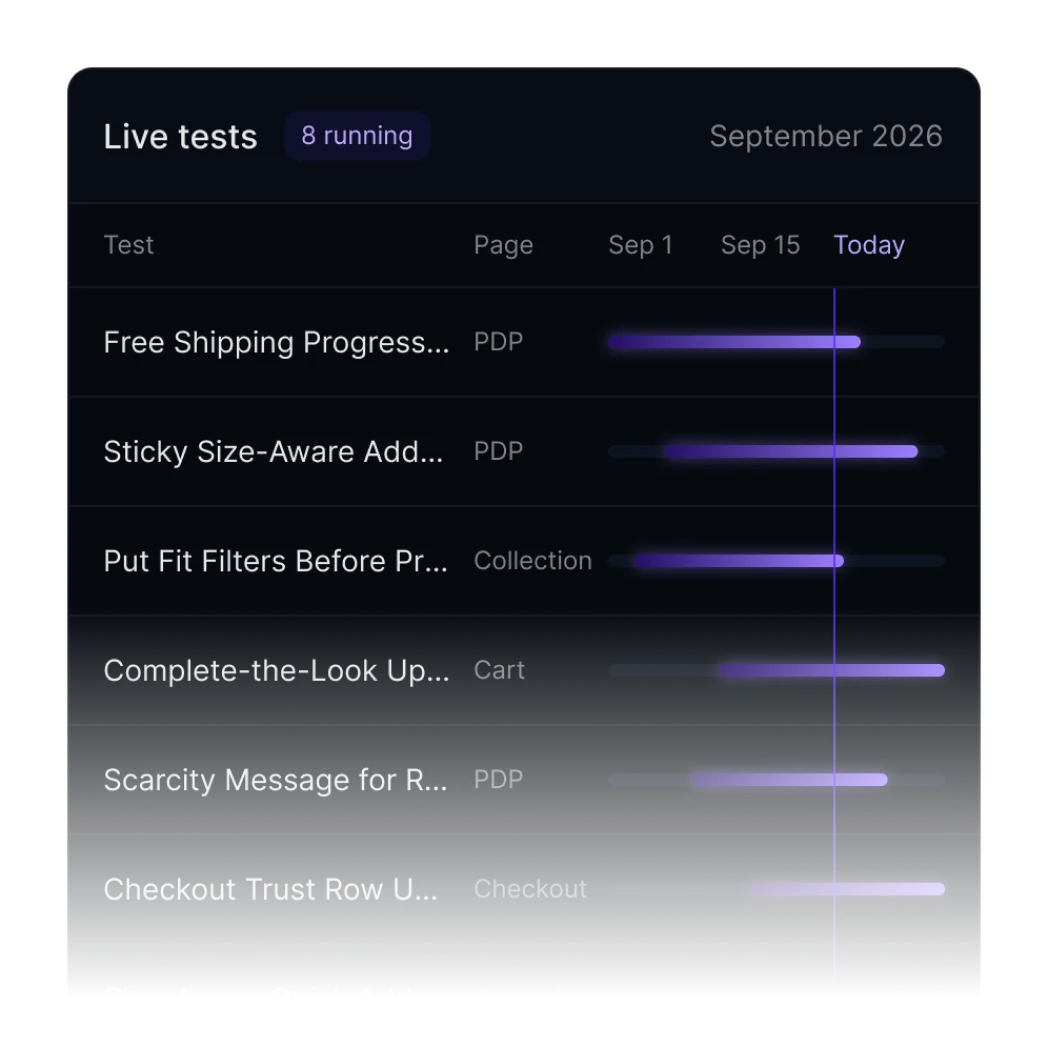
We design the variants, build them at code level and QA them on real devices. Then we run six to ten tests in parallel, each visitor assigned to each test independently, so they don't mess with each other's results. The statistics are fixed before launch: frequentist, 80% confidence, 80% power, no early stopping.
We measure revenue per visitor, not clicks. Winners ship and keep earning. Every result, win or lose, gets filed by what it revealed about your buyers, so the odds on your next ideas get better with every test.
That's the short version. The full method, phase by phase, is on the process page.
See the full processTwo shops that went from occasional tests to a program that runs all year.
350+ · A/B tests run
+10% · Session CVR
Everything a testing program needs, run by one team.

20+ pages on what drives your buyers, what brings them into your category and where your funnel leaks revenue.

Every idea with its Likelihood to Win and effort, re-ranked every two weeks on your results.

3 to 5 designed variants per test for mobile and desktop, approved by you before code gets written.

Our QA team checks every variant on real devices, tracking included, before it touches your traffic.

Clean 50/50 splits, sample-ratio checks and pre-registered statistics on every test.

Dashboards with revenue per visitor, shipped winners and the next best bets, plus a call with the team every two weeks.
Most agencies test ideas that nobody checked first. We put odds on every idea before it gets built, using research into your visitors and a database of 4.3 million A/B tests. We run six to ten tests at once instead of one, and we fix the statistics before launch. The result: between April and June 2026, 56% of our tests won, while the industry wins about 1 in 5.
Your program runs on Apex by DRIP, the testing tool we built ourselves. It holds the research, the ranked backlog with a Likelihood to Win on every idea, the live tests and the dashboards. Apex is included in our service, so there's no separate tool subscription.
We ramp up until six to ten tests run in parallel at any time. By month three, your shop has usually run more experiments than most brands ship in a year. The exact pace depends on your traffic and how many pages carry enough revenue to test on.
In revenue per visitor, not clicks. Every test is pre-registered before launch: frequentist method, 80% confidence and 80% power, minimum detectable effect and duration fixed upfront, and no early stopping. A fake win is worse than a loss, because a loss gets switched off and a fake win ships and costs you money forever. We also say upfront that 40 to 50% of tests come back negative or unclear.
Online shops from €100k a month in revenue. Below that, tests take too long to reach a result and the program can't pay for itself. If that's you, we'll tell you on the call.
No. A single test without the research and the learning loop behind it is a guess with a price tag. What we offer is how much of the work we do: full service, where our team runs everything, or consulting, where your team builds and launches the tests with Apex and our guidance.

Book a call with the team and tell us about your shop. We'll talk through where it stands, where you want it to go, and how we'd get you there. If working with us isn't the best return on your money, we'd tell you rather than take it.
30 minutes, and you'll know exactly where your shop stands.
The guarantee, in full
When you can predict what is likely to win, you can promise the outcome. What counts as uplift, how it's measured, and what happens if we miss is written down in plain language.
We can promise it because we know our numbers: more than 50% of our A/B tests win, across 4,000+ documented experiments. The guarantee stands when our team runs the program for you.