01What Is Apex by DRIP?
In one sentence: Apex by DRIP is an A/B testing platform for companies selling online that predicts which tests will win before they go live, built on one of the largest A/B test databases in e-commerce. The aim is more revenue and more profit from the traffic you already pay for.
A testing tool helps you build a test, run it and read the result. Apex does that too, and adds a step in front of it. Before anything is built, each test idea is checked against what shops like yours tested and how those tests ended. The database is the reason Apex can predict. It is not the point on its own.
| Apex by DRIP | |
|---|---|
| Best for | Shops whose tests keep coming back flat |
| Method | Prediction-Based Experimentation |
| Can test | Pages, elements, A/A, redirects, holdout, feature flags |
| Shop systems | Shopify app, two-click install via link |
| Data location | EU plus UK hosting, GDPR in place |
| Entry price | Not published; card-free free tier, one store |
| Main strength | Prediction from 4.3 million observed A/B tests |
| Main limitation | The price is not published |
| Evidence level | Documented by DRIP; no third-party reviews yet |
The three layers
- Test memory. 4.3 million A/B tests from 151,000 shops, collected since 2011. Every test idea gets a Likelihood to Win before launch.
- Testing tool. Build, launch and evaluate tests directly in the shop, with heat maps per variant, profit per test and the Apex chat.
- Managed execution. Tests built, checked, launched and read together with the DRIP team.
Each layer answers a different question. The test memory answers what is worth testing. The testing tool runs the test and shows what happened. Managed execution covers the work in between, for shops that want the DRIP team to build, check, launch and read their tests with them.
02What Does Prediction-Based Experimentation Mean?
A weather forecast is a fair comparison. It does not know what tomorrow brings. It knows what happened on many days that looked like today, and it gives you odds you can plan around. Apex does the same for test ideas. It looks at observed A/B tests on shops like yours and shows how ideas like yours have done.
In a usual testing program the order is: collect ideas, argue about priority, build, launch, wait, read the result. The choice of what to build is made in a meeting, often by whoever argues hardest. Prediction-Based Experimentation puts a scoring step in front of the build. Ideas go into the backlog, Apex classifies them automatically and gives each one a score, and the team builds from the top of the list.
This matters because building is where the cost sits. Every variant takes design, development, QA and traffic. Ronny Kohavi puts the share of experiments that win at 10 to 20 percent. When most tests come back flat, choosing better tests before that work starts saves more than building the same tests faster.
03What Is the Likelihood to Win, and How Should You Read It?
Every idea in the Apex backlog gets one number: its Likelihood to Win. Next to it, Apex shows how many observed tests back that number. A score backed by many similar tests carries more weight than one backed by a handful.
That footnote changes how you use the number. A high figure does not mean the test will win. It means the idea ranks high against the other ideas in your backlog, based on what similar tests showed on other shops. The test still decides.
How big is the memory behind the score?
Apex scores each idea against 4.3 million observed A/B tests from 151,000 shops and shows how many tests back each score. Among the tools in our comparison of A/B testing tools for online shops, the nearest published figure is Kameleoon’s Ideate, trained on more than 20,000 experiments; Varify cites 10,000 or more test patterns; no other vendor in this comparison publishes a count of tests behind its recommendations (vendor pages checked October 2026).
04How Do You Know the Predictions Hold?
A prediction is worth as much as its record. DRIP publishes two checks, both stated in the press release of September 29 2026.
The holdout check
In a holdout check within a shop, the top third of ideas won 1.4 to 1.6 times as often. In general terms, a holdout check keeps some results back and tests the predictions against them, so the score is judged on outcomes it was not given.
The pre-registered predictions
In early September 2026, DRIP scored 33 brands and froze the predictions. Pre-registered means the prediction is written down before the result exists, so nobody can adjust it afterwards. Results are published from the launch on.
05What Can You Test With Apex, and How Do Tests Get Built?
What you can test
- Pages and page elements.
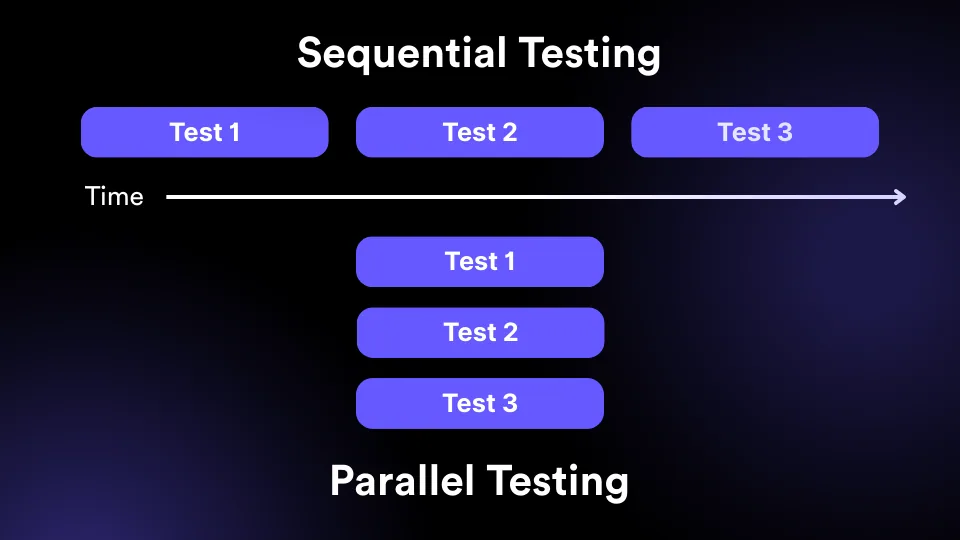
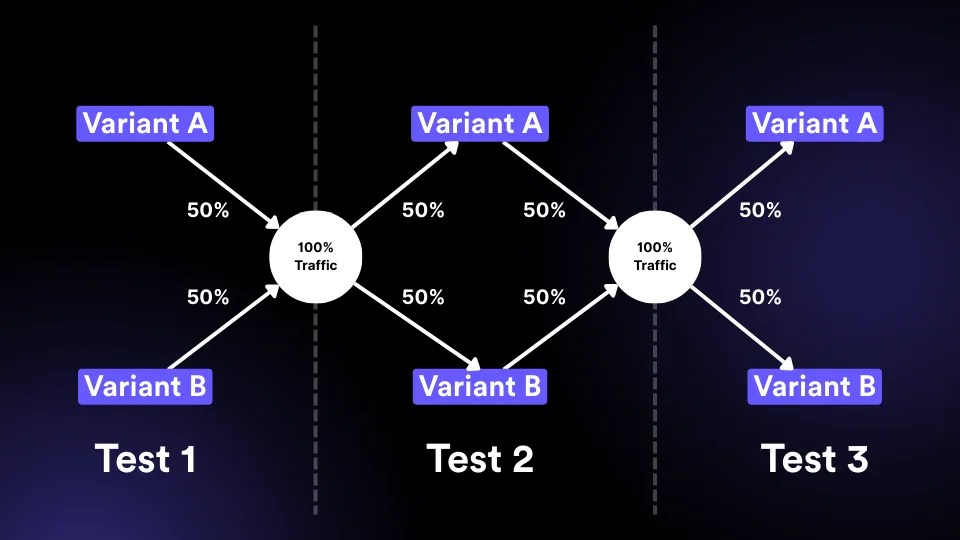
- Parallel tests on the same traffic, with optional exclusion groups.
- A/A tests, which compare two identical versions to check the setup.
- Redirect tests.
- A global holdout.
- Feature flags and staged rollouts.
How tests get built
In Apex, the experiment config is code. You build a variant in the code editor or with the visual builder, which is called Operator. CLI preview links let you open a variant before it goes live, and QA runs through the preview.
Clients see four QA checks: all devices, tracking and targeting, responsive, and matches design.
Building with agents
Apex is built agent-first. Through the MCP connection, a shop owner builds and reads tests from ChatGPT or Claude without a terminal. MCP, the Model Context Protocol, is the open standard that lets AI assistants use outside tools. In practice you ask your assistant to set up a test or to explain a result, and the work happens in Apex.
The CLI is the developer path. A developer works from the command line, with the experiment config as code and CLI preview links for checking a variant. Both routes lead into the same testing program.
06How Does Apex Read Results?
Results use fixed-horizon statistics with confidence. A fixed-horizon test runs for its planned length and is read at the end. Each test shows its main metric, the lift and the revenue during its runtime.
Profit per test
Revenue can rise while profit falls, for example when a variant leans on discounts or leads to more refunds. On Shopify, Apex shows profit per test so you can optimise for profit: the discount share, the refund share and the profit per sale.
Guardian
Guardian stops a running test automatically when it crosses a revenue loss threshold. A losing variant does not keep costing money while nobody is looking.
Heat maps per variant
A result tells you which variant won. Heat maps per variant help explain why. Apex shows clicks, scroll depth, average fold and funnel steps for each variant. An Engagement view adds bounce rate, read depth and whether visitors keep browsing.
Integrations with Clarity and Hotjar are in beta. An analytics area covers acquisition, behaviour, audiences and sources, including ChatGPT.
07What Does the Apex Chat Do?
The chat is called Apex, like the product. It answers three kinds of question: what to test next, why a test won, and how visitors moved. Its answers cite sources, so you can check where a statement comes from.
Apex also keeps the backlog. New ideas are classified automatically and each one gets a score, so the question of what to test next has a ranked list behind it.
There are three ways to work with Apex: the app with its chat, ChatGPT or Claude through the MCP connection, and the CLI for developers. A shop owner with many other tasks can stay in the assistant they already use; a developer can stay in the terminal.
08How Does Apex Install, and How Does It Handle Data?
Apex installs as a Shopify app. The install takes two clicks from a link. Tracking runs server-side and uses first-party data. Consent apps are supported for most Shopify GDPR apps.
| Topic | Status |
|---|---|
| GDPR | In place |
| Hosting | EU plus UK |
| US tools | Covered by DPAs |
| ISO 27001 | In progress, no certification yet |
| SOC 2 | In progress, no certification yet |
| Consent apps | Most Shopify GDPR apps supported |
We state the certifications as they are: in progress. If your procurement needs a certificate today, raise it on the call.
09What Is Managed Execution, and Who Is Behind Apex?
Some shops have a team that builds and reads tests. Many do not, because the people who would do it already have plenty of other work. Managed execution covers that gap: the DRIP team builds, checks, launches and reads the tests together with the shop.
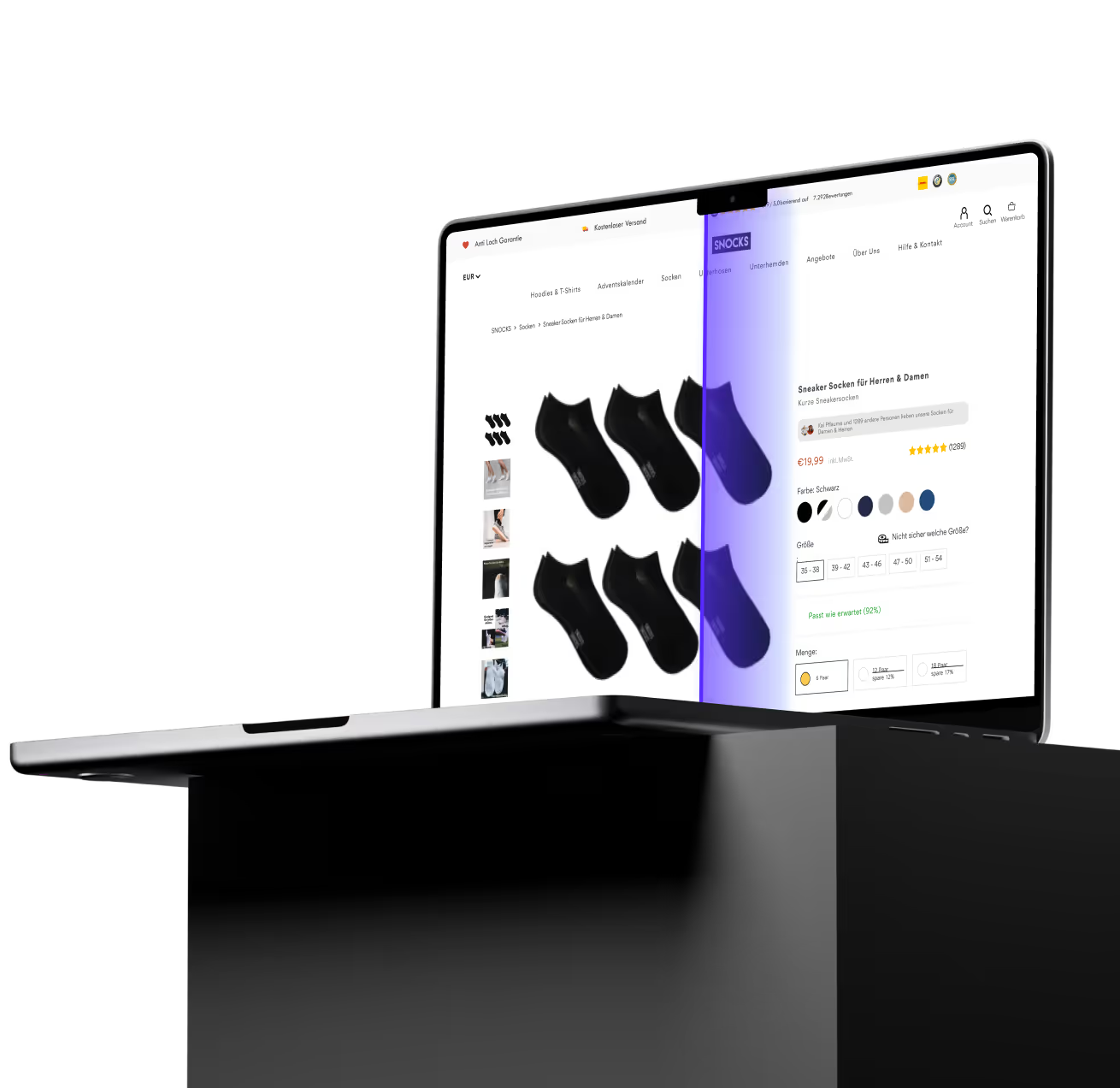
DRIP is the company behind Apex, about 50 people. DRIP has run over 4,000 own tests and served over 250 online shops, among them SNOCKS, AG1, Hornbach and KoRo. SNOCKS runs on Apex.
DRIP’s own win rate
DRIP’s win rate went from 27 percent in 2024 (808 tests) to 56 percent between April and June 2026 (278 tests). For context, Ronny Kohavi puts the industry baseline at 10 to 20 percent of experiments that win.
10How Much Does Apex Cost?
Apex does not publish prices. You can start on the free tier, which needs no card and covers one store. Beyond that, the way to a price is a call with the DRIP team.
We name this as the main limitation because it is one. Many testing tools publish their plans and let you buy without talking to anyone. If your buying process needs a price list first, our comparison of 15 A/B testing tools lists each vendor’s entry price as published, checked October 2026.
11When Is Apex Not the Right Choice?
- A team that already picks winning tests well gets less from the prediction layer.
- A shop that cannot ship a test a week yet should build that habit on a lighter tool first; buying prediction before you can execute is the wrong order.
- Anyone who needs a published price list before a conversation.
| Your situation | Fit for Apex | Next step |
|---|---|---|
| Tests keep coming back flat | Good fit | Score the backlog before building |
| You already pick winners well | Less value from prediction | Compare tools in our deep dive |
| You cannot ship a test a week | Not yet | Build the habit on a lighter tool |
| You need a price list first | Not the right choice | Pick a tool with published plans |
The second case is about order. Prediction helps most when choosing the next test is the bottleneck. When building tests is the bottleneck, fix that first, then add prediction.
12How Does Apex Compare With Other A/B Testing Tools?
Our comparison of A/B testing tools for online shops compares 15 tools by what they can test, which shop systems they run on, where they keep your data and what they cost to start. It is a documentation comparison, not a hands-on test, and the order is not a ranking.
The head-to-head pages go one tool at a time:
- Apex vs Intelligems
- Apex vs Shoplift
- Apex vs Shoplift vs Intelligems
- Apex vs Varify
- Apex vs VWO
- Apex vs Optimizely
- Apex vs Kameleoon
- Apex vs ABlyft
- Apex vs ABConvert
- Apex vs Convert
- Apex vs GrowthBook
- Apex vs Visually
- Apex vs Shopify Rollouts
When you compare, start from your constraint, not from a feature list. Every serious tool has an editor, targeting and reports. The question is whether your program is held back by building tests or by choosing them.