01How do Apex and Shopify Rollouts compare at a glance?
| Apex by DRIP | Shopify Rollouts (with SimGym) | |
|---|---|---|
| Built for | Shops whose tests keep coming back flat: the constraint is choosing which tests to run, not building them | Shopify merchants on the Online Store who want to schedule theme changes and A/B test them inside the admin |
| Shop systems | Installs as a Shopify app (two-click install via link, server-side tracking, first-party data) | Shopify only. Native in the admin at Markets > Rollouts, no app. Headless and custom storefront checkouts are not supported |
| Can test | Pages and page elements, parallel tests on the same traffic with optional exclusion groups, A/A tests, redirect tests, global holdout, feature flags and staged rollouts | Theme edits or a full replacement theme, checkout and customer account configurations (since June 2026), discount activation, catalog status. No Liquid template changes, no price tests |
| Prediction before launch | A Likelihood to Win per test idea, shown with how many tests back it (see note below) | None in Rollouts. SimGym, a separate app in AI Research Preview, simulates shoppers with AI agents |
| Building tests | Experiment config as code, code editor, visual builder (Operator), CLI preview links, QA via preview, MCP connection to ChatGPT or Claude | Shopify's theme editor and checkout settings on an automatic copy of the live theme; “View As” preview per market |
| Statistics and metrics | Fixed-horizon with confidence; main metric, lift, runtime revenue per test; profit per test on Shopify; Guardian auto-stop at a revenue loss threshold | Method not published. Theme experiments: conversion rate, bounce rate, reached checkout rate, add to cart rate. Checkout experiments: checkout conversion rate. No revenue metrics for experiments; metrics cannot be customised |
| Heat maps | Heat maps and behaviour per variant: clicks, scroll depth, average fold, funnel steps | Not published |
| AI and agents | The Apex chat in the app; backlog with auto-classification and score; MCP and CLI | SimGym (separate app). Agents, MCP or a ChatGPT or Claude connection for Rollouts: none found |
| Data location | GDPR in place; hosting in the EU plus UK; ISO 27001 and SOC 2 in progress | Shopify: Level 1 PCI DSS; SOC 2 Type II and SOC 3 reports issued; hosting region not published |
| Entry price | Pricing is not published; a card-free free tier for one store exists; book a call | Included in Shopify plans, no separate fee listed. Experiments from Grow: €105/mo billed monthly, €79/mo billed yearly (checked October 2026) |
| Reviews | No public review profile yet | Rollouts: no App Store listing, it is a native feature. SimGym: 2.8 of 5 from 40 App Store reviews |
Note on Likelihood to Win: it is one percent figure per test idea, shown with how many tests back it. It ranks an idea against your shop's own backlog. It is not a win probability in the strict sense.
02What is each tool built for?
Shopify describes Rollouts in its Winter '26 Edition as: “Schedule theme changes and A/B test with Rollouts, built directly into the admin.” The help center defines a rollout as “a scheduled set of changes to your online store's main theme, checkout and accounts pages, discounts, product catalogs, or a combination of these changes.” Shopify adds that it starts with scheduling, such as sales events, and “as you get more traffic, it naturally expands to support A/B testing.” Rollouts was announced on December 10, 2025 in early access, opened for scheduling and A/B tests on March 31, 2026, and extended to checkout and customer accounts on June 5, 2026.
Apex by DRIP is an A/B testing platform for companies selling online that predicts which tests will win before they go live, built on one of the largest A/B test databases in e-commerce. The method is Prediction-Based Experimentation: we know what shops like yours tested and which tests won. Apex has three layers. A test memory of 4.3 million A/B tests from 151,000 shops, collected since 2011, gives every test idea a Likelihood to Win before launch. A testing tool builds, launches and evaluates tests directly in the shop, with heat maps per variant, profit per test and the chat. Managed execution means tests are built, checked, launched and read together with the DRIP team.
03What can you test with Apex and with Shopify Rollouts?
| Area | Apex by DRIP | Shopify Rollouts |
|---|---|---|
| Pages and theme sections | Pages and page elements | Theme edits, including translations. No Liquid template changes |
| Whole theme | Not documented | Full replacement theme against the live theme |
| Landing pages and URLs | Redirect tests | Split URL tests not published |
| Checkout and customer accounts | Not documented | Yes, since the June 5, 2026 changelog |
| Discounts and catalogs | Not documented | Discount activation or deactivation, up to 250 per rollout; catalog status (active or draft) |
| Prices | Not documented | Not offered as a price test |
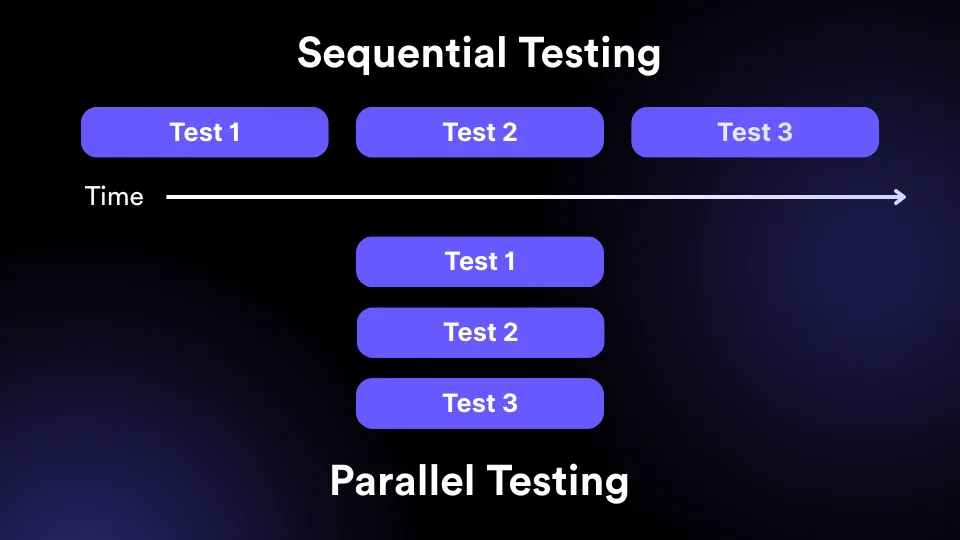
| Parallel tests | Parallel tests on the same traffic with optional exclusion groups | Each experiment gets its own mutually exclusive segment of visitor traffic |
| A/A tests, holdout, feature flags | A/A tests, global holdout, feature flags and staged rollouts | Not published. Rollouts can apply changes to a percentage of traffic |
Where Rollouts can do something Apex does not list, we say so plainly. Rollouts tests checkout and customer account configurations, discount activations and catalog status. If your next test is in checkout, Rollouts covers it and Apex's documented test types do not. Third parties disagree on one detail: Black Belt Commerce says “full Checkout Components testing is a Shopify Plus feature”, while Shopify's help pages do not state this.
Rollouts also has limits. Vintage themes, Liquid template changes and archived catalogs are not supported, and experiments “apply only to your online store”, so headless and custom storefronts are out.
04How do tests get built and launched?
Shopify Rollouts
A rollout comes in one of three types: Launch (permanent), Event (time-boxed, then rolled back) and Experiment (control vs treatment). Changes are made in Shopify's theme editor and checkout settings. Shopify creates a copy of the published theme automatically, so the live theme can still be edited while a rollout runs. Liquid template changes are not allowed; you can test a whole replacement theme instead.
- Preview: “View As” mode shows the rollout per market.
- Traffic split: 50% control and 50% treatment by default, with an end date 90 days after the start.
- Control: experiments can be paused and resumed, then rolled back or applied at the end.
- Targeting: localised tests per market. Market-specific targeting needs the Advanced or Plus plan.
- Templates, AI generation and QA tools: not published.
Apex by DRIP
Apex builds tests from experiment config as code, a code editor or the visual builder, Operator. It offers CLI preview links and QA via preview. An MCP connection lets a shop owner build and read tests from ChatGPT or Claude without a terminal; the CLI is the developer path. Four QA checks are shown to clients: all devices, tracking and targeting, responsive, and matches design. With managed execution, tests are built, checked, launched and read together with the DRIP team.
05How are winning tests chosen before launch?
Apex scores each test idea with a Likelihood to Win: one percent figure per idea, shown with how many tests back it. It ranks an idea against your shop's own backlog. It is not a win probability in the strict sense. In a holdout check within a shop, the top third of ideas won 1.4 to 1.6 times as often (press release, September 29, 2026). The backlog auto-classifies and scores ideas.
Apex scores each idea against 4.3 million observed A/B tests from 151,000 shops and shows how many tests back each score. The nearest published figure in this comparison is Kameleoon’s Ideate, trained on more than 20,000 experiments; Varify cites 10,000 or more test patterns; no other vendor in this comparison publishes a count of tests behind its recommendations (vendor pages checked October 2026).
Rollouts itself offers no prediction. Shopify's answer for this step is SimGym, “a Shopify app in AI Research Preview that uses AI-powered shoppers to simulate buyer behavior on your online store.” It compares themes by add-to-cart rate, or analyses one theme and returns strengths, improvement areas and recommendations prioritised by “conversion impact”. It needs a Liquid storefront and Shopify Network Intelligence activated.
“It's not fully testing.”
Aaron Glazer, Shopify, on SimGym, The Unofficial Shopify Podcast, December 22, 2025
Shopify's own help page adds that SimGym “results might differ from actual buyer behavior”. On the podcast, Glazer positioned SimGym for stores without enough traffic for split tests.
06Which statistics and metrics does each tool use?
Shopify lists these metrics for theme experiments: conversion rate over time, bounce rate, reached checkout rate and add to cart rate. Checkout experiments report checkout conversion rate only. Gross sales, average order value and orders appear for Launch rollouts, not for experiments. “You can't customize the available metrics.”
The method behind a result is not published. WeltPixel wrote in July 2026 that Shopify “publishes no statistical-significance methodology for calling a winner.” Sources disagree on confidence intervals: Shoplift reported intervals on conversion, add to cart, reached checkout and bounce rate in March 2026, while Conspire Agency (updated October 2026) says there are “no confidence intervals”. Shopify's help page does not say. Auto-stop, sample ratio checks and guardrails are not published.
Apex runs fixed-horizon tests with confidence. Each test reports its main metric, lift and runtime revenue per test. On Shopify, Apex reports profit per test, so you can optimise for profit: discount share, refund share and profit per sale. Guardian stops a test automatically at a revenue loss threshold.
Apex shows heat maps and behaviour per variant: clicks, scroll depth, average fold and funnel steps, plus an Engagement view with bounce rate, read depth and keep browsing. For Rollouts, heat maps and recordings are not published, results sit on a rollout results page in the admin, and WeltPixel found “no documented way to see variant assignment anywhere outside the rollout's own results card. Not in GA4. Not in any pixel.”
07What do Apex and Shopify Rollouts cost?
| Shopify plan | Billed monthly | Billed yearly | Rollouts access |
|---|---|---|---|
| Basic | €36/mo | €27/mo | Scheduling and gradual rollouts, no experiments |
| Grow | €105/mo | €79/mo | Experiments |
| Advanced | €384/mo | €289/mo | Experiments plus market-specific targeting |
| Plus | from €2,100/mo | not listed | Same as Advanced |
Shopify's pricing page lists no separate fee for Rollouts. A store on Basic can schedule changes but cannot run experiments.
SimGym is priced on its own: free to install, with a monthly allowance of simulations (the number is not published), then $0.75 per single-theme simulation and $1.50 per comparison. “Unused simulations don't carry over.”
Apex: pricing is not published. A card-free free tier for one store exists. To see if your shop is a fit, book a call. That is Apex's main limitation: if you need a published price list before a conversation, Rollouts gives you that and Apex does not.
08How do they handle data, hosting and compliance?
Shopify states it is “certified Level 1 PCI DSS compliant” and has “issued SOC 2 Type II and SOC 3 reports”. It publishes GDPR and CCPA guidance pages. For Rollouts experiments, the visitor assignment method, cookies and consent handling are not published. ISO 27001, the hosting region and subprocessors are not published on Shopify's security page.
Apex has GDPR in place, hosts in the EU plus UK and has DPAs for US tools. ISO 27001 and SOC 2 are in progress, so Apex makes no certification claim yet, while Shopify has issued SOC 2 Type II reports. Apex supports consent apps for most Shopify GDPR apps and uses server-side tracking with first-party data.
09When is Shopify Rollouts the better choice?
- You want testing without another tool. Rollouts is built into the admin, needs no app, and Shopify lists no separate fee; experiments come with the Grow plan and above (checked October 2026).
- Your test is in checkout, customer accounts or discounts. Rollouts has tested checkout and customer account configurations since June 2026 and can switch up to 250 discounts per rollout. Apex does not list these test types.
- You need scheduling as much as testing. Launch and Event rollouts put theme, discount and catalog changes live at a set time and roll Events back afterwards, for example a sale that starts at midnight.
10When is Apex the better choice?
- Your tests keep coming back flat. Every test idea gets a Likelihood to Win before launch, backed by the memory of 4.3 million A/B tests from 151,000 shops, so selection improves before anything is built.
- You judge tests on money, not clicks. Apex reports runtime revenue per test and, on Shopify, profit per test, and Guardian stops a test at a revenue loss threshold. Rollouts experiments report conversion-type metrics only.
- You want to know why a variant won. Apex shows heat maps and behaviour per variant, and the Apex chat explains why a test won and how visitors moved. Heat maps are not published for Rollouts.
Apex is not the right choice for every shop. A team that already picks winning tests well gets less from the prediction layer. A shop that cannot ship a test a week yet should build that habit on a lighter tool first; buying prediction before you can execute is the wrong order. On Shopify's Grow plan or higher, Rollouts is one way to build that habit.
11Apex or Shopify Rollouts: which should you pick?
If you are on Shopify's Grow plan or higher and have never run a test, Rollouts lets you start inside the admin with no separate fee listed. If your next tests are in checkout, customer accounts or discounts, Rollouts documents those test types and Apex does not. If your tests keep coming back flat, the constraint is choosing which tests to run, and that is what Apex's Likelihood to Win is built for. If you judge tests on revenue and profit per test rather than conversion-type metrics, Apex reports them and Rollouts experiments do not.
Want to see which of your test ideas Apex would score highest? Book a call→