01How do Apex and Shoplift compare at a glance?
| Apex by DRIP | Shoplift | |
|---|---|---|
| Built for | Shops whose tests keep coming back flat: the constraint is choosing which tests to run, not building them | “high-growth DTC brands” on Shopify (vendor wording) |
| Shop systems | Installs as a Shopify app (two-click install via link, server-side tracking, first-party data) | Shopify and Shopify Plus; headless “not currently supported” |
| Can test | Pages and page elements, parallel tests with optional exclusion groups, A/A tests, redirect tests, global holdout, feature flags and staged rollouts | Theme templates and sections, URL redirects, prices (Advanced and Pro), subscription prices via Recharge 2.0; no A/B/n, no direct checkout tests |
| Prediction before launch | Likelihood to Win per test idea, backed by 4.3 million A/B tests from 151,000 shops | None found; Lift Assist™ recommends theme sections |
| Building tests | Experiment config as code, code editor, visual builder (Operator), CLI preview links, MCP connection | Shopify Theme Editor, Liquid or JavaScript, JavaScript API, preview mode and QA checklist |
| Statistics and metrics | Fixed-horizon with confidence; lift, revenue per test, profit per test on Shopify; Guardian auto-stop | Bayesian, “Probability to Win”; revenue, orders, cart adds, revenue per visitor; profit metrics none found |
| Heat maps | Heat maps and behaviour per variant in the app | Not native; integrations with Heatmap.com, Hotjar and Clarity |
| AI and agents | Apex chat in the app, backlog with auto-classification and score, MCP and CLI | Lift Assist™; public API usable from Claude or ChatGPT over “plain HTTP”; MCP server none found |
| Data location | Hosting in the EU plus UK; GDPR in place | Data “transferred to and processed in the United States” |
| Entry price | Not published; card-free free tier for one store; book a call | Core from $99 a month billed monthly, $74 billed annually; 14-day trial; no free tier (checked October 2026) |
| Reviews | No public review profile yet | 4.9 from 133 reviews on the Shopify App Store (checked October 2026) |
02What is each tool built for?
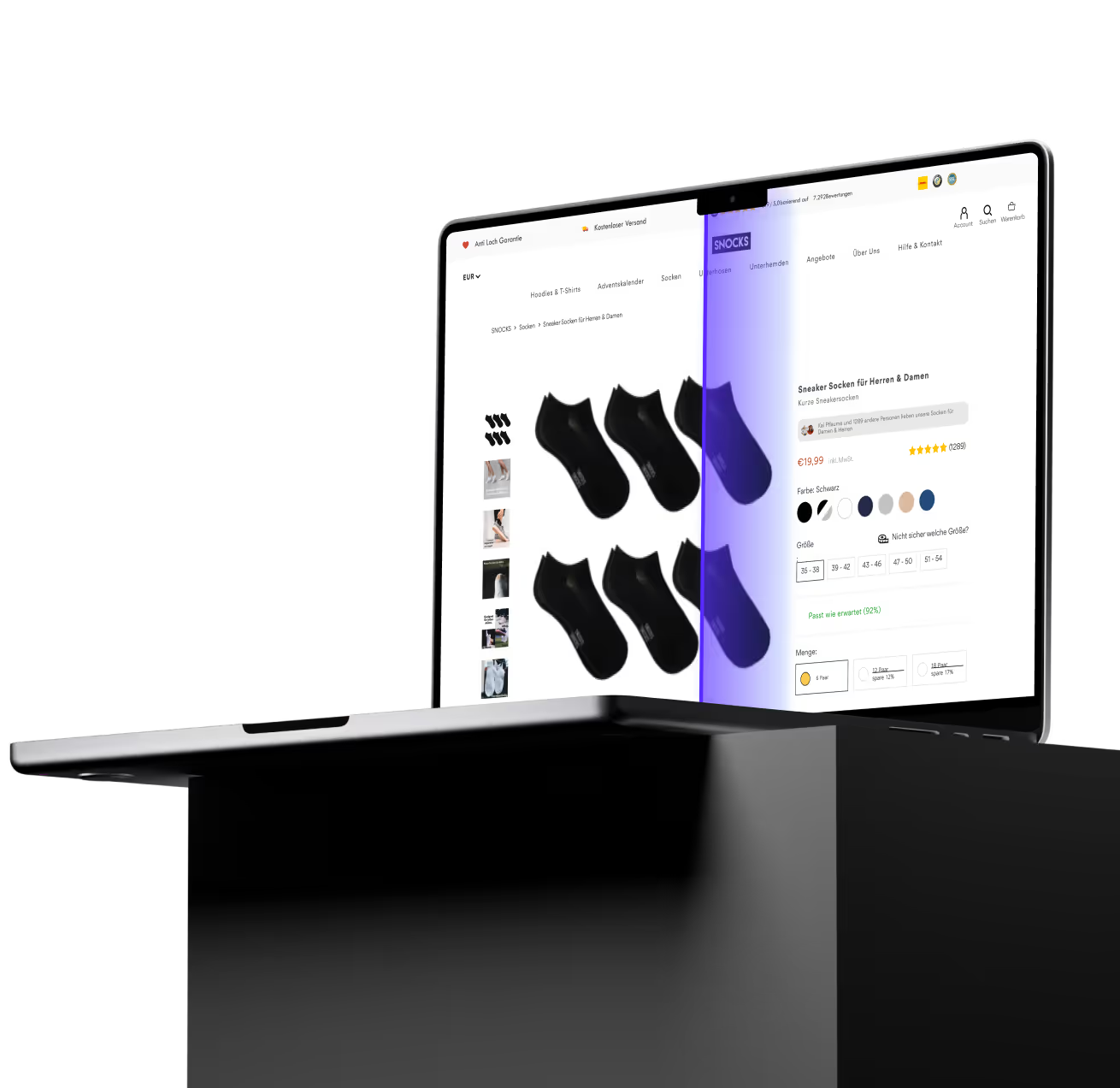
Shoplift describes itself as “the Shopify-native A/B testing and conversion rate optimization (CRO) platform built for high-growth DTC brands”. Tests run on the shop’s own templates, so a merchant who already maintains a Shopify theme works in a tool they know. Shoplift runs on Shopify and Shopify Plus; its documentation says headless storefronts on Hydrogen or Next.js are “not currently supported”.
Apex by DRIP is an A/B testing platform for companies selling online that predicts which tests will win before they go live, built on one of the largest A/B test databases in e-commerce. It has three layers. The test memory holds 4.3 million A/B tests from 151,000 shops, collected since 2011, and every test idea gets a Likelihood to Win before launch. The testing tool builds, launches and evaluates tests directly in the shop, with heat maps per variant, profit per test and the chat. Managed execution means tests are built, checked, launched and read together with the DRIP team.
The difference in one line: Shoplift helps you run the tests you choose. Apex ranks your ideas by Likelihood to Win before anything is built, then runs the tests.
03What can you test with Apex and with Shoplift?
| Area | Apex by DRIP | Shoplift |
|---|---|---|
| Pages | Pages and page elements | Home, collection, product, page, blog, article, cart and search templates |
| Theme sections | Page elements | Header, footer, navigation, global styles, cart type |
| Prices and offers | Not among the documented test types | Price tests on Advanced and Pro, single-currency stores, not with Replo, PageFly and other listed builders; subscription prices via Recharge 2.0; discounts and offers none found |
| Shipping thresholds | Not among the documented test types | Via the JavaScript API and a Shopify Function, which Shoplift calls “very technical” |
| Checkout | Not among the documented test types | “does not currently support testing Shopify’s checkout pages directly” |
| Landing pages and redirects | Redirect tests | URL redirect tests |
| More than two variants | Not documented in this comparison | “does not currently support A/B/n testing”; default split 50/50 |
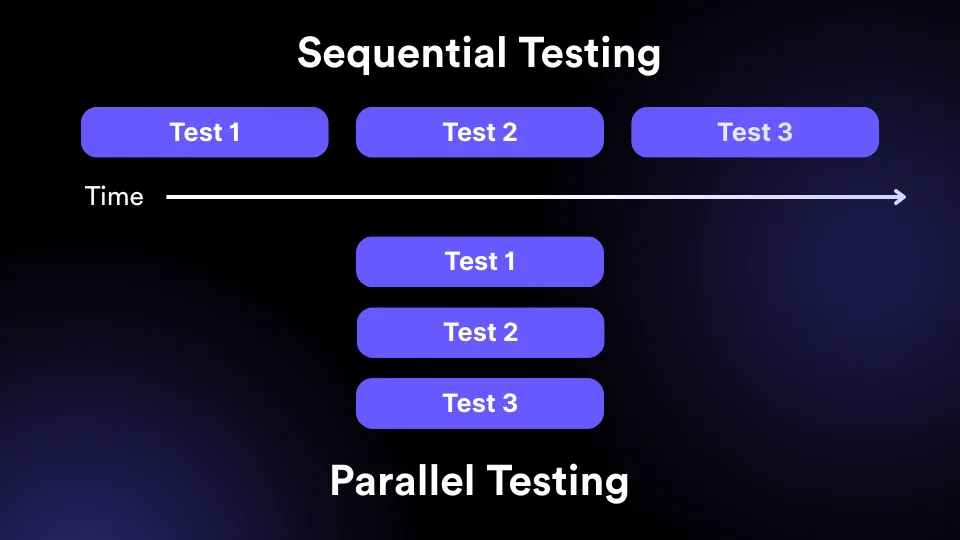
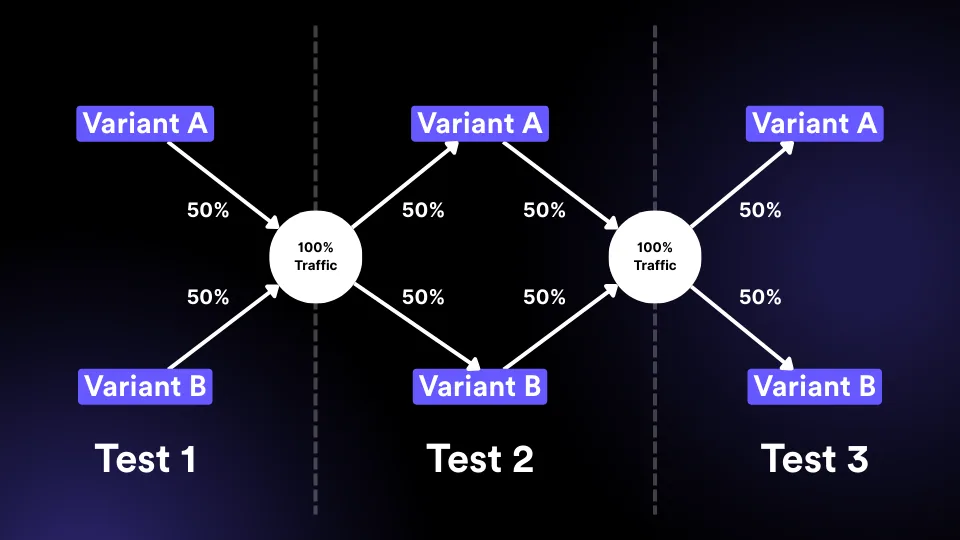
| Parallel tests | Parallel tests on the same traffic with optional exclusion groups | “There is no limit”; automatic mutual exclusion by test type |
| A/A tests, holdout, feature flags | A/A tests, global holdout, feature flags and staged rollouts | Feature flags, holdouts: none found |
Where Shoplift can do something Apex cannot: price tests. Shoplift tests prices on its Advanced and Pro plans and subscription prices through Recharge 2.0. Price tests are not among the test types Apex documents, so if price testing is the main job, Shoplift covers it and Apex does not.
Where Apex can do something Shoplift does not document: A/A tests, a global holdout, feature flags and staged rollouts.
04How do tests get built and launched?
Shoplift
Shoplift has no editor of its own. Variants are edited in the Shopify Theme Editor, or in Liquid or JavaScript. Lift Assist™ inserts a theme section styled with the shop’s Brand Styles; Shoplift notes that it “does not automatically add content to this section”. Before launch there is a preview mode and a QA checklist. A public API, pitched as “Command Your CRO Program From Claude or ChatGPT”, works over “plain HTTP”. We found no MCP server.
Apex by DRIP
Apex keeps the experiment config as code and offers a code editor and a visual builder called Operator. CLI preview links and QA via preview let you check a variant before it goes live, and four QA checks are shown to clients: all devices, tracking and targeting, responsive, and matches design. An MCP connection lets a shop owner build and read tests from ChatGPT or Claude without a terminal; the CLI is the developer path. With managed execution, tests are built, checked, launched and read together with the DRIP team.
05How are winners chosen before launch?
This is the main difference between the two tools. Ronny Kohavi puts the industry baseline win rate at 10 to 20 percent, so the order in which you test decides how much a program returns from the traffic you already pay for.
Apex: Likelihood to Win
Apex calls its method Prediction-Based Experimentation. In plain words: we know what shops like yours tested and which tests won. Every test idea gets a Likelihood to Win before launch, one percent figure per idea, shown with how many tests back it. The figure comes from the test memory: 4.3 million A/B tests from 151,000 shops, collected since 2011.
Does the ranking hold? In a holdout check, within a shop, the top third of ideas won 1.4 to 1.6 times as often (DRIP press release, September 29, 2026; vendor-stated). In early September 2026, predictions for 33 brands were scored and frozen. We publish the first results from November 2026.
Shoplift: Lift Assist™ and recommendations
Shoplift describes Lift Assist™ as “Shoplift’s recommendation engine which dynamically provides theme sections”. On training data, Shoplift says it “analyzes millions of shopper sessions to recommend what converts” and “Leverages your brand and test ideas from hundreds of top brands”. We found no published win prediction per test idea.
Apex scores each idea against 4.3 million observed A/B tests from 151,000 shops and shows how many tests back each score. The nearest published figure in this comparison is Kameleoon’s Ideate, trained on more than 20,000 experiments; Varify cites 10,000 or more test patterns; no other vendor in this comparison publishes a count of tests behind its recommendations (vendor pages checked October 2026).
06What statistics do they use and what gets measured?
Shoplift uses “Bayesian statistical methods”, and its main metric is “Probability to Win”. A result has to hold “for multiple days” before it gets a stage: Leaning, High Confidence, Clear Winner, or No Change after two weeks. As a guideline, Shoplift names “at least 10,000 visitors per variant and 14 days”. Metrics include revenue, orders, cart adds, and one-time versus subscription orders, with revenue per visitor as a goal. We found no profit metrics, sample ratio checks, holdouts or automatic stops.
Apex uses fixed-horizon statistics with confidence. Each test shows the main metric, lift and revenue over its runtime. On Shopify, Apex also reports profit per test: you can optimise for profit, with discount share, refund share and profit per sale. Guardian stops a test automatically when it crosses a revenue loss threshold.
If you sell with heavy discounts or high return rates, a variant can raise revenue and lower profit. That is the case for measuring profit per test.
Heat maps and behaviour
Apex shows heat maps and behaviour per variant: clicks, scroll depth, average fold and funnel steps. Shoplift has no native heat maps or recordings; it integrates with Heatmap.com, Hotjar and Clarity.
07What do Apex and Shoplift cost?
Shoplift bills on site-wide monthly unique visitors, “not tested visitors”, through Shopify every 30 days. If a shop goes over its visitor limit, tests pause. All plans come with a 14-day trial. There is no free tier, and setup fees are not published.
| Visitors per month | Core (monthly / annual) | Advanced (monthly / annual) | Pro (annual only) |
|---|---|---|---|
| Up to 50k | $99 / $74 | $399 / $299 | $699 |
| 50k to 100k | $199 / $149 | $399 / $299 | $699 |
| 100k to 250k | Not offered | $599 / $449 | $699 |
| 250k to 500k | Not offered | $799 / $599 | $999 |
| 500k to 1M | Not offered | $999 / $749 | $1,499 |
| Above 1M | Not offered | Custom | Custom |
Annual prices are per month. The price-testing feature sits on Advanced and Pro. One conflict on Shoplift’s own site: the pricing page text shows Advanced monthly at “$299 /mo.”, while the page code and Shoplift’s September 2025 pricing update say $399. Pro adds a dedicated account manager and “Twice monthly strategy sessions”.
Apex does not publish its pricing. A card-free free tier for one store exists, and the way to a plan is to book a call. That is a real limitation if your buying process needs a published price list before the first conversation.
08Where is the data hosted and how is compliance handled?
Shoplift’s privacy policy says data “is transferred to and processed in the United States”. Shoplift acts as processor and the merchant as controller, under a DPA with EEA standard contractual clauses (Module 2) and the UK IDTA. Consent runs through Shopify’s Customer Privacy API; if a visitor declines, “no visitor data is collected, logged, or stored”. Conversions are tracked “using server-side methods” through Shopify’s Web Pixel API. We found no ISO 27001 or SOC 2 certification and no public subprocessor list.
Apex has GDPR in place and hosts in the EU plus UK, with DPAs for US tools. ISO 27001 and SOC 2 are in progress, not certified. Apex uses server-side tracking and first-party data, and supports the consent apps of most Shopify GDPR apps.
If your legal team requires EU hosting, that difference matters more than any feature row.
09When is Shoplift the better choice?
- You want to test prices. Shoplift tests prices on Advanced and Pro in single-currency stores, and subscription prices through Recharge 2.0. Price tests are not among the test types Apex documents.
- Your team works in the Shopify Theme Editor. Shoplift variants are edited there, with no separate editor to learn.
- You need a published price and a trial first. Shoplift publishes its plans from $99 a month and offers a 14-day trial on all plans (checked October 2026). Apex does not publish its pricing.
10When is Apex the better choice?
- Your tests keep coming back flat. The constraint is choosing which tests to run, not building them. Every idea gets a Likelihood to Win from 4.3 million A/B tests from 151,000 shops before anything is built.
- You want profit and behaviour per variant in one place. Apex shows profit per test on Shopify, heat maps and behaviour per variant, and Guardian stops a test automatically at a revenue loss threshold.
- You want the program run with you. With managed execution, tests are built, checked, launched and read together with the DRIP team.
Apex is not the right choice for everyone. A team that already picks winning tests well gets less from the prediction layer. A shop that cannot ship a test a week yet should build that habit on a lighter tool first; buying prediction before you can execute is the wrong order. And anyone who needs a published price list before a conversation will not find one.
11Apex vs Shoplift: which should you choose?
If you already know which tests to run and want to ship them inside your Shopify theme at a published price, Shoplift is built for that. If price testing is the job, Shoplift has it and Apex does not document it. If your tests keep coming back flat, the constraint is choosing which tests to run, and Apex scores every idea before anything is built. If EU hosting or profit per test is a requirement, Apex documents both and we found neither for Shoplift.