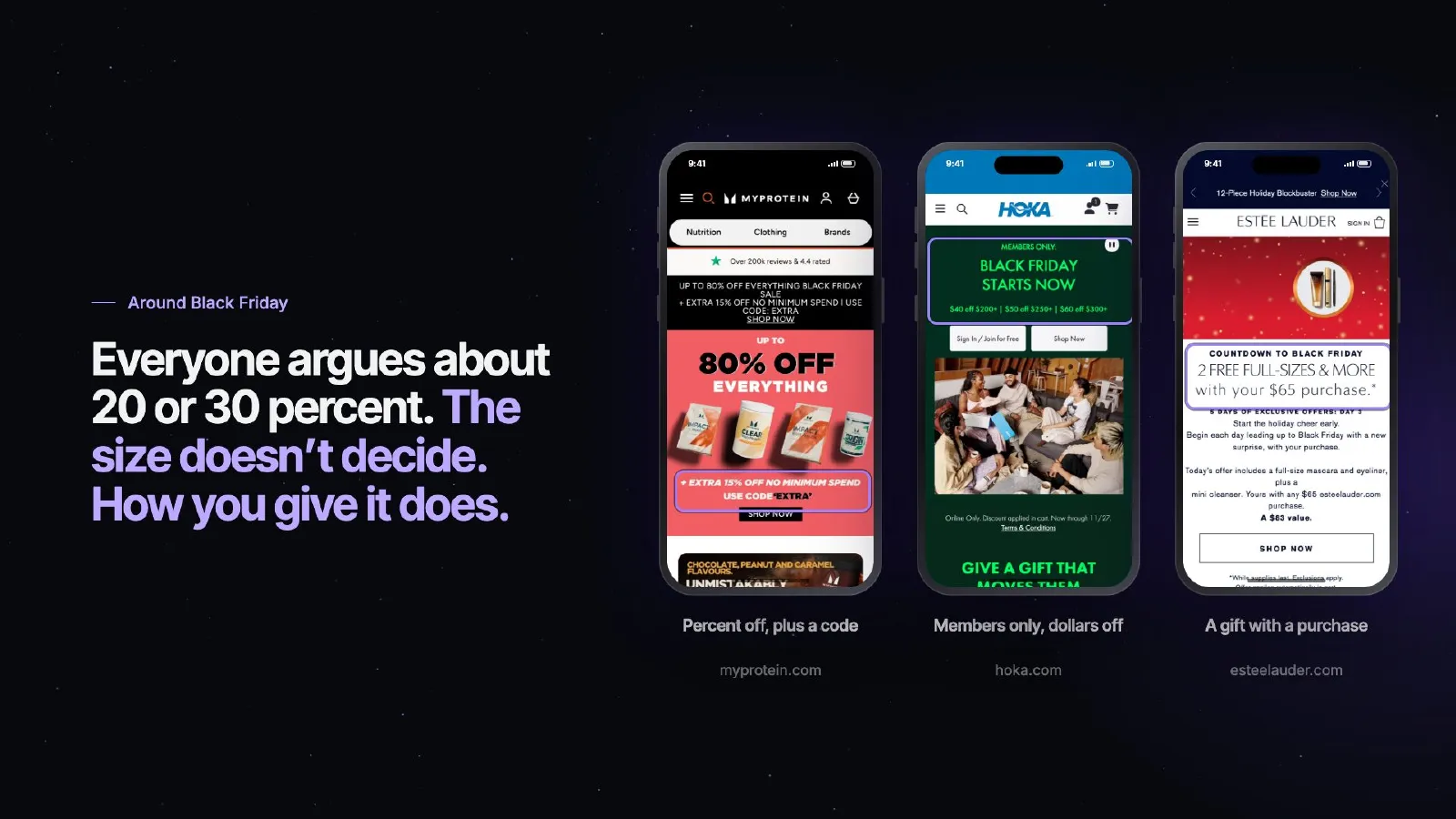
Everyone argues about 20 or 30 percent. The size does not decide much; how you play the offer does. Six decisions, from 4.3 million A/B tests and our own tests.
Mechanics first, then the size. In our database, shops keep a discount with a code more often than the same discount applied automatically, early access for members more often than a sale for everyone, a gift more often than free shipping, and an offer that names its price more often than one that says "free". The discount size shows no clear pattern.
01Which version would you run on Black Friday?
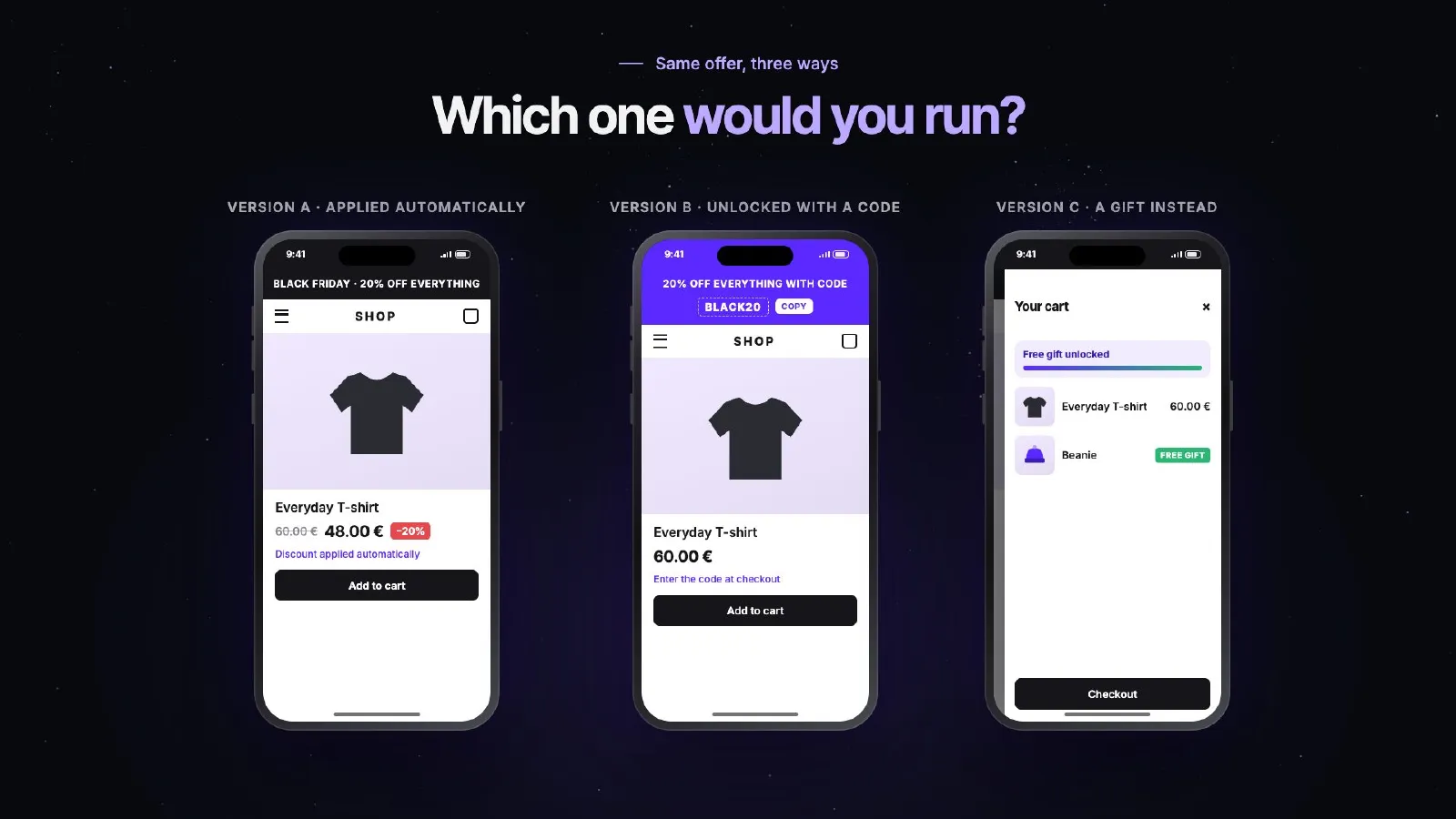
Version A takes 20% off automatically, version B unlocks 20% with the code BLACK20, version C gives a gift instead of a discount. Almost one new A/B test in three is a Black Friday or offer test, but few ask which mechanic works.
The full talk, in German (14 minutes).Three versions of the same offer.
The automatic discount is the most practical for many: no codes, no stacking rules. I see a gift at more and more brands, and I am a fan myself. If you run a no-discount policy, a free gift makes a lot of sense on Black Friday: it is not a discount, your brand does not suffer, and you still have a deal.
The size does not decide. How you play it does.
So think first about what people actually want. Ideally run an offer a few weeks before and test, for example a goodie bag against a different gift.
02What six decisions sit in one offer?
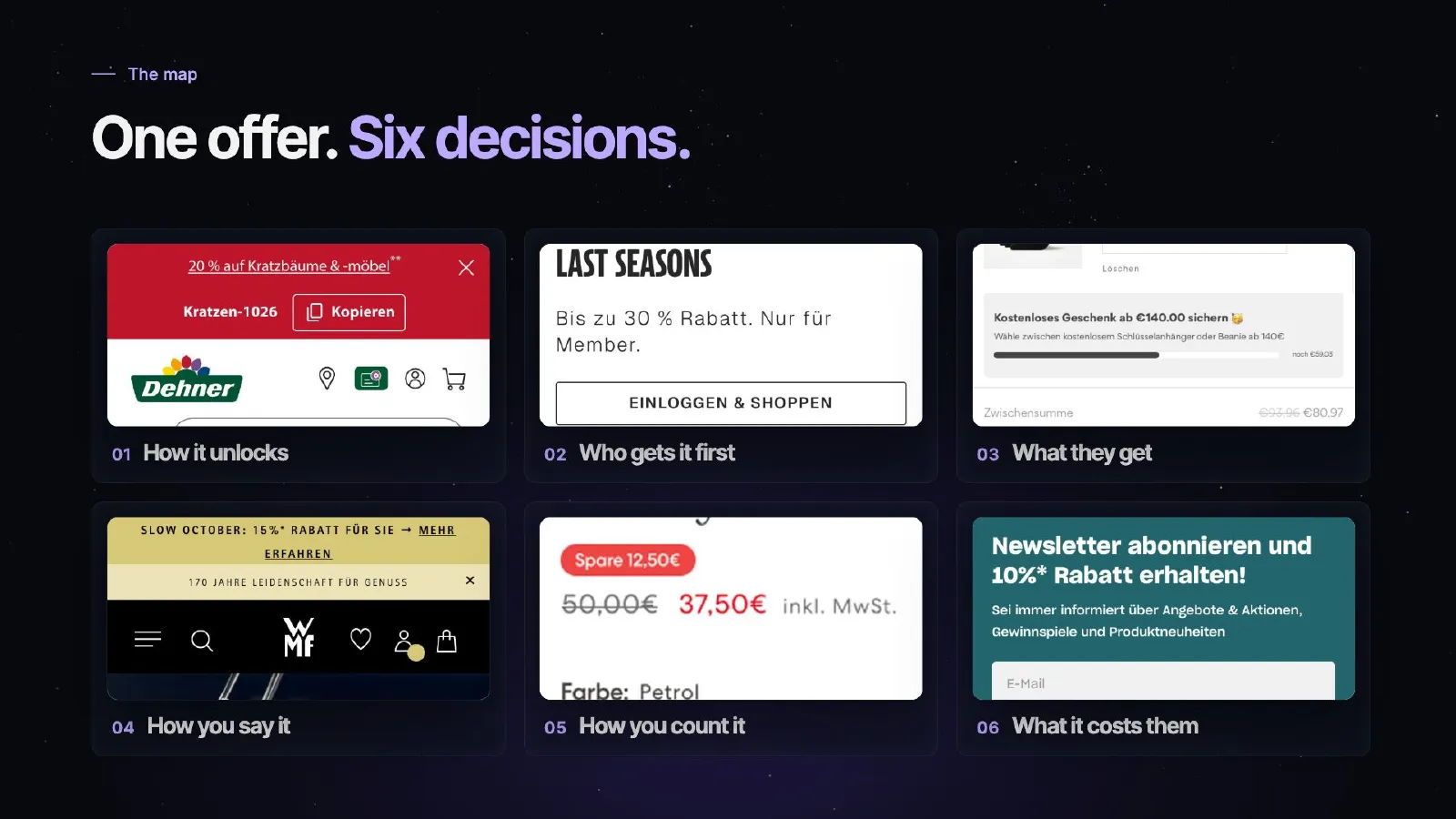
How it unlocks, who gets it first, what they get, how you say it, how it is counted and what it costs the customer. Write them down: these are the six things you decide for Black Friday.
One offer. Six decisions.
03Code or automatic discount?
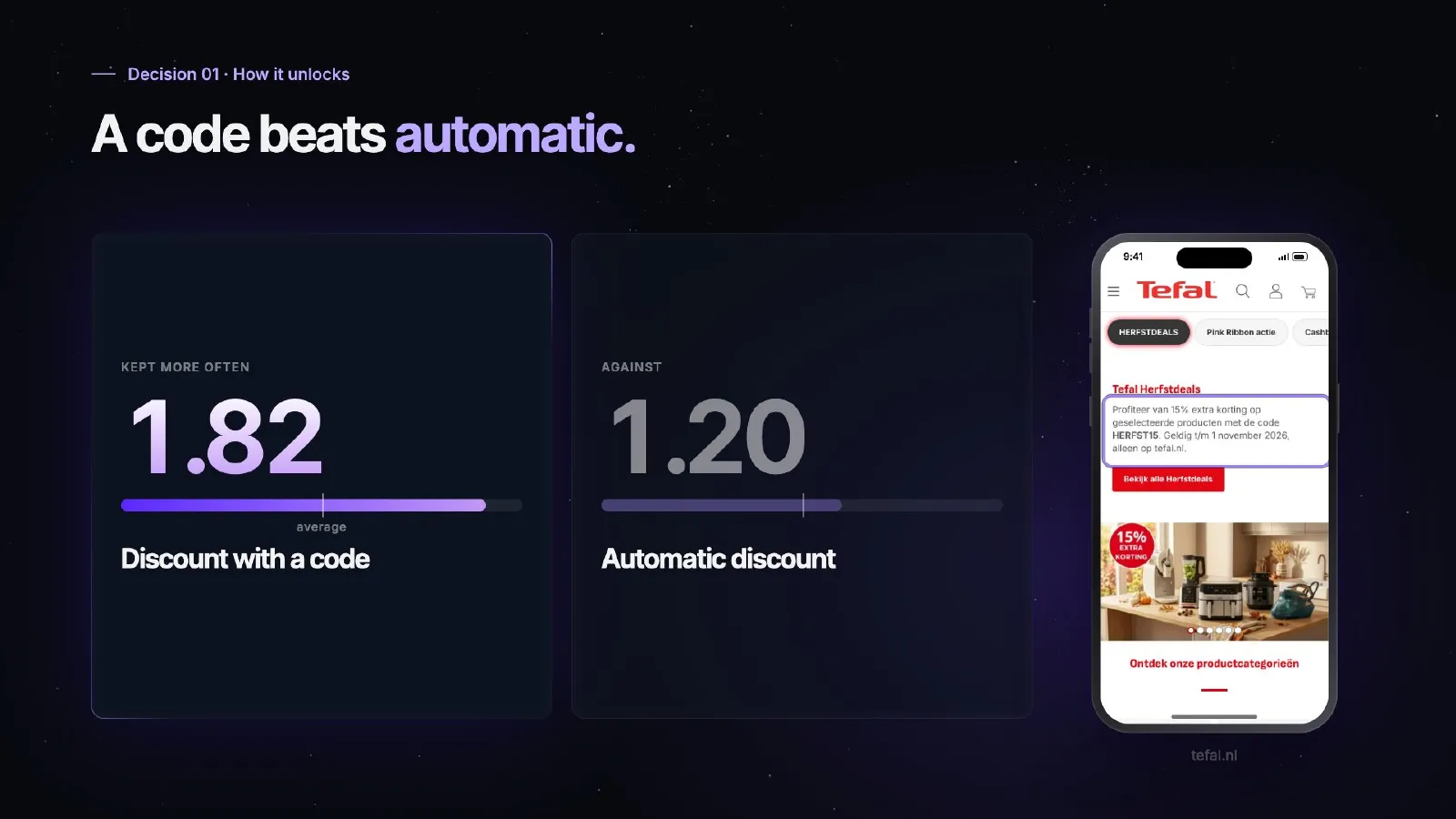
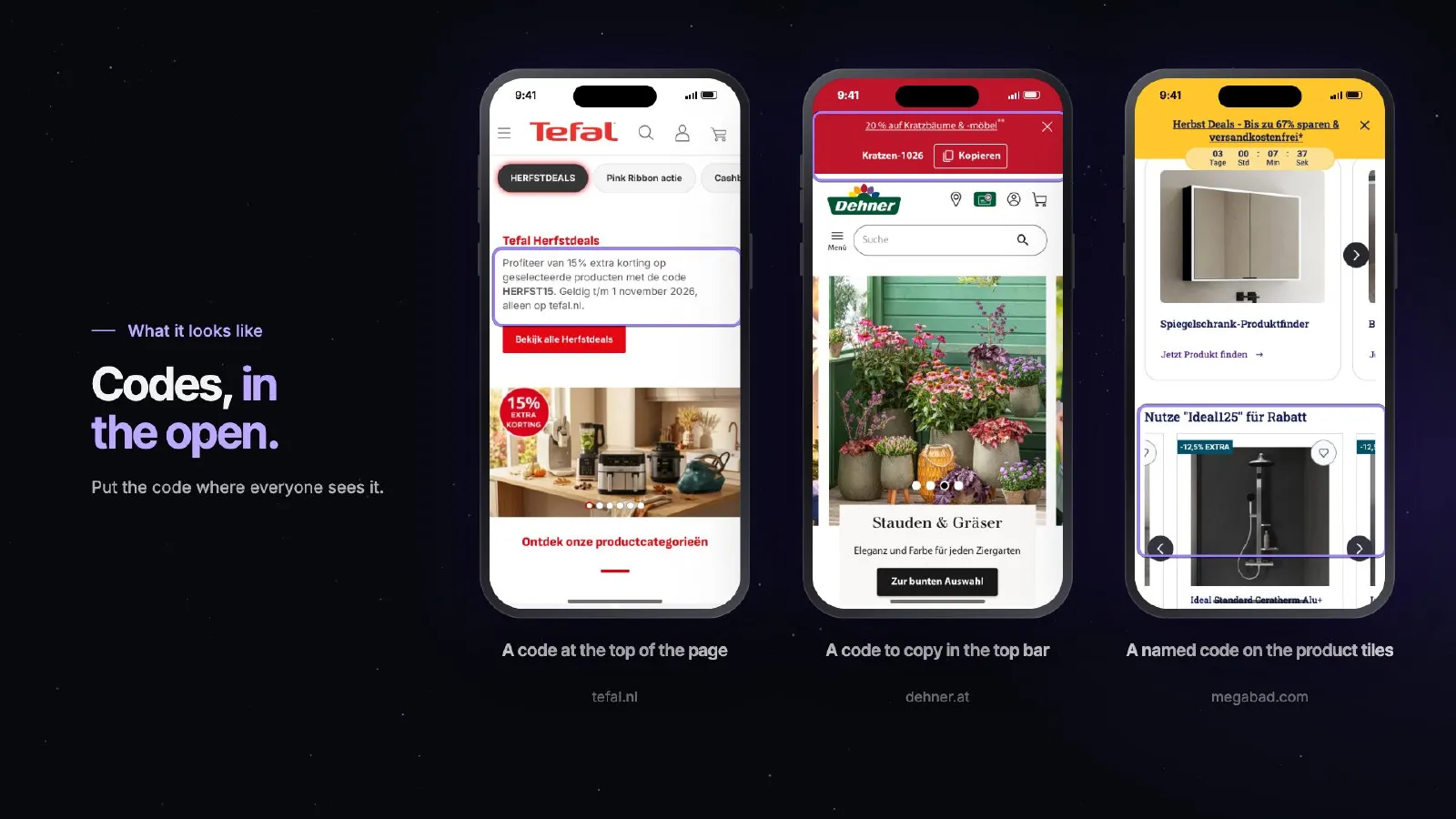
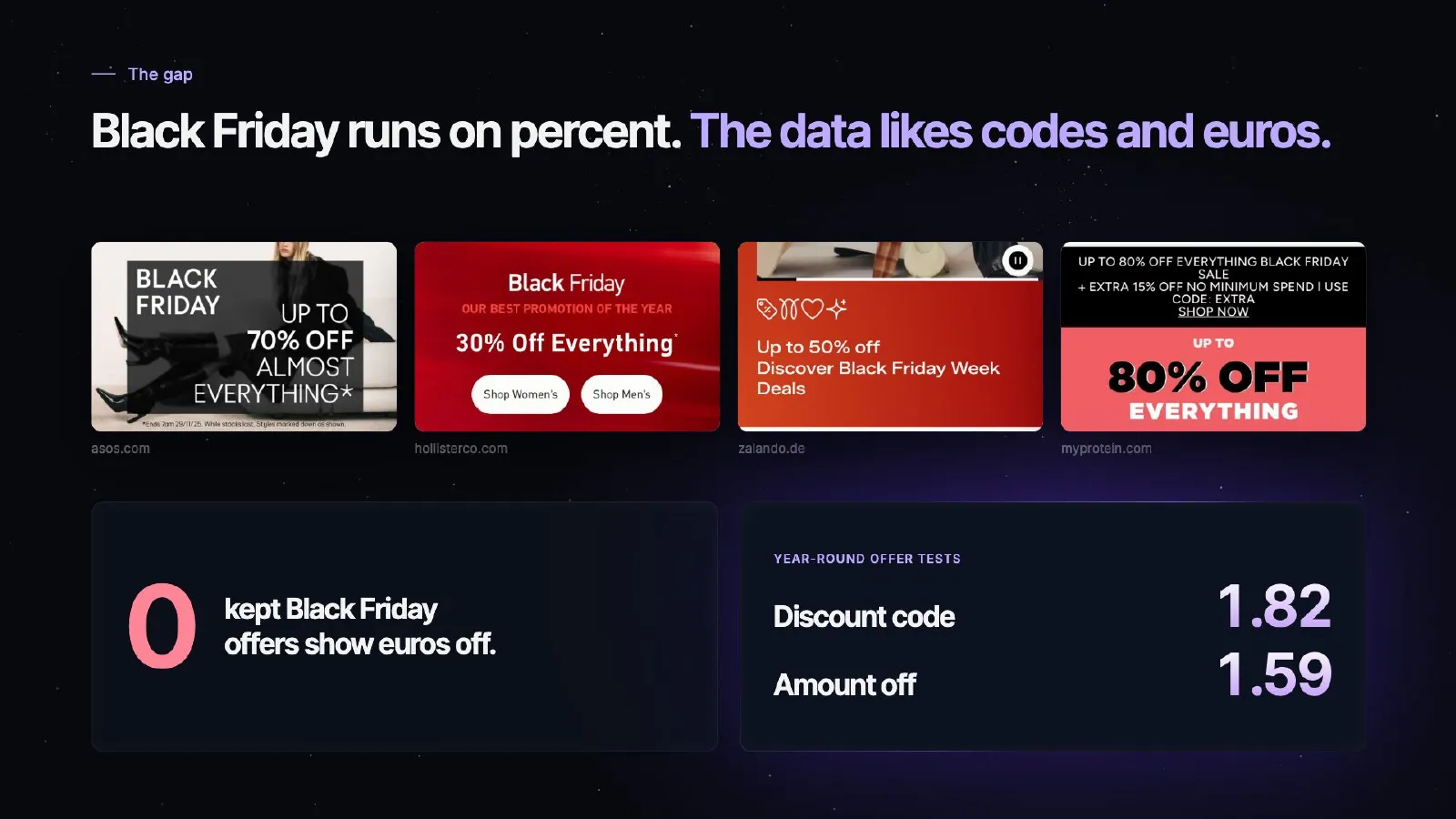
A code. A discount triggered by a small step like a promo code is kept more often than the same discount applied automatically: 1.82 against 1.20 compared with the average test. As long as the offer does not get too complex.
A code beats the automatic discount.Make codes easy to see.
The biggest problem is usually not whether you follow best practice, but that it is too complex. Everyone understands that a code gets them 20%. But which code, and where do I type it? Make it visible, copyable, put it in the headline, and place it again in the cart.
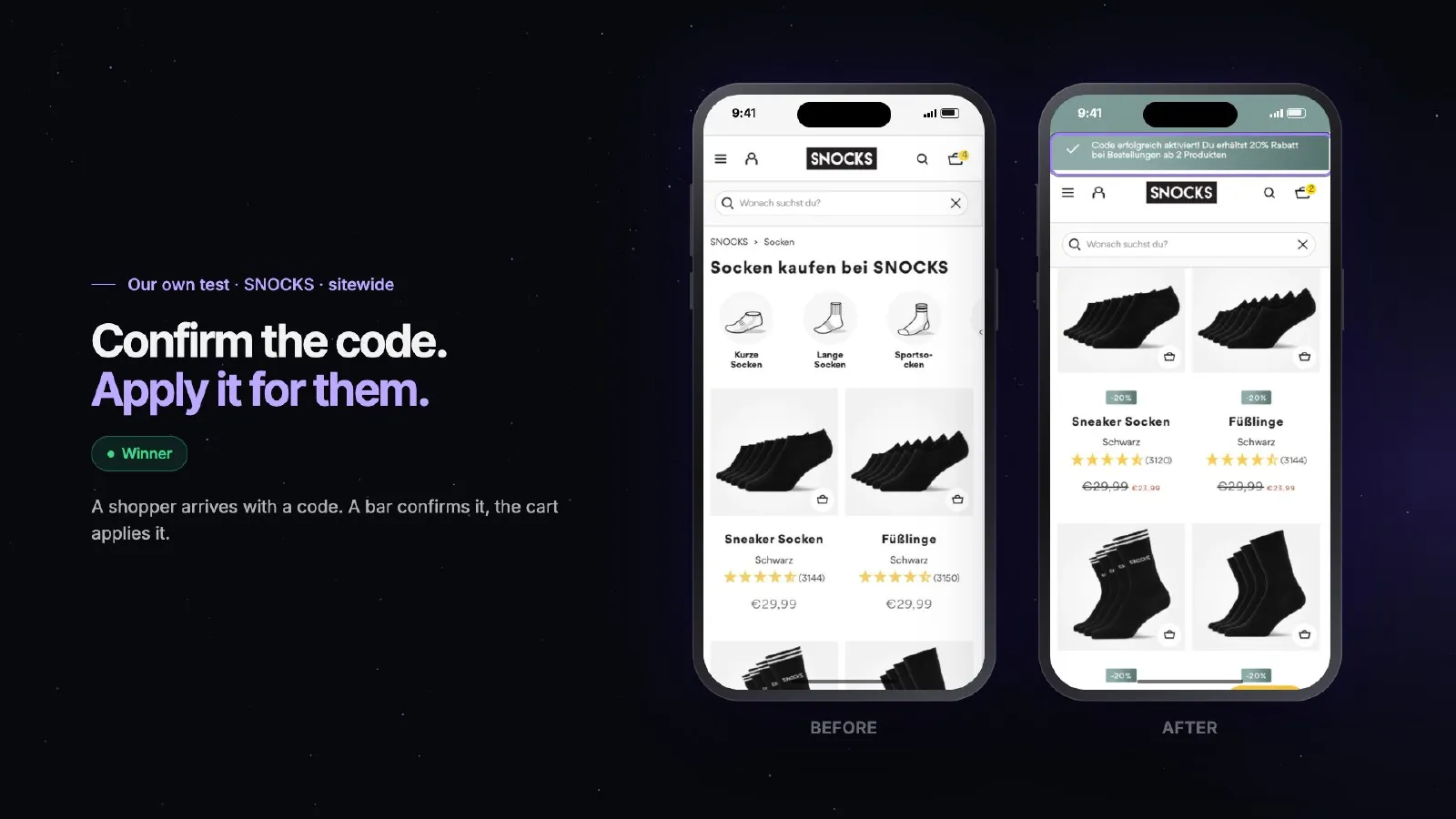
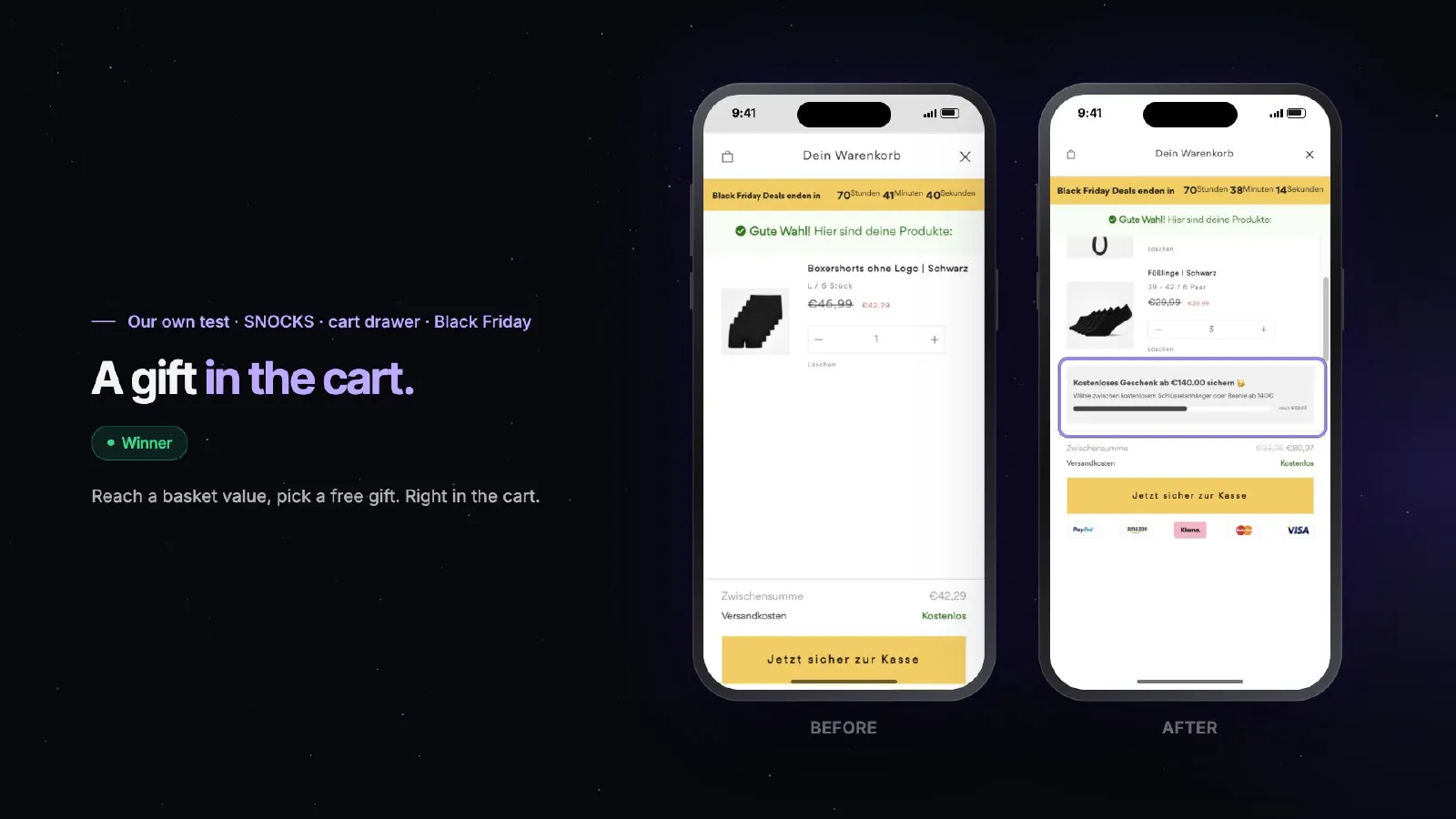
Our own test: confirm the code and apply it. Won.
04Who gets the offer first?
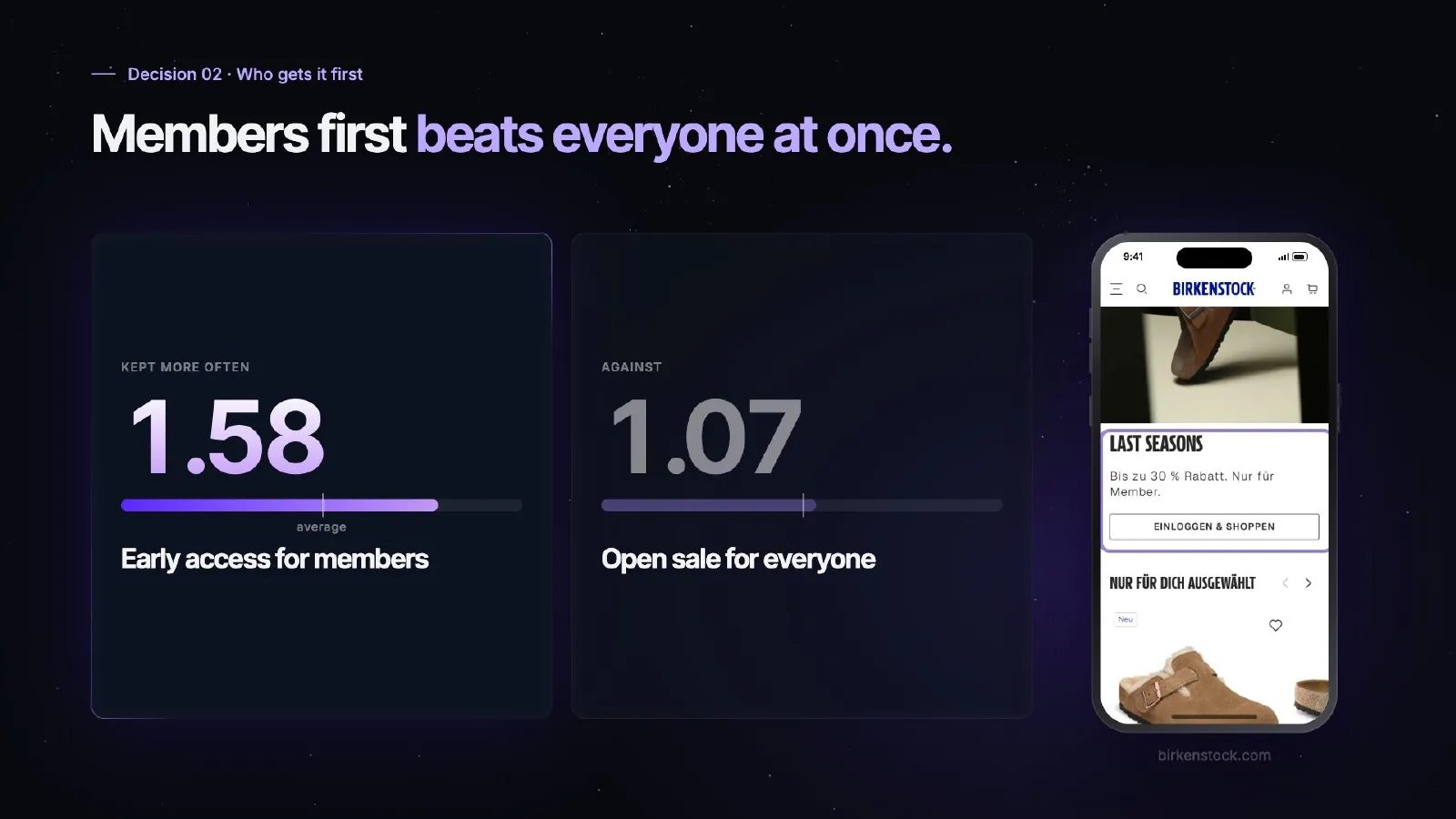
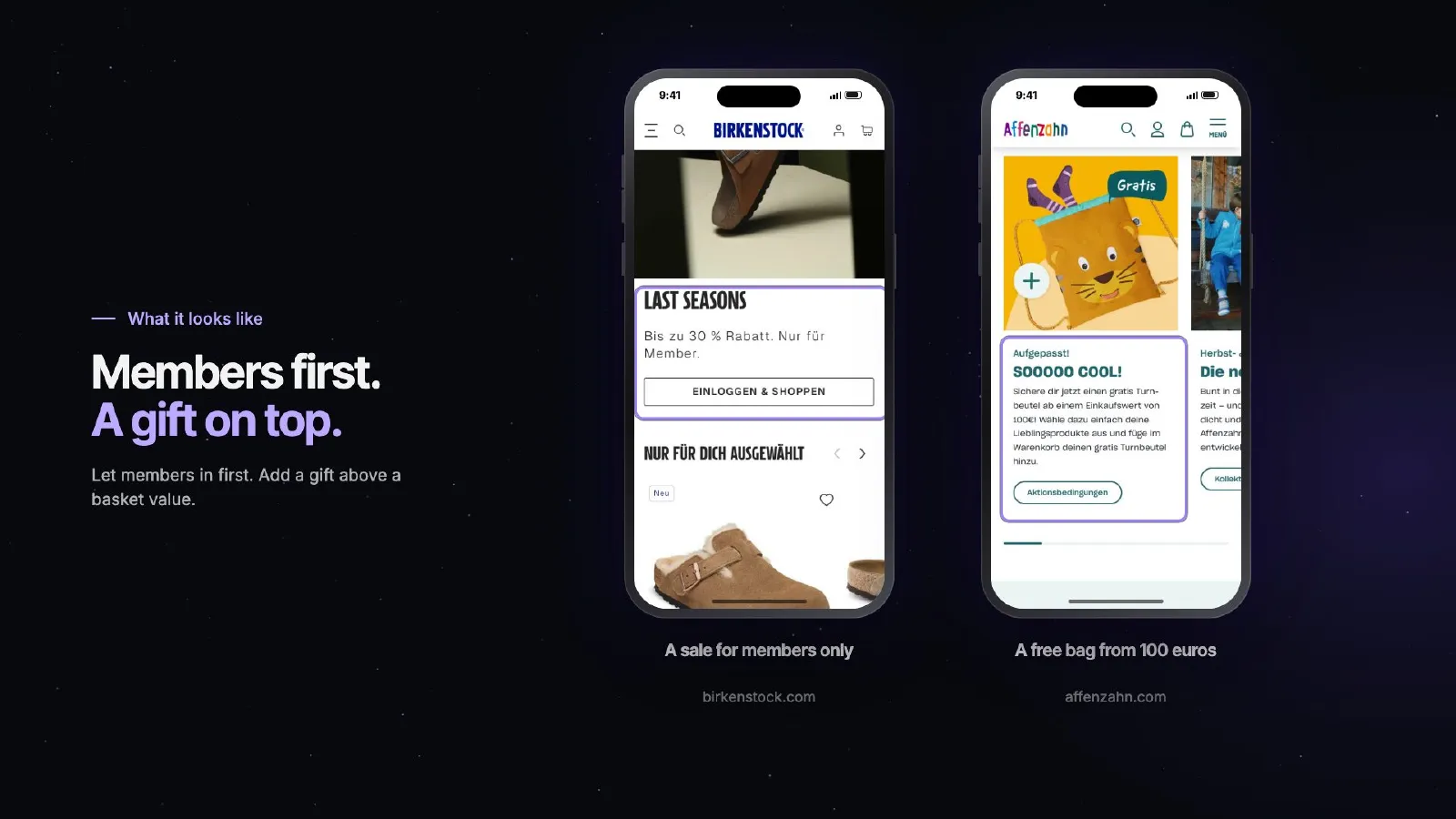
Your members. Early access for members is kept more often than the same sale for everyone: 1.58 against 1.07. Exclusive feels better, and you collect email addresses you keep using afterwards.
Members first beats the sale for everyone.
05Gift, discount or free shipping?
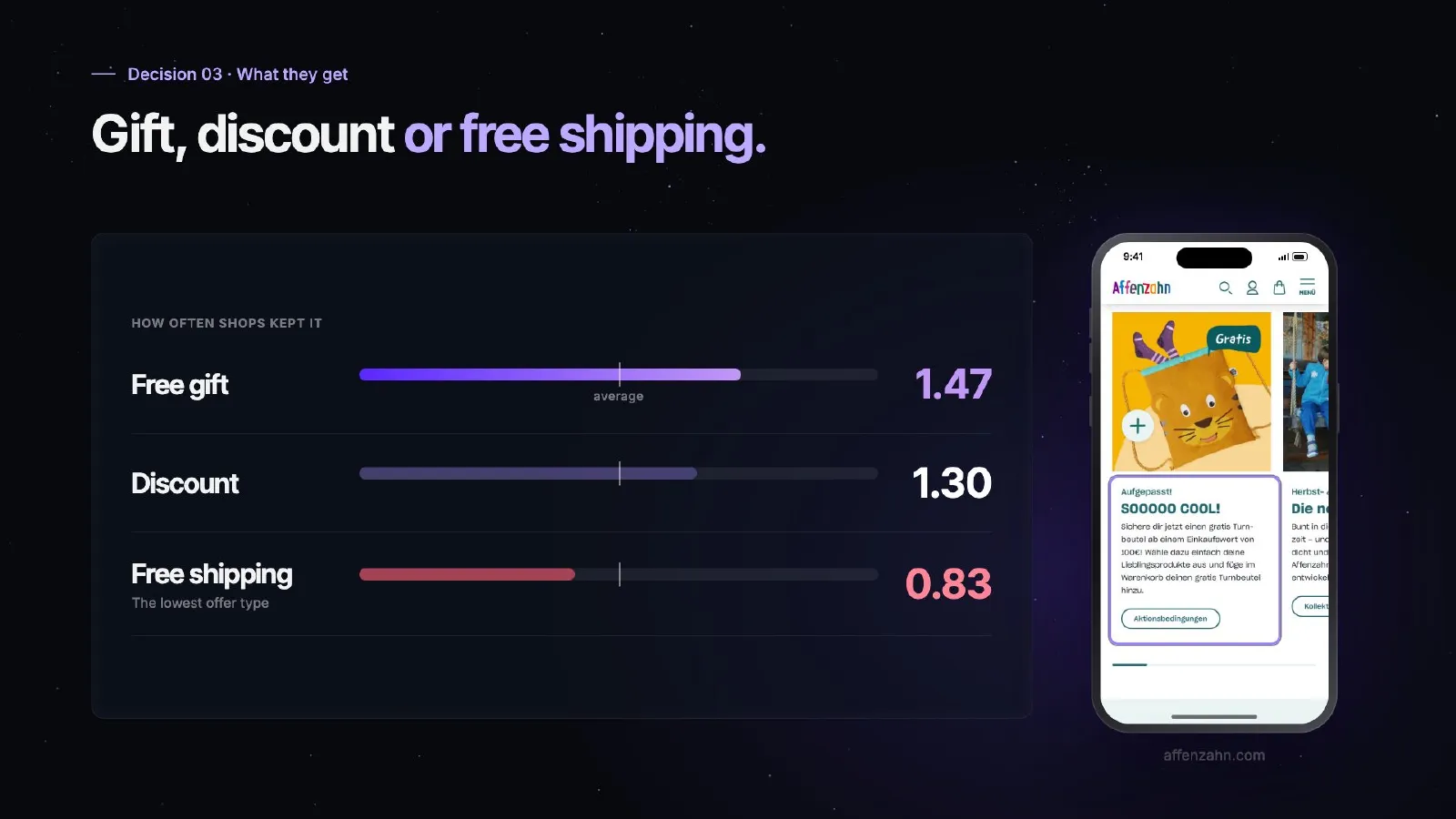
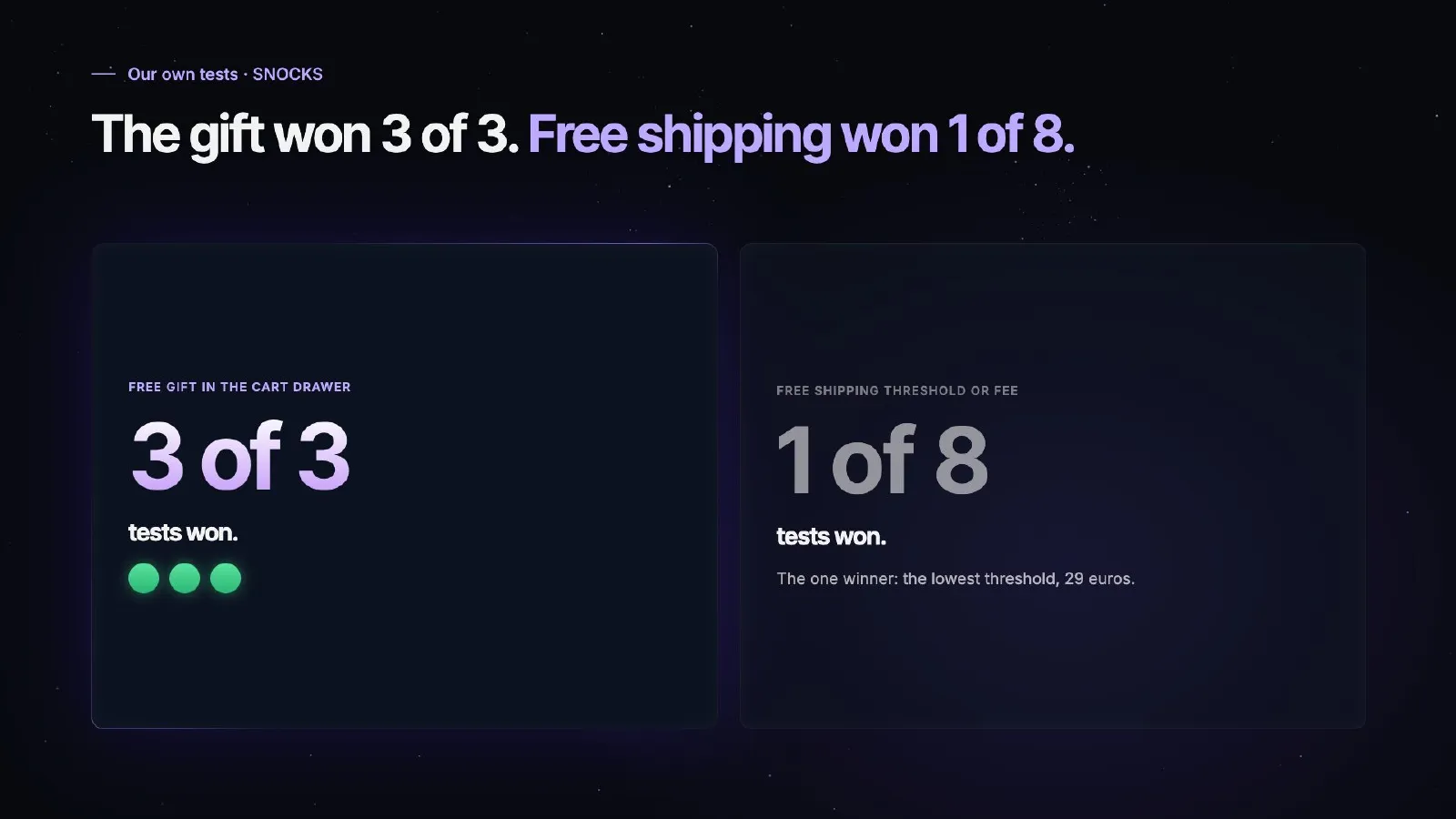
A gift is kept most often (1.47), a discount next (1.30), free shipping least (0.83). In our own tests a gift in the cart won 3 of 3, a free shipping threshold 1 of 8.
Gift, discount or free shipping.
On profit, a gift makes far more sense. A discount lowers the price, and lowering the price is the biggest lever for shrinking your profit. A gift does not lower the price; it adds maybe €2 of cost on top. If your brand is well perceived, a product that costs you little feels valuable to people.
Our own tests: 3 of 3 against 1 of 8.A gift in the cart.Examples for inspiration: a gift above a basket value.
Be a little bold with the gift, but it has to fit the brand. A free gym bag above €100 makes a lot of sense for the right brand and none for another.
06How do you word the offer?
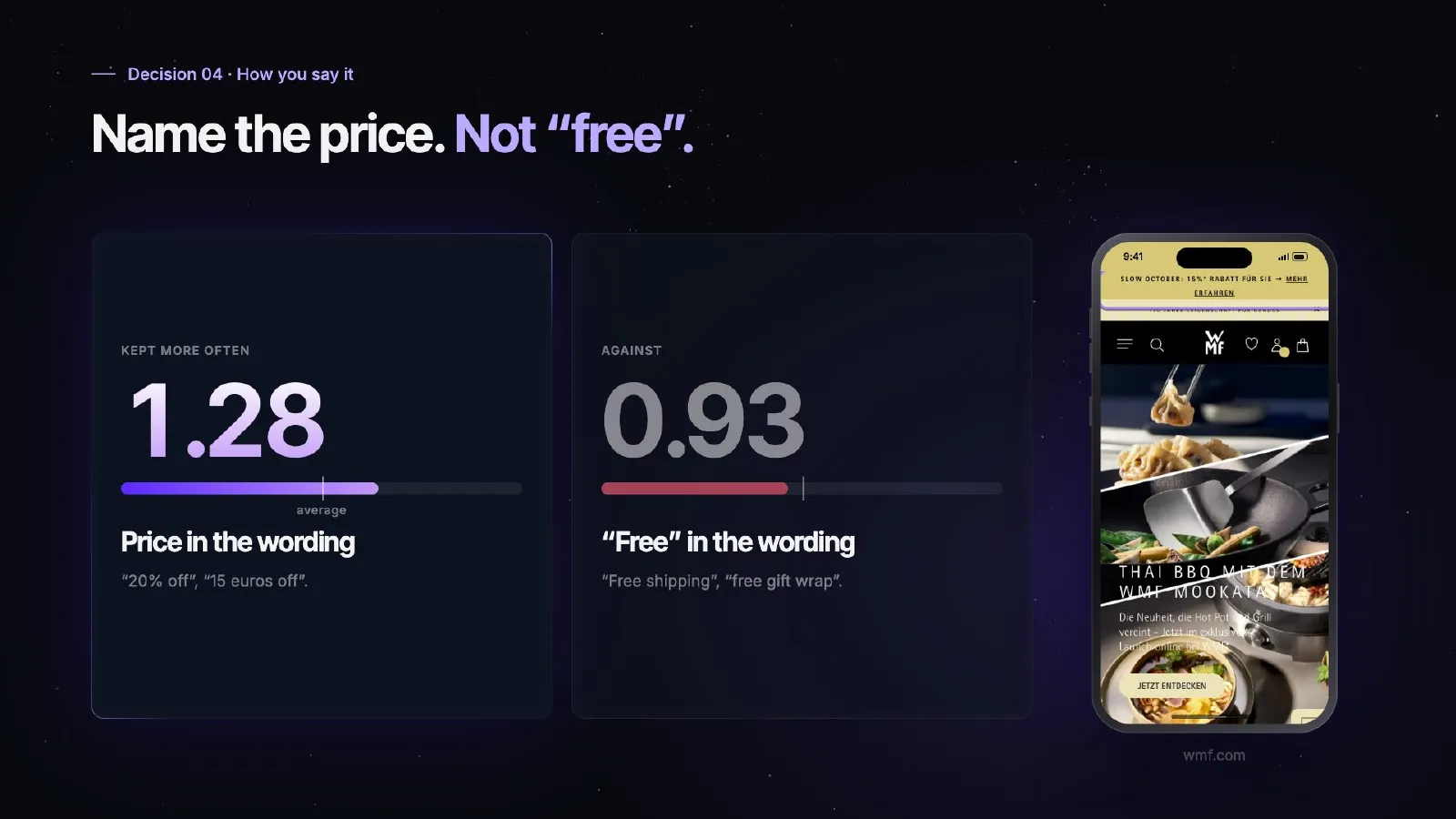
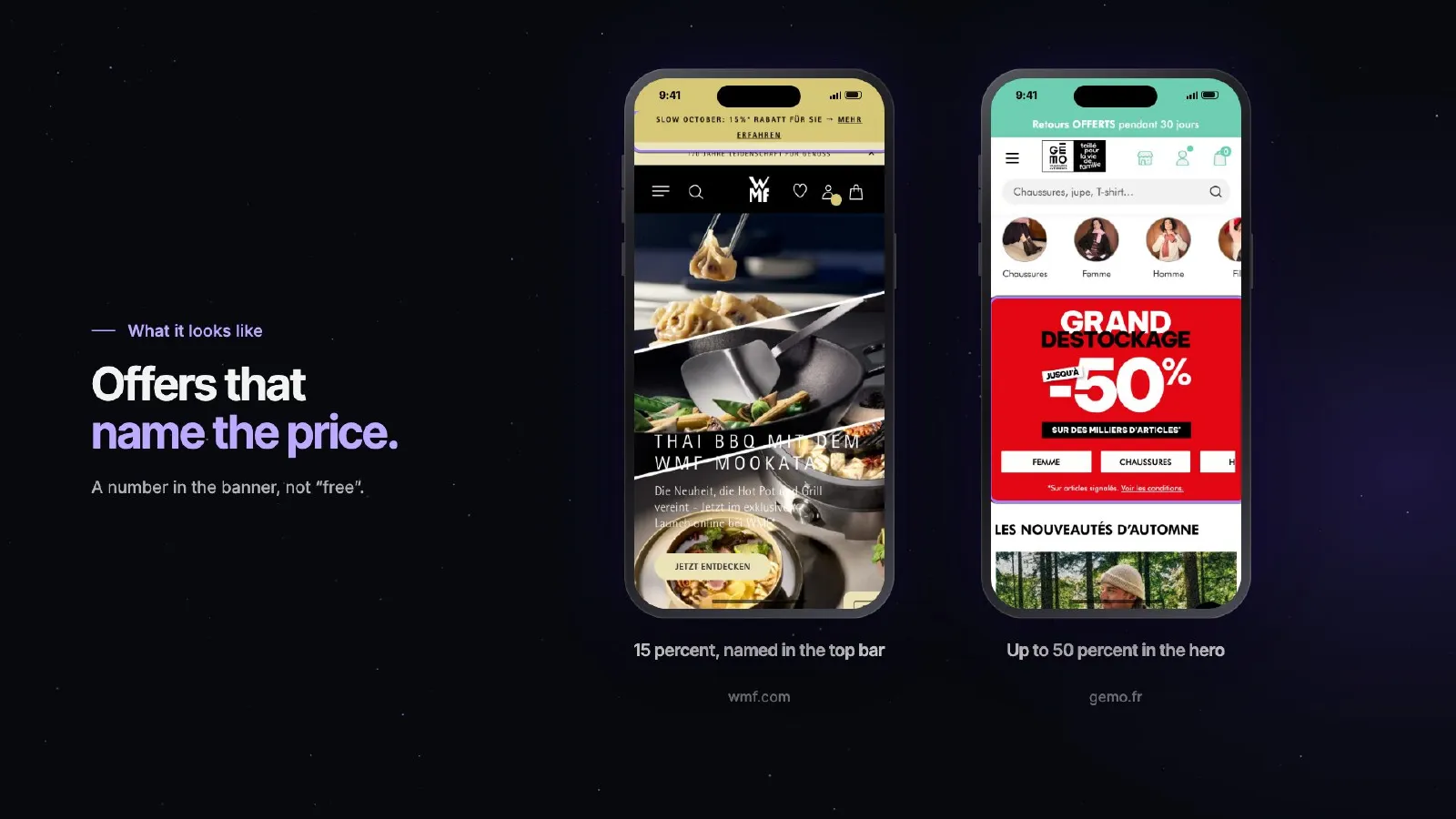
With the price, not with "free". "20% off" or "€15 off" is kept more often than "free shipping" or "free gift wrap": 1.28 against 0.93. A gift is simply a gift, not a free gift.
Name the price. Not "free".
A well-known study shows how strong the word is: when a Hershey's chocolate was free instead of 1 cent, its share rose from 27 to 69 percent, and Lindt fell from 73 to 31 percent (Shampanier, Mazar and Ariely, 2007).
What it looks like.
07Amount off or percent off?
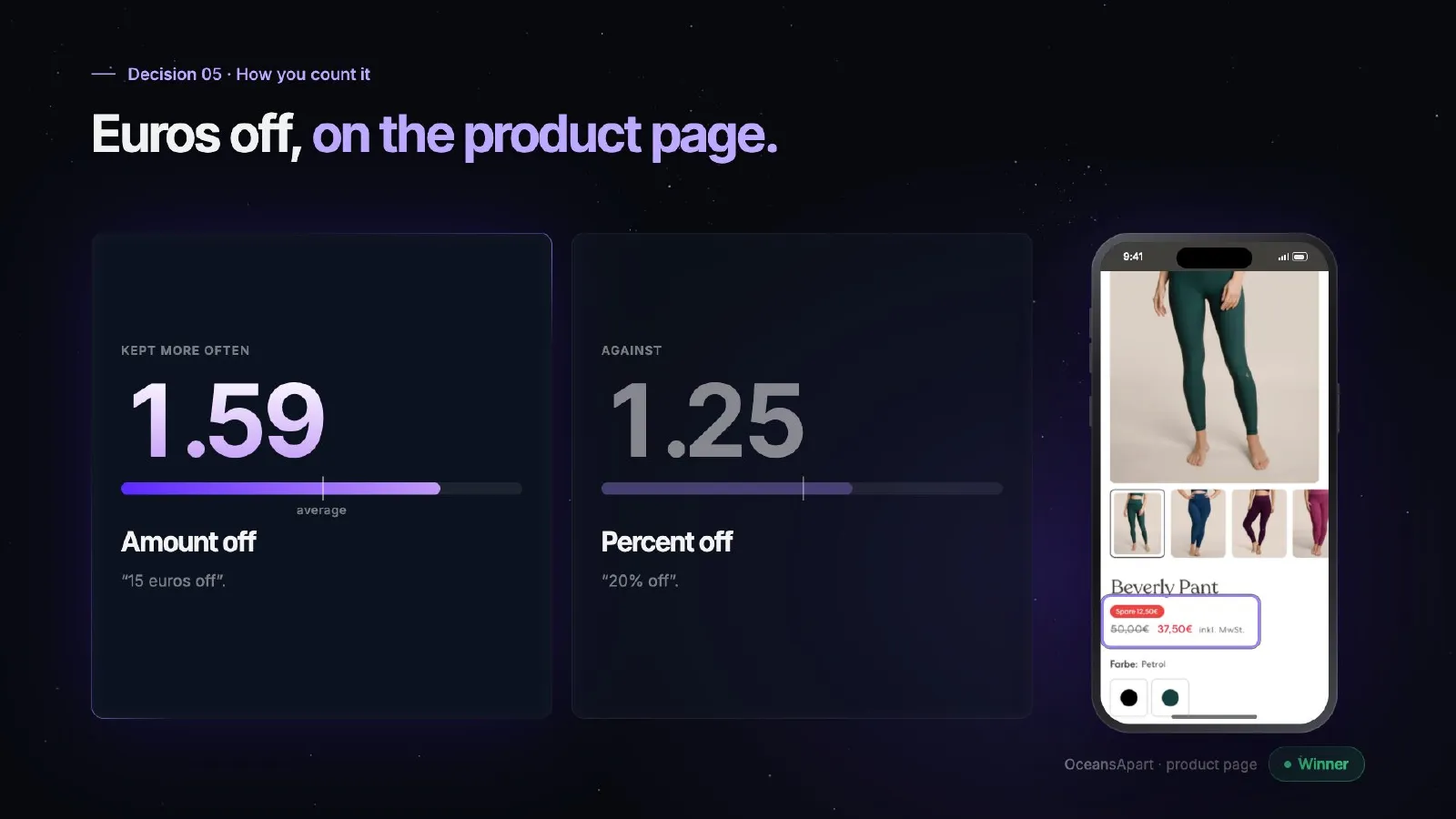
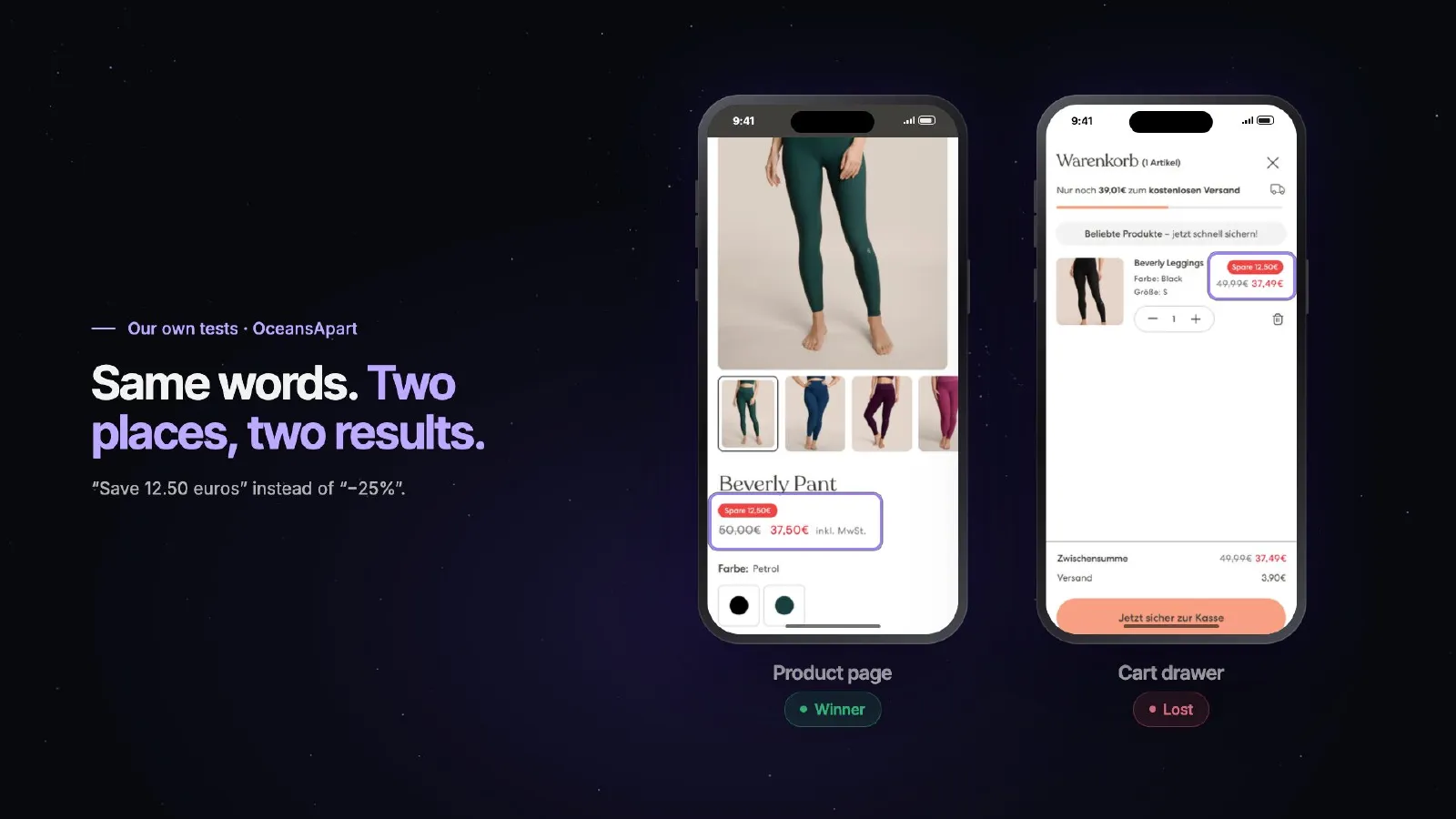
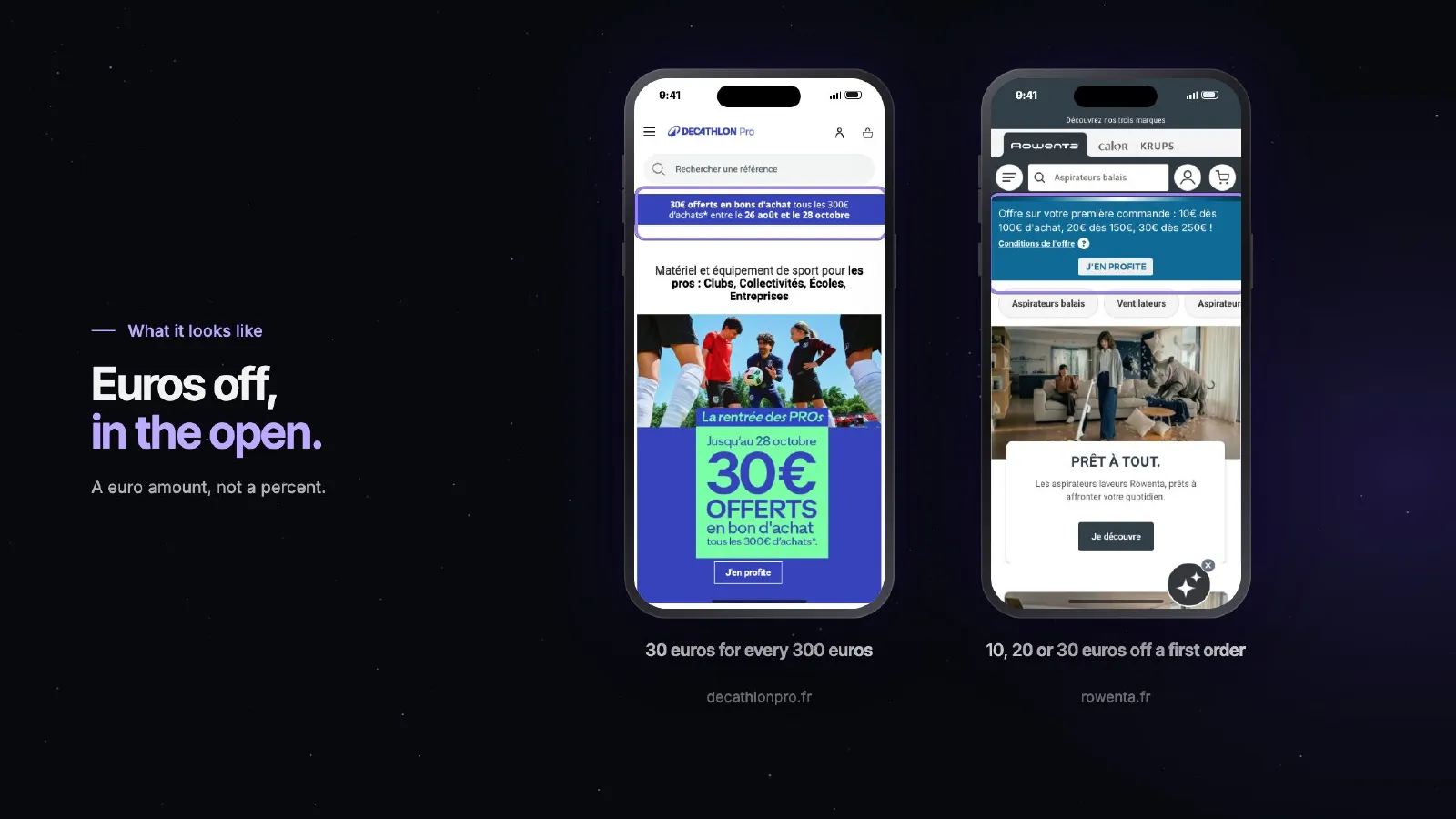
Amount off beats percent off, best shown on the product page rather than in the cart. Few shops test it yet, because it is harder with very different prices.
Amount off, on the product page.Same words, two places, two results.Amount off, easy to see.
If your products cost very different amounts, percent off is easier: €50 off does not work on a product that costs €50. For amount off, your range needs to be a bit simpler.
08What should the offer cost the customer?
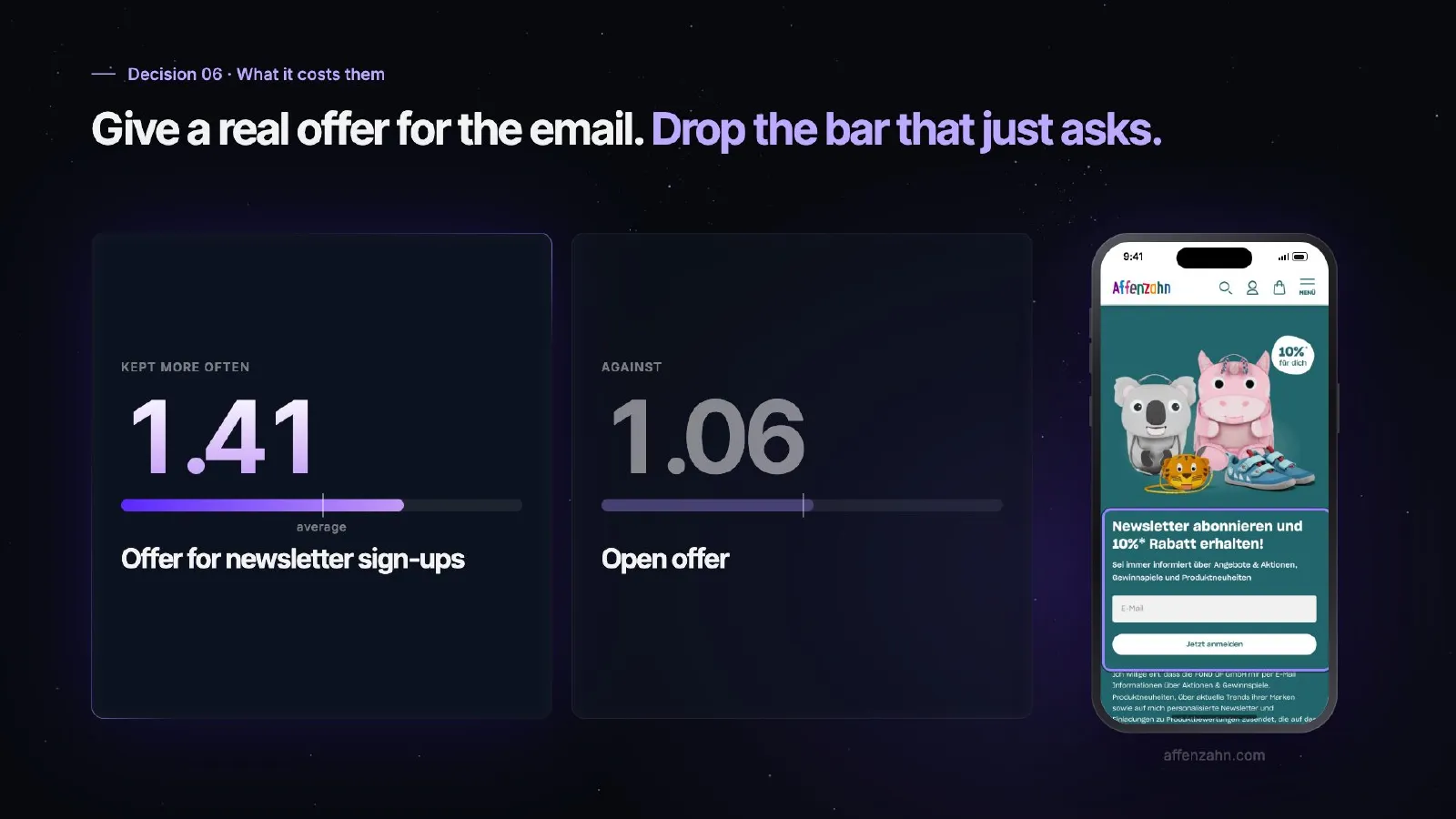
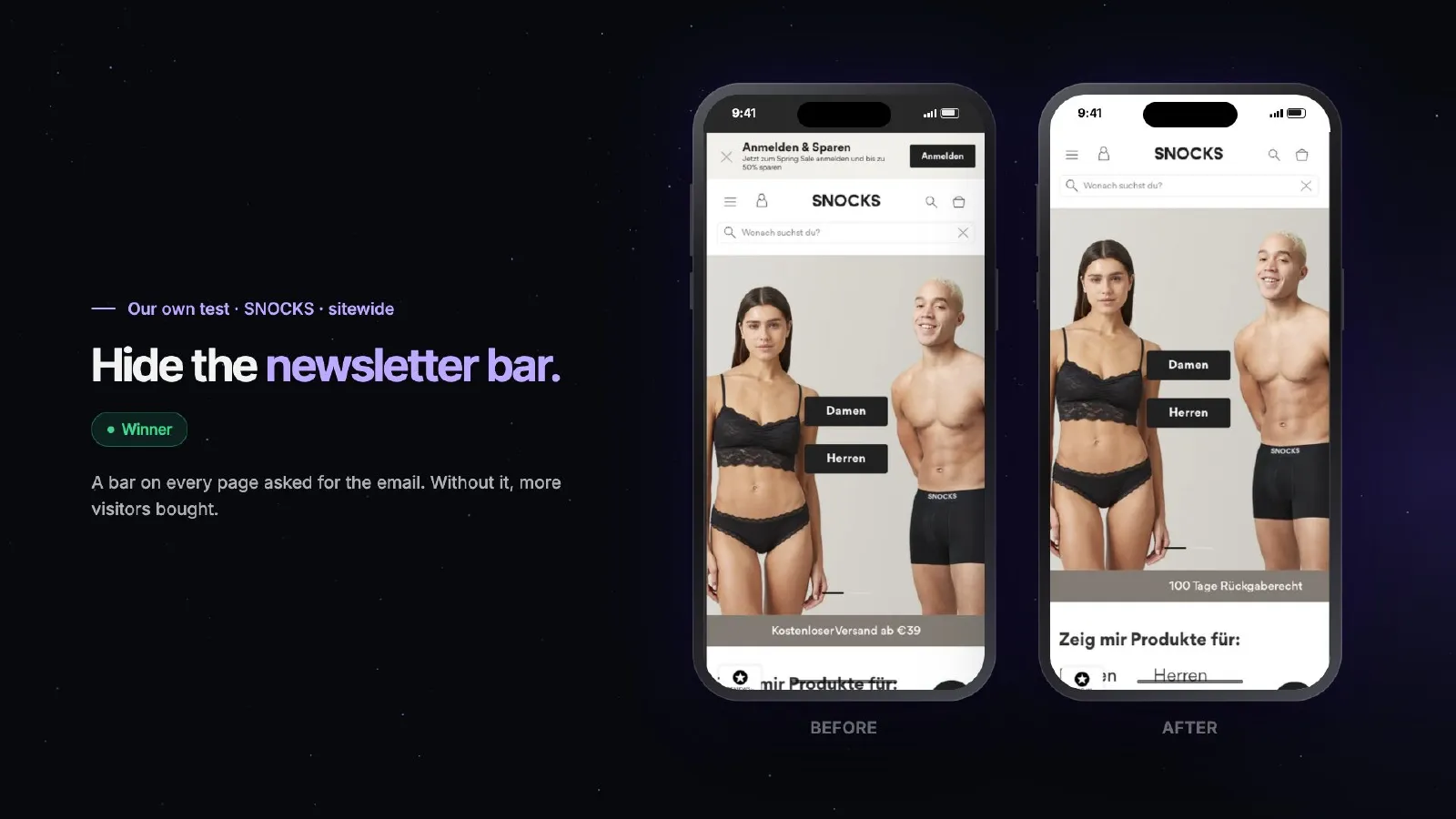
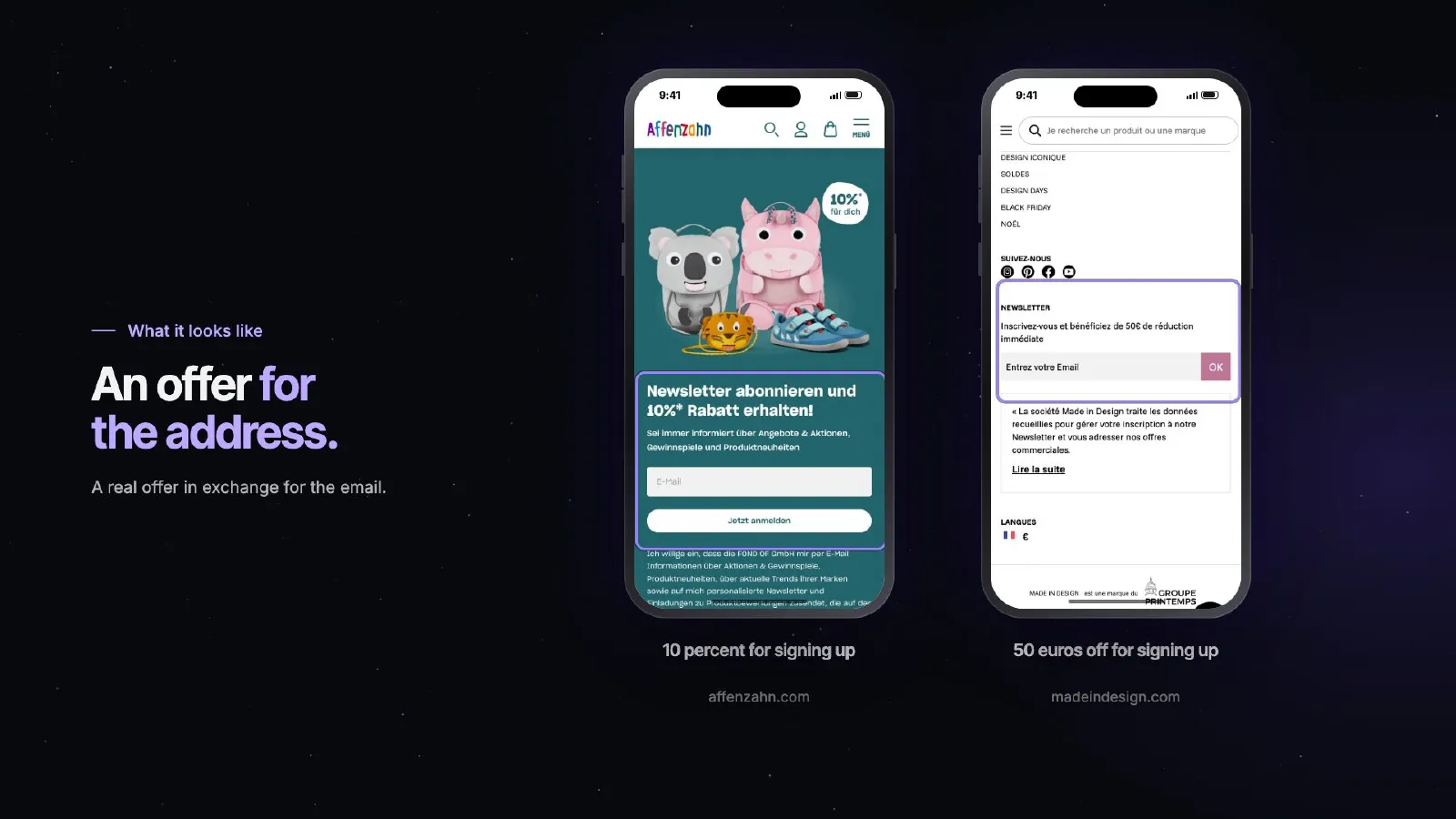
An email address, if the offer is real. An offer for a newsletter sign-up is kept more often than an open offer. But do not nag: in our own test, hiding the newsletter bar won.
A real offer for the email.Our own test: hide the newsletter bar. Won.An offer for the address.
Make sure not too many things float around the page. A bar, plus a pop-up, plus a banner, and at some point there is simply too much going on. Better: one clear offer like a secret pre-Black Friday sale, then the sign-up.
09Does a bigger discount do more?
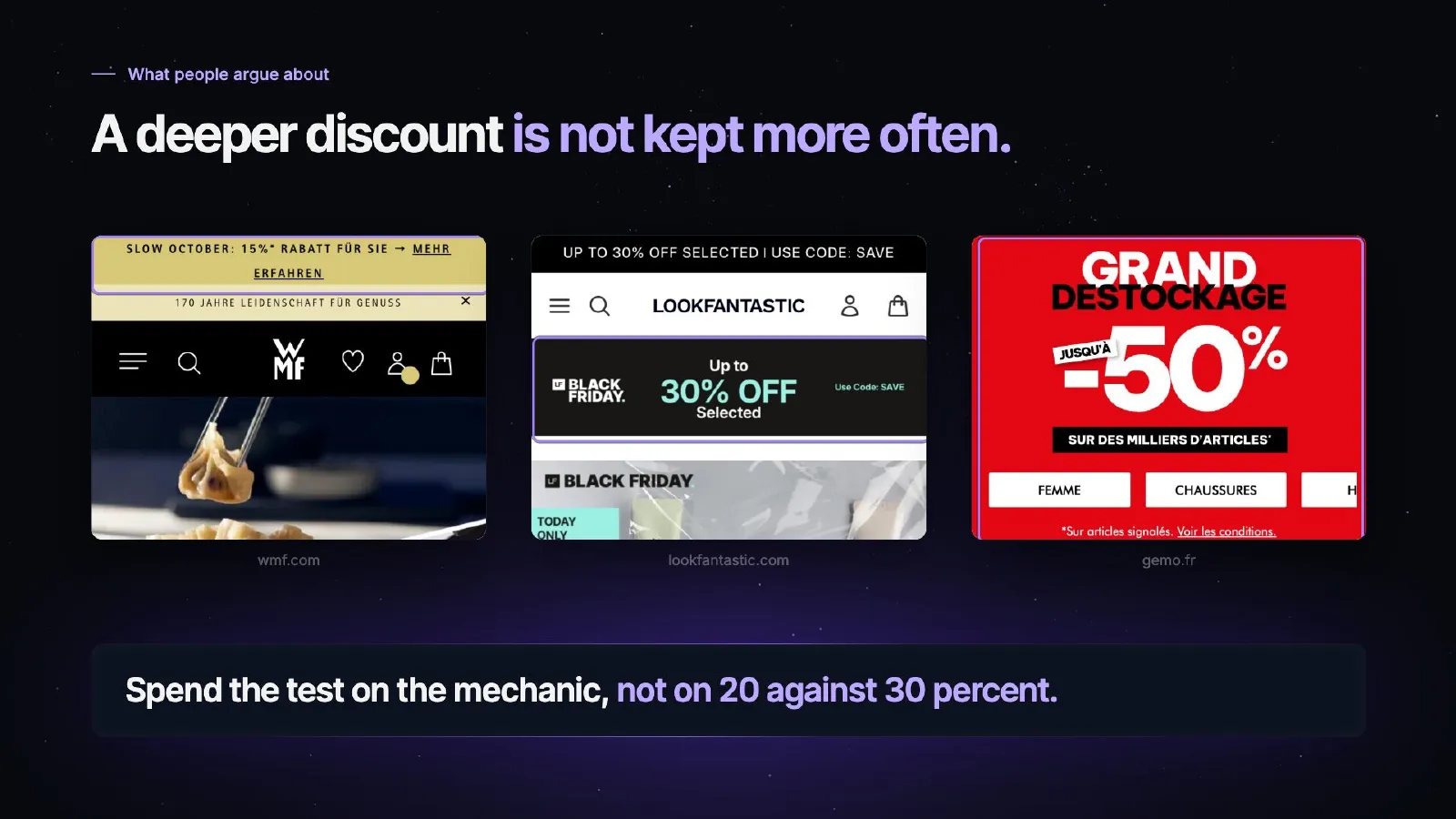
Not for what gets kept. Discount size shows no clear pattern, and neither do countdowns yet. A bigger discount can bring more purchases, but not necessarily more profit. Put the test into the mechanic, not into 20 against 30%.
A bigger discount is not kept more often.Black Friday runs on percent. The data likes codes and amounts.
Which twelve Black Friday tests are most likely to win, with a real before and after, is in the free report.
10Which six tests can you run now?
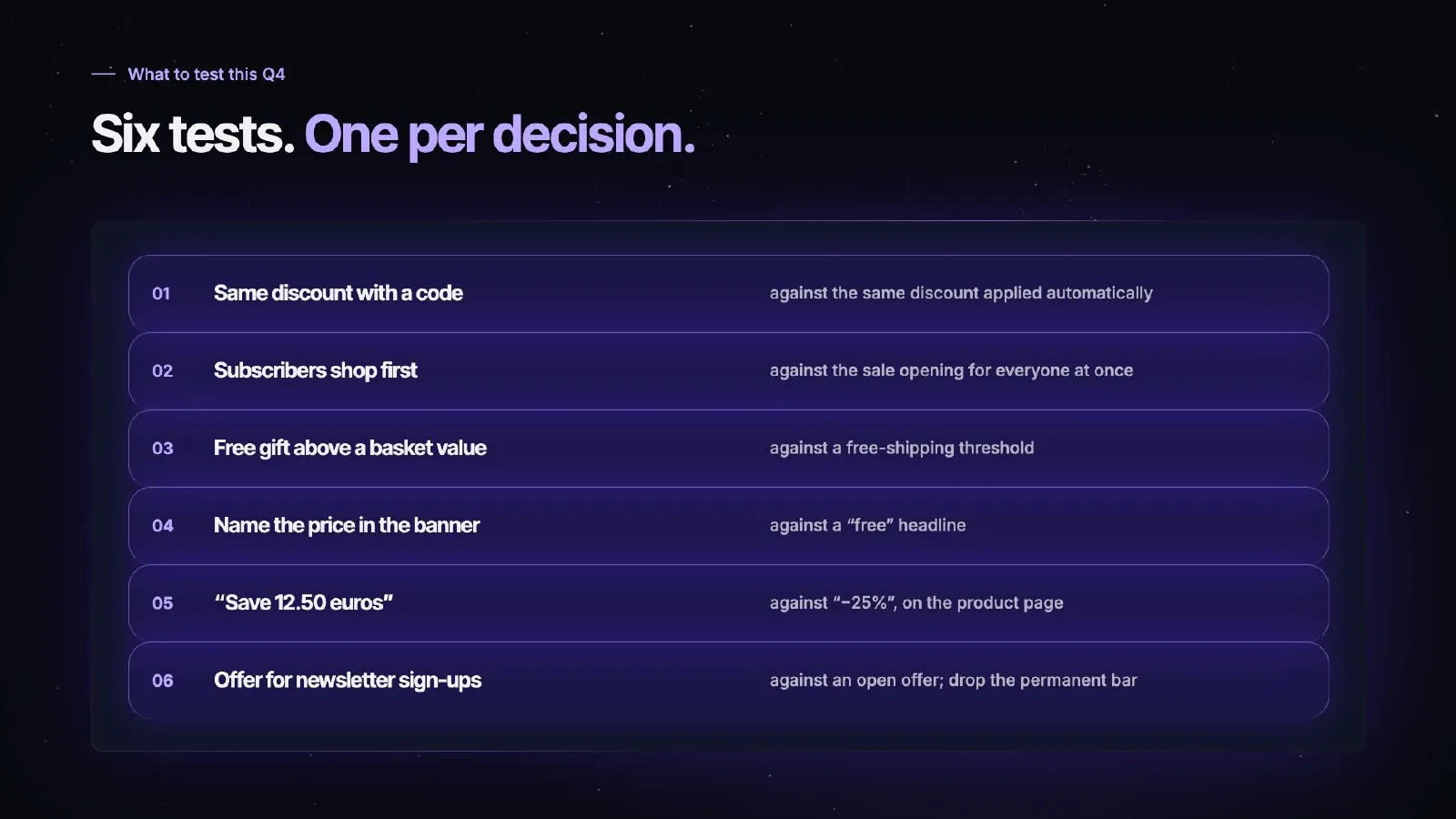
One per decision: a discount with a code instead of automatic, subscribers shop first, a gift above a basket value instead of free shipping, the price named in the banner, amount off on the product page, and a real offer for the newsletter sign-up.
Book a call with the team and tell us about your shop. We'll talk through where it stands, where you want it to go, and how we'd get you there. If working with us isn't the best return on your money, we'd tell you rather than take it.