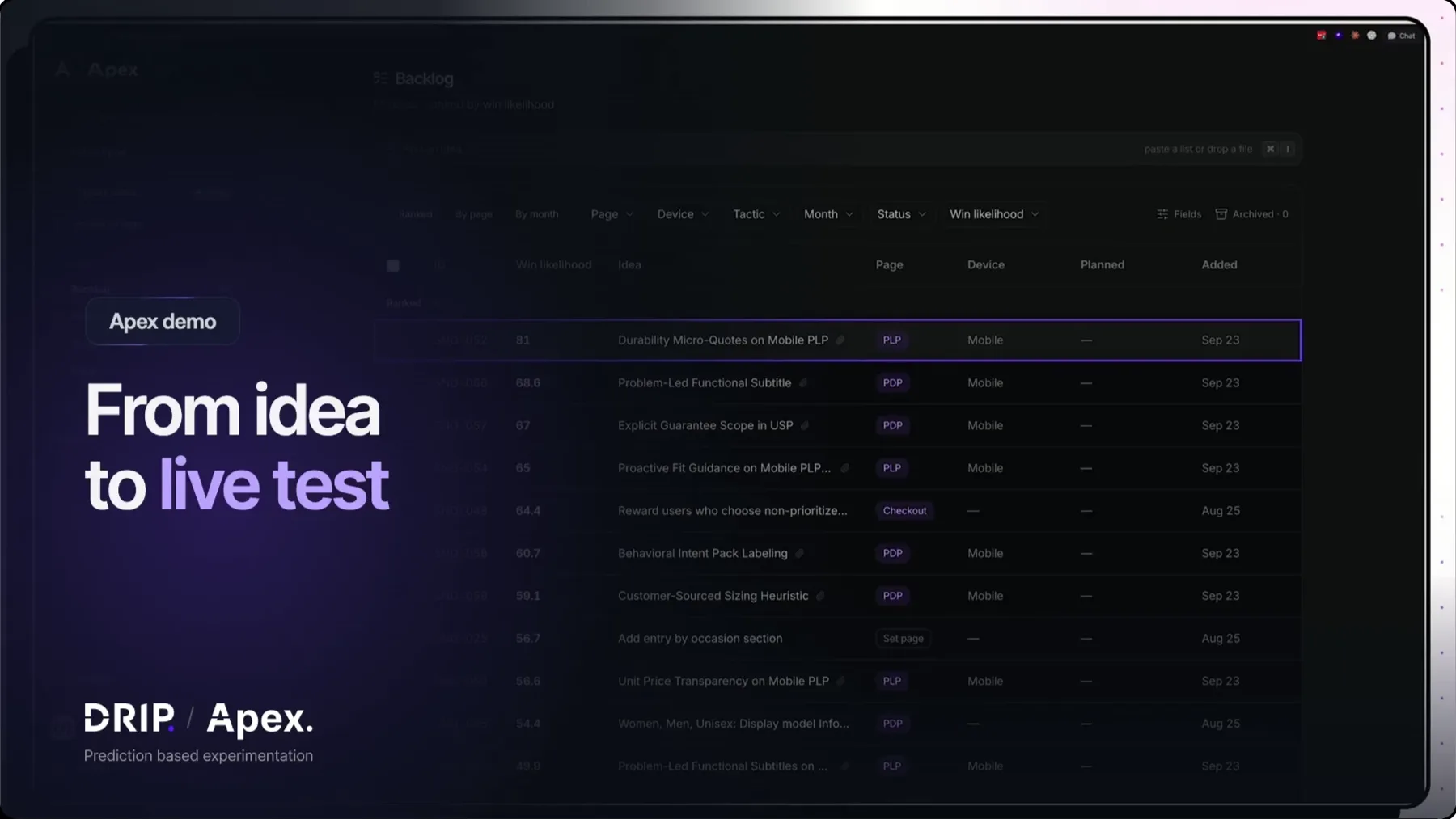
Capture
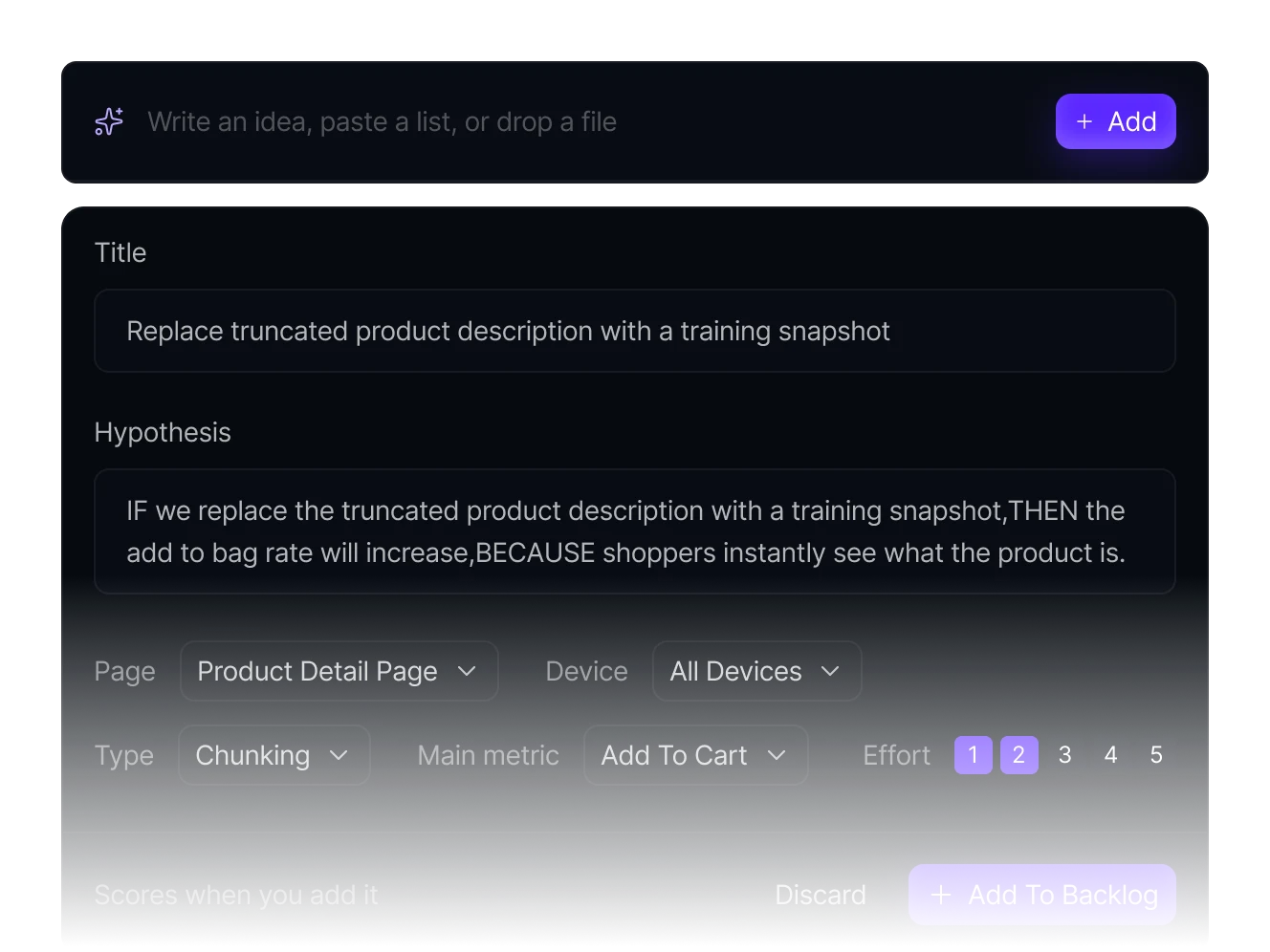
Type an idea, paste a list or drop a file. Apex writes the hypothesis and tags page, device and type.

Type an idea, see its odds. Built from 4.3 million tests and everything Apex learns about your shop.
The sheet, the testing tool, the analytics and the slide deck, replaced by one place that remembers.
Type an idea, paste a list or drop a file. Apex writes the hypothesis and tags page, device and type.
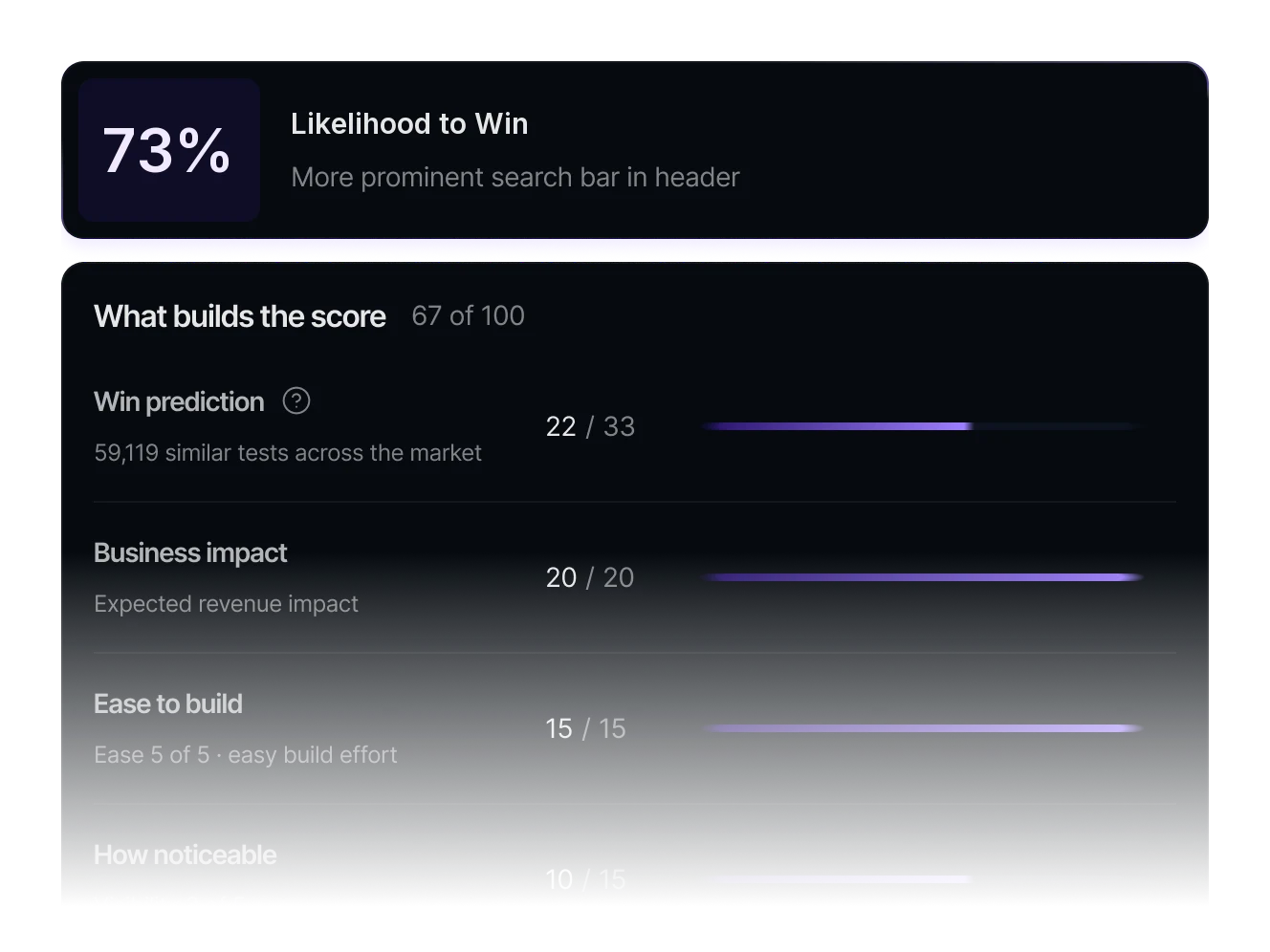
Every idea gets its Likelihood to Win, built from the matched evidence in 4.3 million tests.
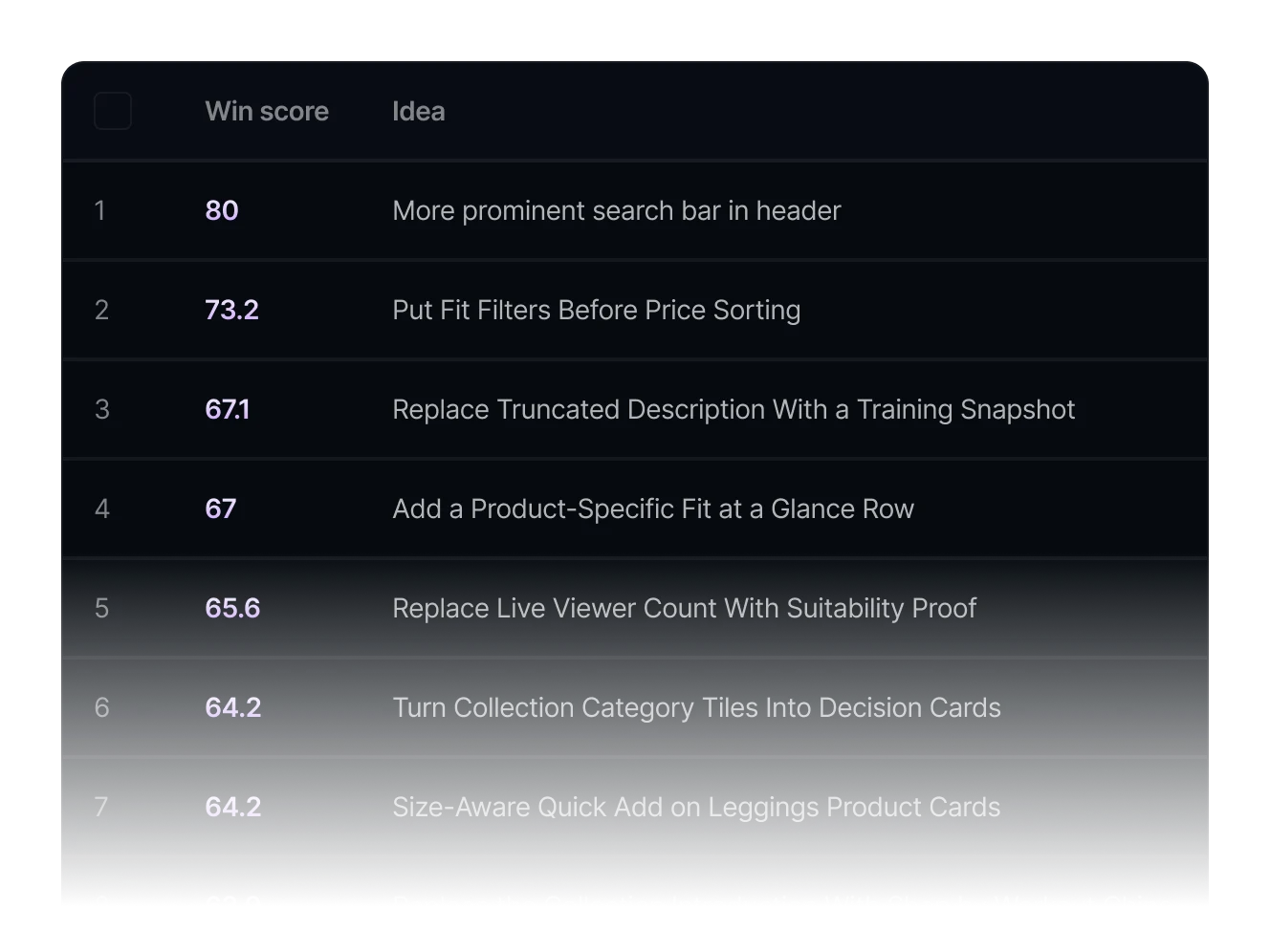
The backlog sorts itself. What earned its odds moves up, what didn't stays on paper.
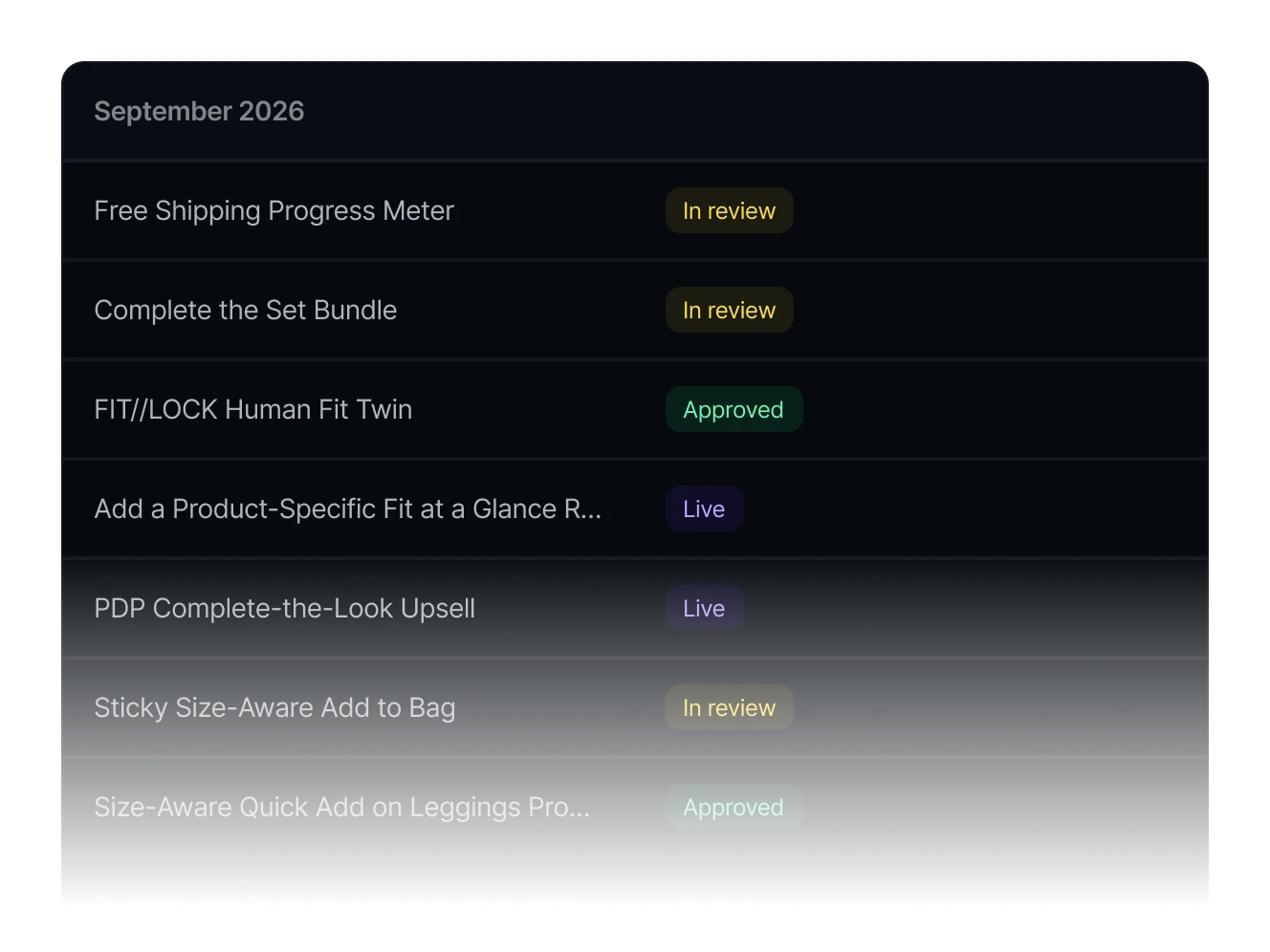
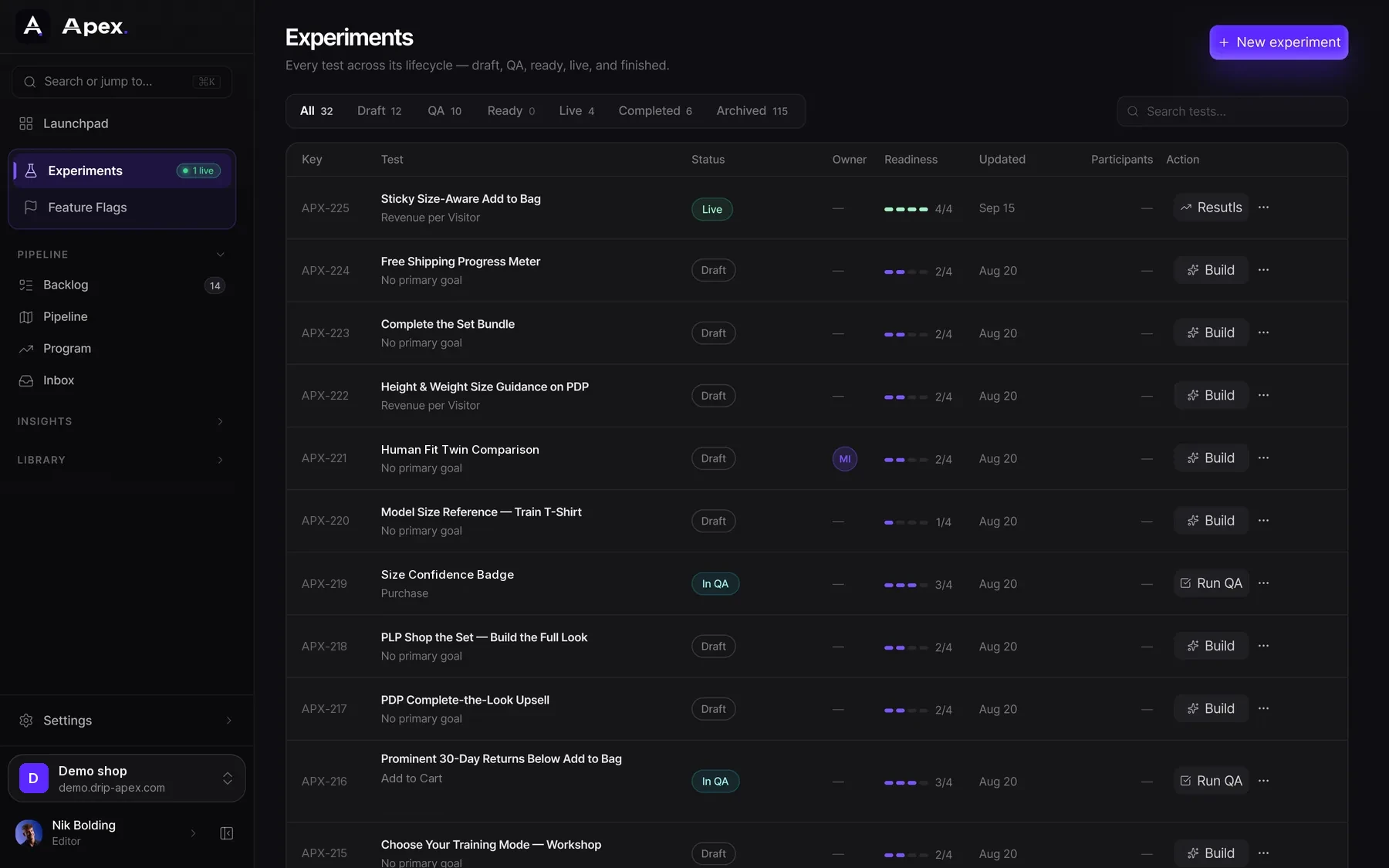
Ideas become months. Approved, in review, live, finished: one board for the whole pipeline.
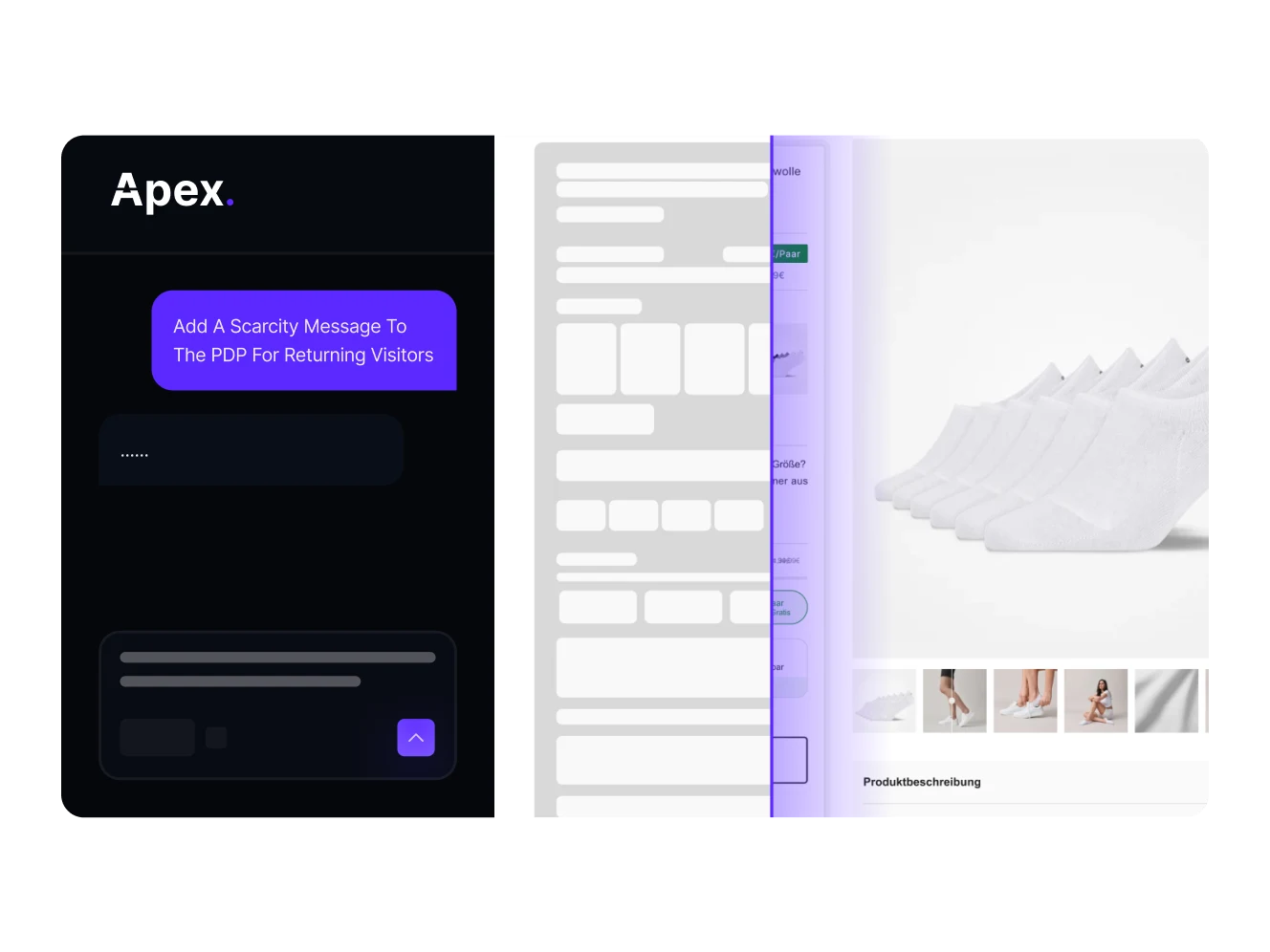
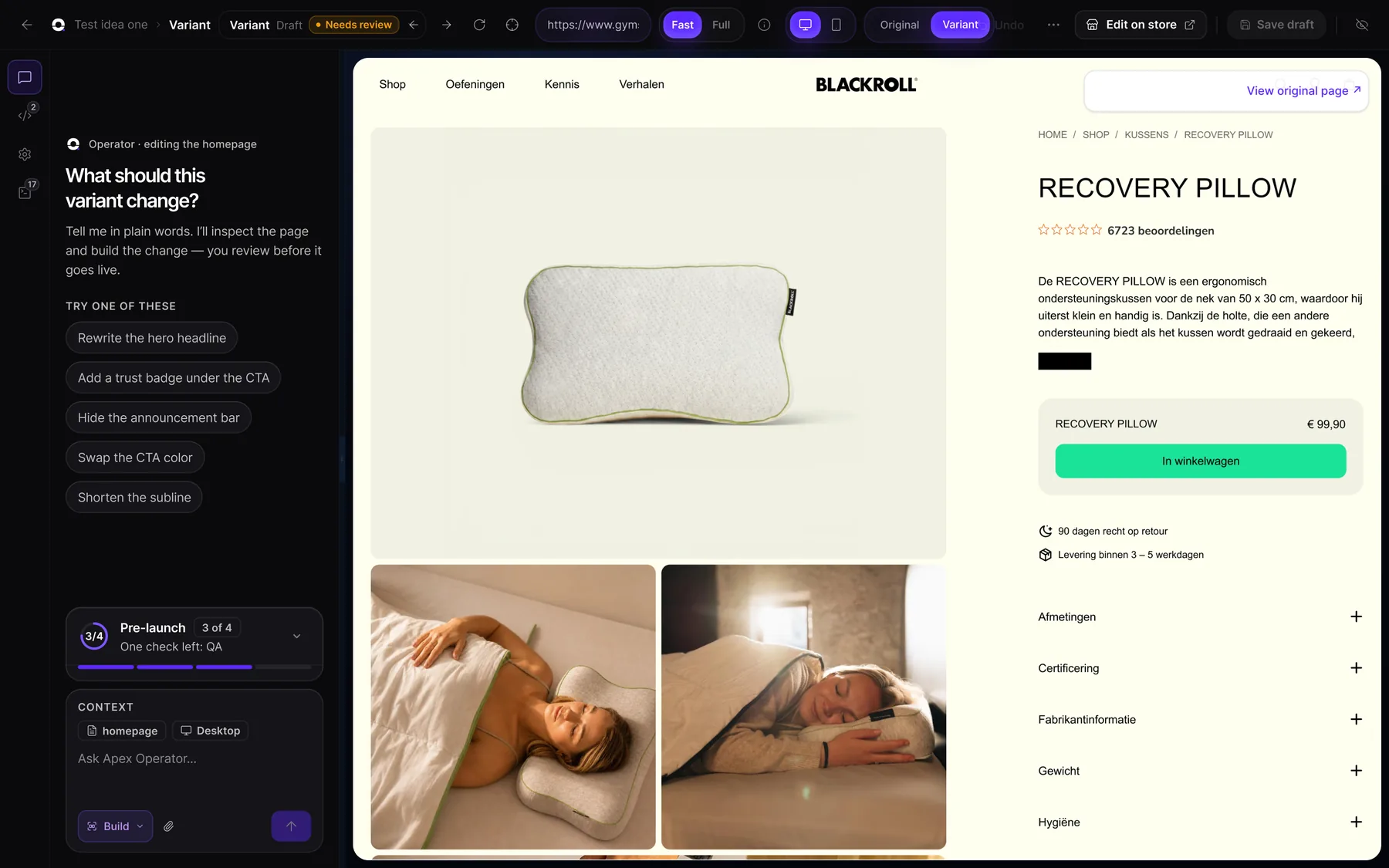
Operator edits your real page in plain words, then you review the variant before it ships.
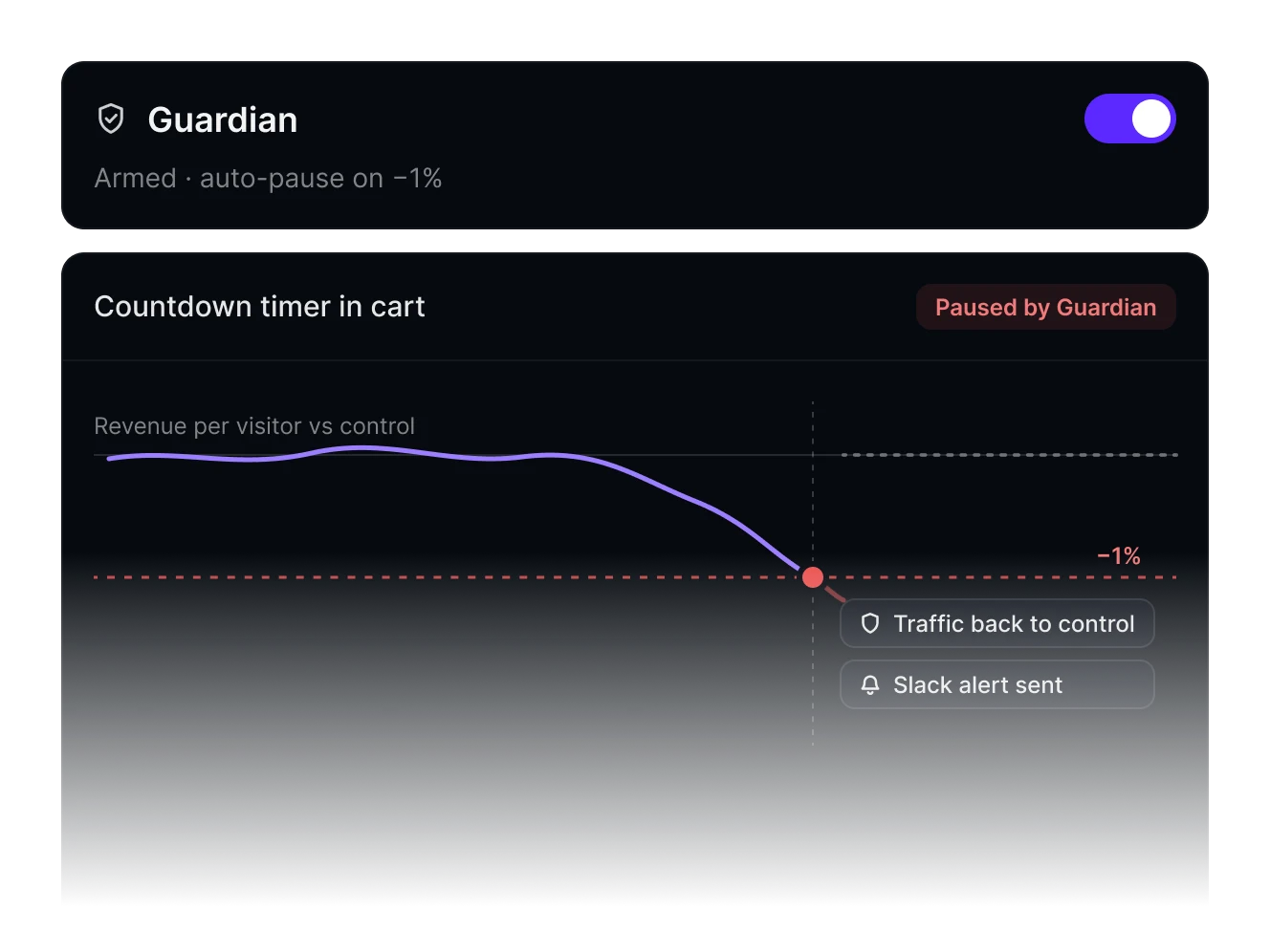
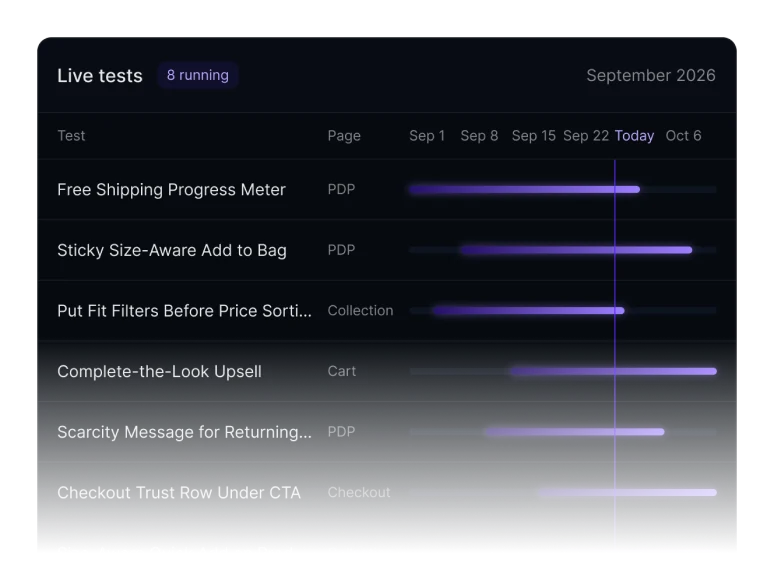
A losing test gets paused automatically, traffic goes back to control, your team gets the alert.
Sound familiar?
You bought the tool, opened it, and met a blank canvas: “what would you like to test?” So you typed the button-color idea from some blog, because the tool had nothing better to suggest.
Three weeks later: not significant. The next one lost. By month four the testing channel went quiet. The tool did its job. It split traffic and it counted. The ideas, the odds and the memory were never in the box.
You weren't bad at testing. You were testing empty-handed.
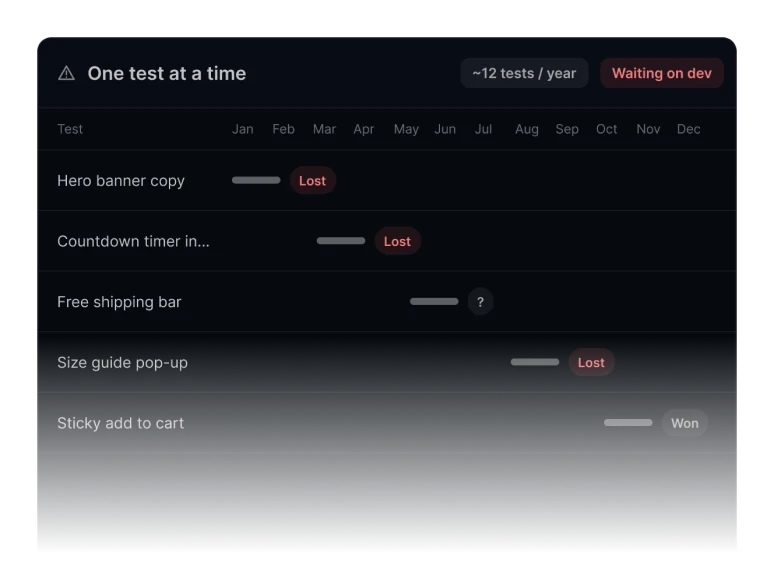
Testing was always the tax you pay for not knowing what works.
Apex shrinks the tax.
One remembers. One doesn't.
The learning curve
In 2024, 27% of our A/B tests won. Last quarter, 55%. The industry wins about 1 in 5, and that number has not moved in years. A machine that learns has one signature: it gets better.
Operator
Operator opens your live page, reads the DOM and builds the change at code level. You review it in Original, Variant A and Variant B before anything goes live. No visual editor, and a built-in anti-flicker guard.
The genome
Each one tagged: kind of shop, kind of product, price point, what exactly changed, and how it ended. Your next idea lands among the tests most like it.
Nobody sends us their tests. We see them anyway.
How we built the genome →Prediction
03 · Launch machinery
One line of code on your site. Variants built at code level and served at the edge, with a built-in anti-flicker guard. Conflict detection checks overlap before anything goes live, sticky bucketing keeps returning visitors in their variant, and bots and consent-less sessions never make it into the sample.
With this machinery, parallel testing is boring. Without it, it's dangerous.
04 · Statistics on rails
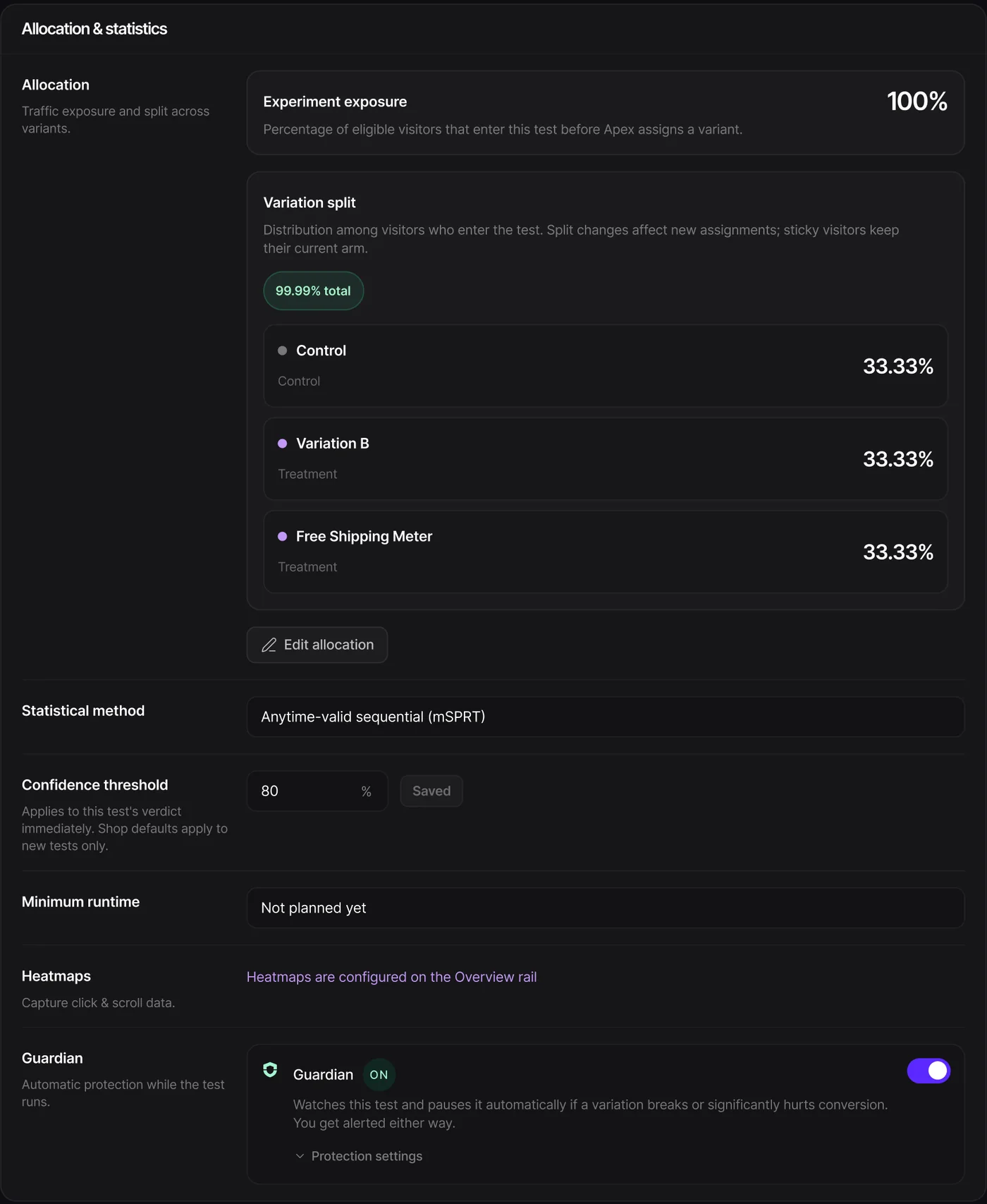
Every test is pre-registered at launch: goal metric, minimum detectable effect, duration, 80% confidence and 80% power, locked before the first visitor. The result gets read once, at the horizon. Sample-ratio mismatch and guardrail metrics are watched the whole way.
And a losing test gets paused automatically, even at 4am with nobody watching.
05 · The loop
Three dashboards: the research memory, the experiment pipeline, and an executive view with revenue per visitor, shipped winners and the next best bets. Every result documented and yours, so when someone asks what testing earned, you open it and point.
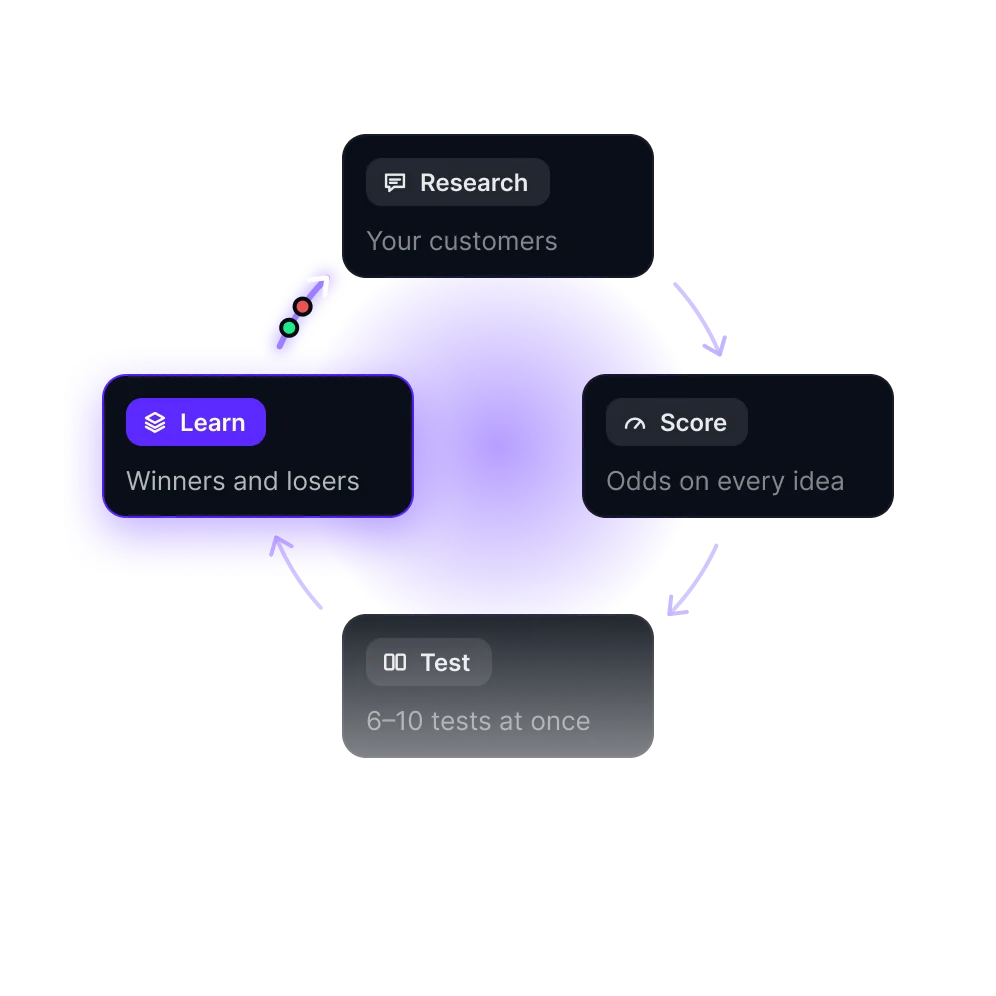
The same result flows back into the model the day it's read. That's why the odds keep getting sharper on your shop specifically.
Readiness
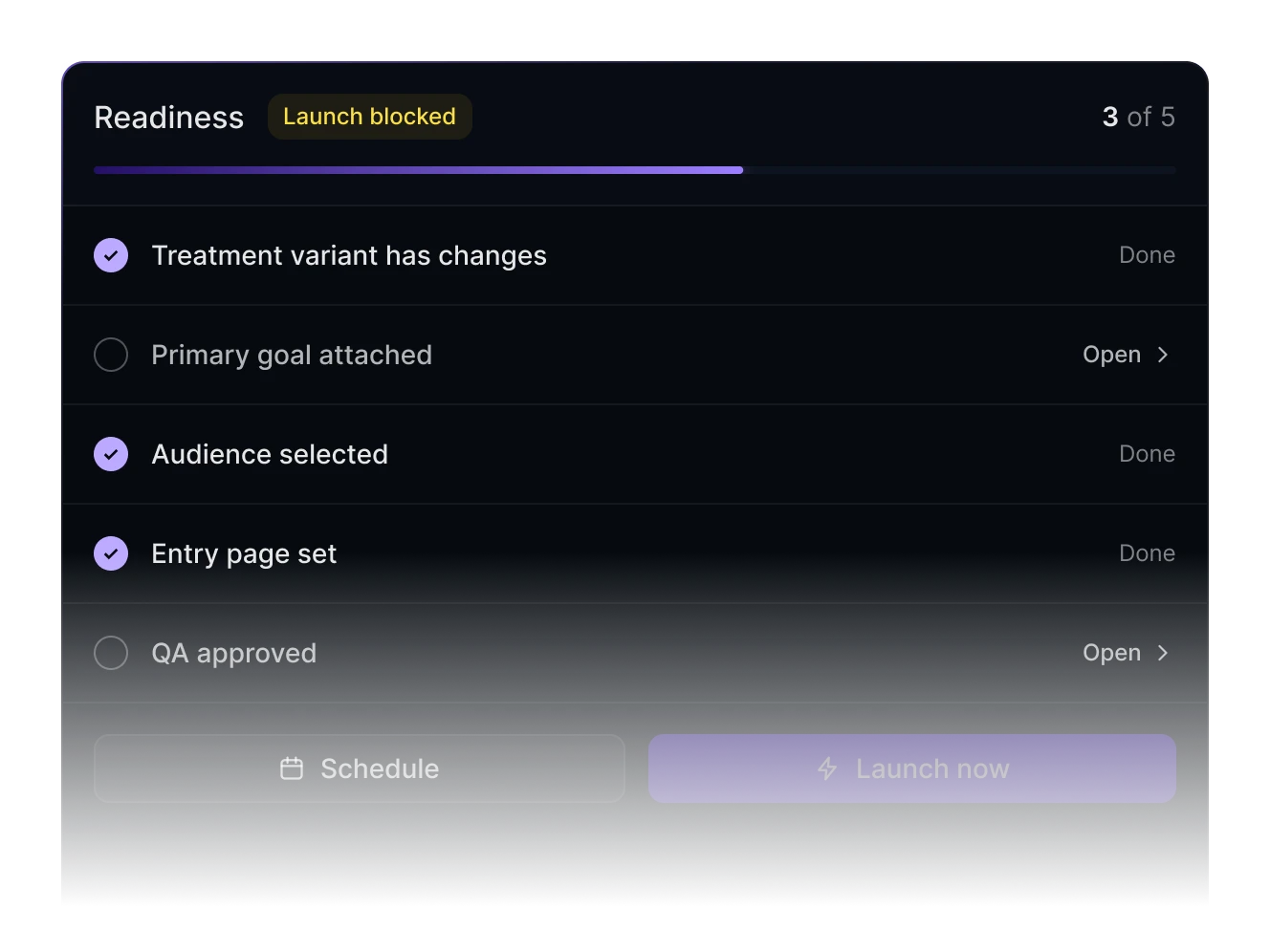
Goal, audience, entry page, QA, treatment: every test walks the same checklist, and Apex blocks the launch until all of it is green. Revenue per visitor decides the winner, never clicks.
<script src="https://cdn…/apex.js"></script>Paste it once and Apex is live at the edge. No rebuild, no dev sprint, no migration project, and your old testing tag simply comes out. On Shopify or Shopware it's even easier: install our app and you're done. That's the whole IT project.

Then it comes with the research, the team and the guarantee. That's the only way it works, and honestly, that's why it works. If your shop does €100k+ a month, book a call.
30 minutes, and you'll know exactly where your shop stands.
The guarantee, in full
When you can predict what wins, you can promise the outcome. What counts as uplift, how it's measured, and what happens if we miss is written down in plain language.
We can promise it because we know our numbers: more than 50% of our A/B tests win, across 4,000+ documented experiments. That's when a guarantee stops being marketing and becomes underwriting.
Yes. Apex runs the tests, so the old tag comes out and one line of code goes in. Nothing else on your shop changes, and your team keeps working the way it does today.
No. Variants are built at code level and served at the edge, so there is no visual editor, and a built-in anti-flicker guard keeps the original from flashing. We measure page speed before and after the install and show you both numbers.
From three sources compressed into one number: the genome of 4.3 million tracked tests, the research month on your own shop, and your live results as they come in. The matched evidence behind every score is one click away.
Then the test loses, and the loss is caught while it runs on part of your traffic, never shipped to all of it. That result goes back into the model the same day, so the next prediction for your shop is sharper. The guarantee covers the program as a whole, not any single test.
Your choice. In full service, our team runs everything inside Apex and you watch the dashboards. In consulting, your team builds and launches, and we supply the research, the ranked ideas and the odds. Both ways, you see every score before anything gets built.
Everything Apex learned about your shop, every result and every document, is yours and stays readable. What enters the shared model is the pattern, never your copy, your creative or your numbers.