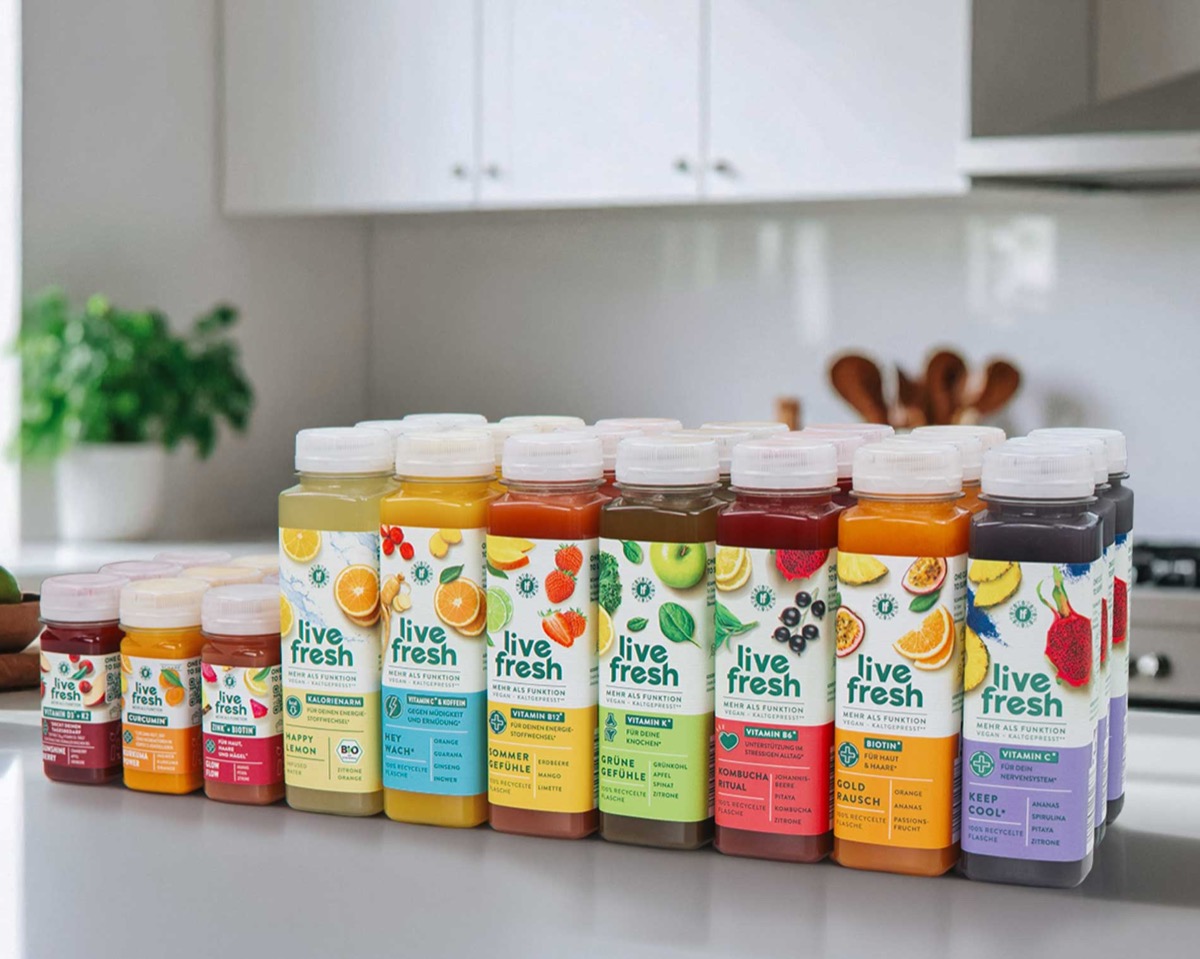
Livefresh sells a system, not just individual products.
How Livefresh generated €4.7M with a guided buying system.
A health-reset buying system shaped by predictive research, 202 experiments, and 55 winning tests across 3.5 years.
Livefresh scaled from a challenger health brand into a major German DTC player while running a long-term CRO program with DRIP. The research showed that shoppers were not only buying juice. They were buying a guided reset: more energy, less hunger, better structure, and the feeling that change was achievable. Across 3.5 years, DRIP ran 202 experiments with 55 winners and generated €4.7M in additional revenue by improving product discovery, bundle comprehension, configurator clarity, and cart confidence.
Research did not stay abstract. It became visible work.
Each case-study layer now keeps the artifacts in the page: current shop screenshots, research boards, prioritization outputs, test evidence, and impact charts.
The strongest blocker was not motivation. It was belief that the reset would be doable.
The testing system made the health goal easier to believe and easier to act on.
Long-term testing compounded because each result improved the next customer question.
The commercial proof behind €4.7M Additional Revenue.
The page keeps the evidence close to the narrative so the growth claim is supported by the same screenshots, tests, and research signals that shaped the roadmap.
Why Livefresh needed a sharper growth system.
Livefresh is a German health food, juice cleanse, and functional nutrition brand with a broad product system: juice cleanses, shots, shakes, meals, bundles, and guided reset programs.
The brand's commercial challenge changed as it scaled. Early demand was driven by health interest and curiosity. Later growth required clearer product education, lower configurator effort, stronger proof, and better guidance for shoppers comparing cleanse durations and bundle options.
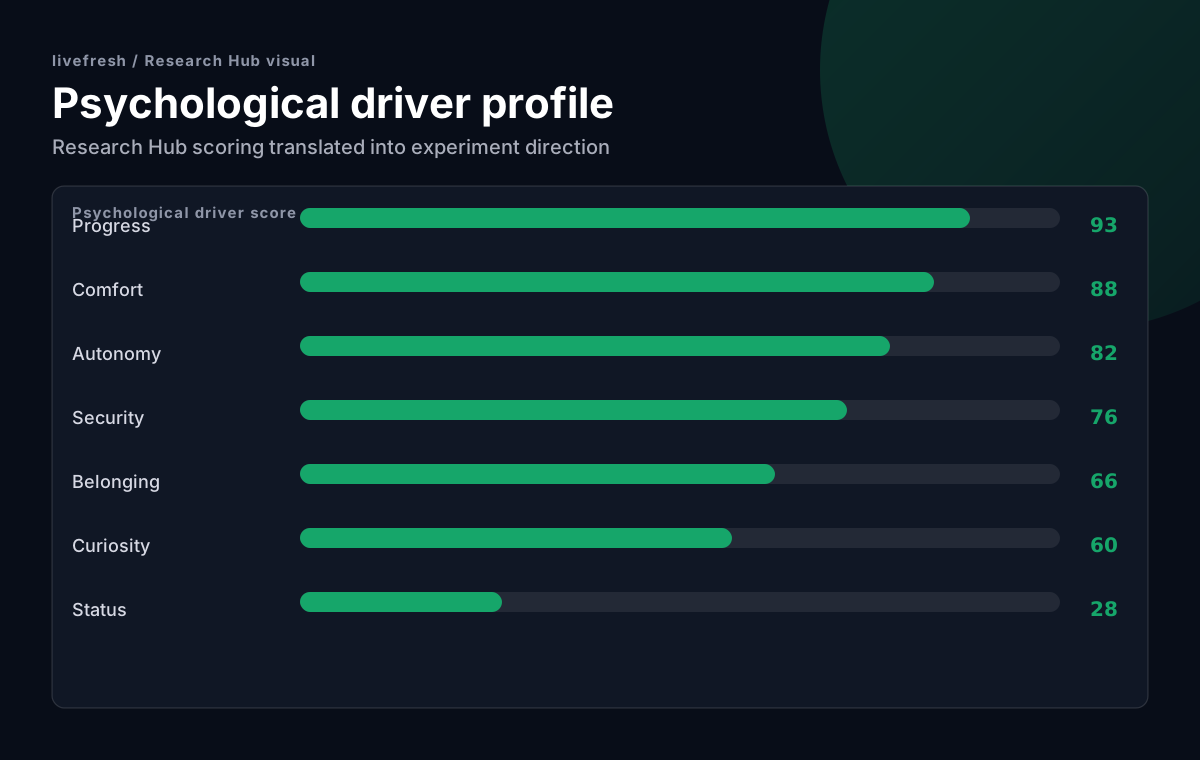
Research Hub made the psychology unusually clear. Progress scored 93, Comfort 88, Autonomy 82, and Security 76. Customers wanted visible outcomes, but only if the program felt doable.
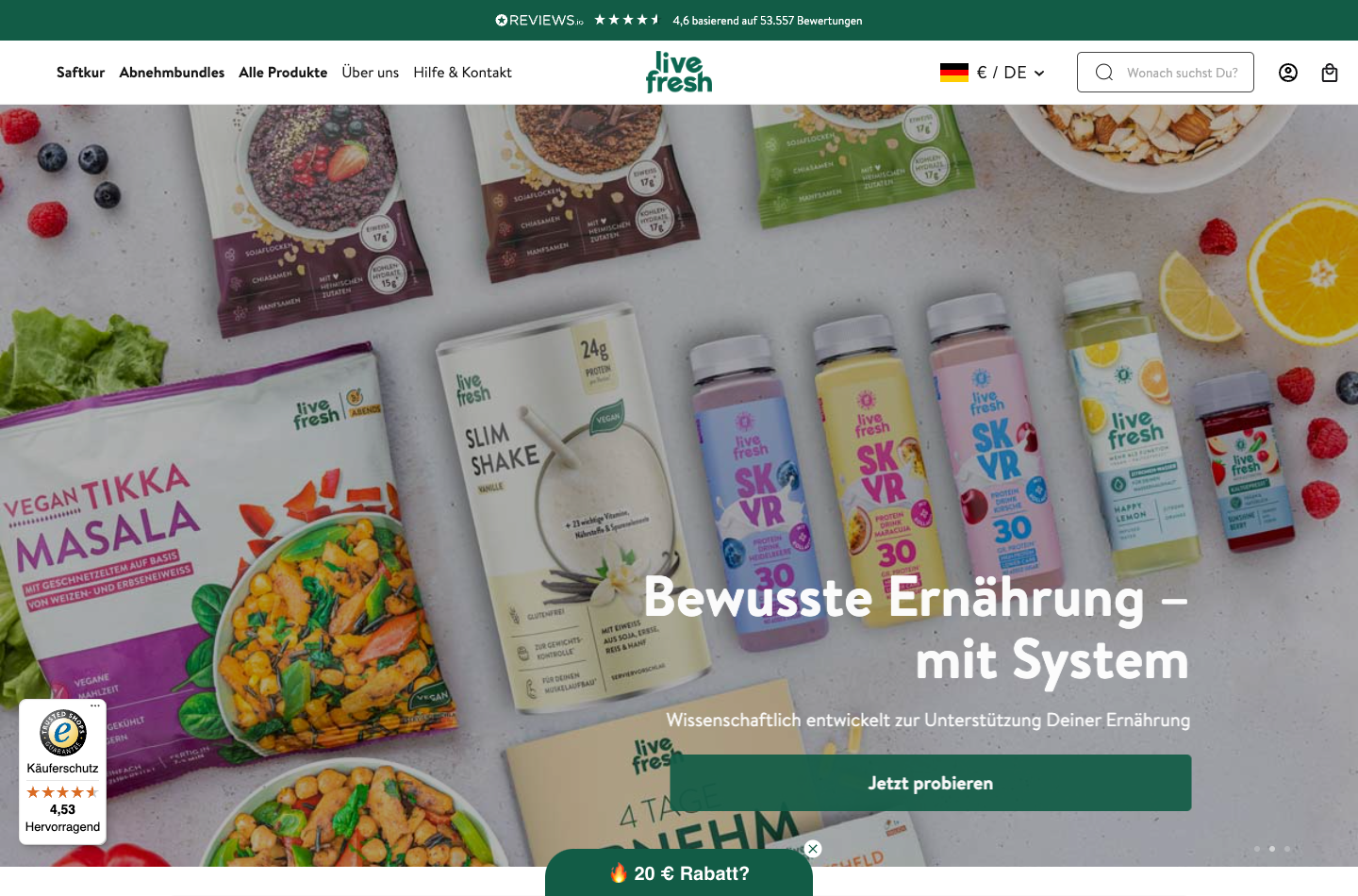
Livefresh sells a system, not just individual products.
The homepage now makes the range feel broad and credible. The conversion task was to carry that same system clarity into the moments where shoppers choose a cleanse, configure a quantity, and justify the commitment.
The conversion problem behind the headline.
The product creates a promise of transformation, but the buying journey can easily create effort. Visitors have to decide cleanse length, quantity, bundle contents, taste tolerance, delivery timing, freshness confidence, and whether the price feels justified.
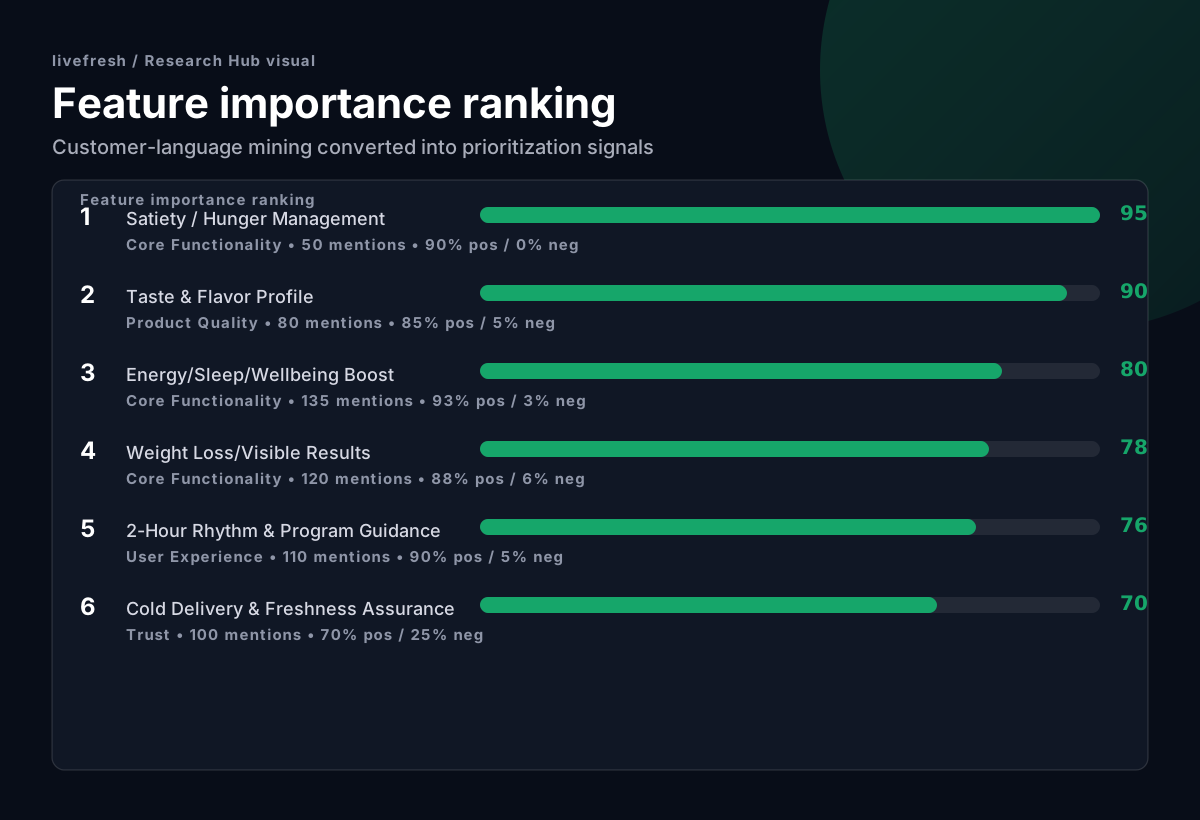
Customer-language mining showed that satiety and taste were the two major compliance levers. People loved the program when they believed they would not be hungry and could enjoy the routine. Taste anxiety, spicy shots, perceived sweetness, and cold-chain concerns could block that confidence.
The strongest CRO opportunity was to reduce willpower load before purchase. The shop had to make the reset feel structured, safe, and immediately understandable.
The strongest blocker was not motivation. It was belief that the reset would be doable.
Buyers wanted the outcome, but needed reassurance around hunger, taste, structure, cold delivery, and price. The research turned those anxieties into testable surfaces.
The work became a research-backed testing system.
We used predictive consumer research to model the cleanse decision around Progress, Comfort, Autonomy, and Security. The key buying question became: can I realistically do this and feel a result fast?
Rapid A/B testing translated that psychology into focused experiments: clearer bundle cards, more concrete configurator CTAs, outcome-led product copy, per-day price framing, and reassurance around hunger, taste, and freshness.
Iterative prioritization let the program evolve with the brand. Every test result fed the next roadmap, so optimization stayed connected to the changing product range rather than becoming a static checklist.
The testing system made the health goal easier to believe and easier to act on.
Livefresh had many valid product claims. The CRO question was where to place them, how to make them scannable, and which ones removed the most hesitation at each step.
How Livefresh turned health motivation into a lower-effort buying journey
The Livefresh program followed the DRIP thesis: predictive research sharpened the hypotheses, rapid A/B testing converted those hypotheses into measurable product decisions, and iterative prioritization kept the long-running roadmap tied to the most valuable friction points.
Identify which health anxieties mattered most before writing test hypotheses.
Run focused tests across PDP, PLP, configurator, cart, and bundle surfaces.
Use each result to refine which buyer question should be solved next.
Every validated change raises the next baseline and teaches the next sprint what to test.
We mapped the exact anxieties behind the cleanse purchase.
Research Hub combined driver scoring, feature extraction, CEP analysis, and customer-language mining. The pattern was consistent: shoppers wanted energy, lightness, weight-loss momentum, and control, but needed proof that the program would be enjoyable and manageable.
The highest-quality ideas removed execution anxiety before visitors had to choose a cleanse length or quantity.
Mine reviews for hunger, taste, energy, and cold-chain signals.
Quantify which claims change belief before purchase.
Turn insights into PDP, PLP, configurator, and cart hypotheses.
We tested the points where choice effort was highest.
The strongest tests made product configuration less abstract: showing bundle details earlier, naming the next step inside the CTA, and replacing generic text with specific outcome cues.
A cleanse purchase accelerates when the shopper can see both the desired outcome and the exact next action.
Make hidden product or bundle information visible earlier.
Use CTA copy and page structure to make the next step obvious.
Answer hunger, freshness, taste, and price anxiety where it appears.
The roadmap evolved as products, audiences, and buying questions changed.
Because Livefresh ran CRO over 3.5 years, prioritization mattered as much as individual ideas. The team kept sequencing tests around the next highest-value customer uncertainty instead of repeating old assumptions.
Long-term CRO works when the research system keeps learning with the brand.
Choose tests that remove the most valuable purchase hesitation.
Let previous winners and losses change the next sprint.
Refresh the roadmap as new products and customer contexts appear.
Progress 93, Comfort 88, Autonomy 82, and Security 76 were the strongest drivers.
Customers wanted a visible reset, but only if it felt achievable and safe.Satiety scored 95 and taste scored 90 in feature importance.
The product had to answer the two practical fears: will I be hungry and will I like it?Key entry points included Monday reset, post-holiday restart, more energy, and no hunger.
Livefresh demand is moment-based: shoppers enter when they want a controlled restart.Research Hub generated 20 recent ideas around PDP, cart drawer, price clarity, and freshness.
The program still had new high-intent surfaces to test after years of optimization.What customers needed to believe before buying
Research Hub showed that Livefresh buyers were motivated by transformation, but conversion depended on practical confidence: no hunger, good taste, visible outcomes, structure, and reliable cold delivery.
Satiety / Hunger Management
Core FunctionalityThe biggest purchase enabler was belief that the cleanse would be doable without hunger.
Taste & Flavor Profile
Product QualityTaste made the program feel enjoyable instead of punitive, but specific shots needed expectation management.
Energy / Sleep / Wellbeing
Core FunctionalityConcrete outcomes made the transformation promise more believable.
2-Hour Rhythm & Guidance
User ExperienceStructure reduced willpower load and turned the cleanse into a guided routine.
What the actual tests looked like.
The page keeps the real control, variant, and result screenshots so the case study shows the evidence behind each claim.
Redesign 'Unsere Bundles' Section with Product Details and ATC Button
The bundle accordion hid the information needed to choose. We redesigned it to show expanded product details, imagery, price, and add-to-cart actions directly in the PLP decision flow.
Clarify Quantity Selection in Food Cleanse Configurator
Changing a generic 'Continue' CTA to a specific 'Choose 3 boxes' action reduced uncertainty at a critical configuration step.
Price Per Day / Price Per Drink Framing
A Research Hub backlog idea reframed the total cleanse price into daily and per-drink cost, making the commitment easier to compare against familiar routines.
The output was not a nicer website. It was a better revenue system.
Over 3.5 years, DRIP ran 202 experiments for Livefresh and produced 55 winners. The program generated €4.7M in additional revenue.
The wins were distributed across the journey: product pages, listing pages, bundles, configurators, and cart flows. That mattered because Livefresh sells a system with many decision points, not a simple single-SKU product.
The long-term partnership meant the CRO roadmap could evolve with the brand as the product range expanded and customer expectations matured.
The advantage came from compounding learning.
Livefresh shows why health and wellness CRO cannot rely on motivation alone. Customers may want the outcome, but conversion improves when the shop makes the behavior feel realistic.
For complex products, the most valuable tests often reduce the effort of imagining use: what happens each day, whether it tastes good, whether hunger is manageable, and whether the logistics are safe.
Long-term testing compounded because each result improved the next customer question.
The program created value by repeatedly reducing effort at high-intent steps: bundle selection, cleanse configuration, PDP comprehension, and cart confidence.
More results from the same operating model.
Want Results Like This?
Book a free strategy call and we'll show you what psychology-driven CRO can do for your brand.
The Newsletter Read by Employees from Brands like