01How Do Apex and ABlyft Compare at a Glance?
This is the most awkward comparison in this series to write, and the most useful. ABlyft has been in our stack for years. We have built experiments in it across dozens of client accounts, argued with its debug mode at midnight, and shipped clean tests on it faster than on any enterprise platform we have used. Nothing below is a takedown. It is what we learned about the limits of tooling in general, and about the one thing Apex does that no testing tool does.
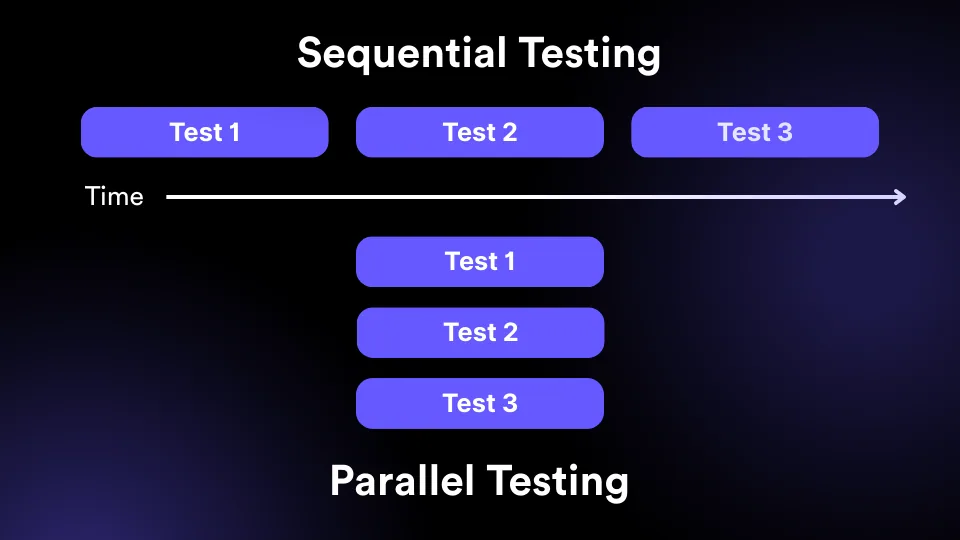
Start with the split that matters. In a normal e-commerce testing program, about 1 in 5 tests produces a real winner. Every other test still consumes design time, developer time, QA, and two to four weeks of traffic. Your tool decides how cleanly and quickly you ship. Your idea selection decides how much of that shipping was worth doing. ABlyft is very good at the first job. Apex was built for the second.
| Dimension | Apex by DRIP | ABlyft |
|---|---|---|
| Category | Predictive A/B testing platform for online shops | Developer-first A/B testing tool |
| Core argument | Predicts which tests win before they go live | Clean, fast, lightweight test implementation |
| Test memory | 4.3 million A/B tests from 151,000 shops, eight years | Not part of the product |
| Pre-launch idea scoring | Yes, every idea is scored before launch | No |
| Test creation | Build, launch, and evaluate tests directly in the shop | Visual editor (Chrome extension) plus code-first workflow |
| Developer workflow | Code editor, CLI, MCP server, public API (~134 paths, scoped keys), signed webhooks, shareable QA preview links | GIT integration, debug mode, mutual experiment exclusion |
| Testing types | Client-side A/B tests; on Shopify also charged-price tests (Cart Transform), shipping-cost and post-purchase tests; server-side via decide API (no SDKs) | A/B, split URL, multi-page, server-side via Feature Experimentation API |
| Page speed impact | Not publicly documented | Minimal, experiment code is pre-compiled and minified |
| Managed execution | Yes, tests built, QA’d, launched, and analyzed with the DRIP team | No, self-service |
| Origin and hosting | German company, hosted in the UK (London) and Ireland | German company, data hosted in the EU |
| Pricing | Book a call | Free-forever plan, custom pricing at scale, flexible contracts |
| Public review profile | Not publicly documented | OMR 4.9/5 (109 reviews, Leader Q1/2026) |
| Best for | Shops where the wrong tests, not too few tests, are the problem | Developer-led teams and agencies that want speed and code control |
Two notes on the table. Where the Apex column says “not publicly documented,” we have chosen not to fill the gap with marketing language, and ABlyft holds those rows on the public record. The pricing row is not evasion either: Apex is sold with managed execution, so scope is set in a call. ABlyft lets you start on a free plan today without talking to anyone, which is a real advantage and one of the reasons we adopted it in the first place.
02What Does Apex Do That ABlyft Does Not?
Apex has one argument, and we would rather state it plainly than bury it in a feature list. Apex predicts which tests win before they go live, from a test memory of 4.3 million A/B tests from 151,000 shops, collected over eight years. That memory is one of the largest A/B test databases in e-commerce, and it is the only reason Apex exists as a separate product.
That changes the order of operations in a testing program. Instead of prioritizing a backlog by gut feel, or by a scoring framework where the numbers are opinions with decimals, each idea is scored against what happened when comparable changes ran on comparable shops. The output is not a promise. It is a prior: this idea class has a track record, that one does not, and this third one has a track record of quietly losing.
The three layers, and what each one is for
- Test memory: 4.3 million A/B tests from 151,000 shops, collected over eight years. It scores every test idea before launch, so the backlog is ranked by evidence instead of enthusiasm.
- Testing tool: build, launch, and evaluate A/B tests directly in the shop. The prediction and the execution live in the same place, so the prediction is checked against the result every time.
- Managed execution: tests are built, QA’d, launched, and analyzed with the DRIP team. This is the part no self-service tool sells, and it is why Apex pricing is set in a call.
ABlyft does not compete on this axis and should not be criticized for it. A developer-first editor and a test memory answer different questions. If your team already knows which tests are worth running, the Apex argument is worth much less to you, and a lean self-service tool is the rational purchase. That is not a polite concession. It is the same recommendation we have made to clients with a strong internal idea pipeline, and ABlyft is often the tool we name.
03Where Is ABlyft the Better Choice?
ABlyft is a genuinely excellent product, and we recommended it long before Apex existed. Its design decisions are coherent, and three of them are better than what most enterprise platforms offer at many times the cost.
Experiments treated as code
ABlyft puts experiments in the workflow developers already trust. GIT integration means every variant is version-controlled, reviewable, and revertible. Debug mode means a test is inspected before it reaches a single visitor, which removes the specific class of failure where a variant looks correct in the editor and breaks on one mobile browser. Mutual experiment exclusion keeps concurrent tests from contaminating each other, and variable traffic allocation lets you ramp a risky variant instead of exposing the whole shop at once. Anything expressible in HTML, CSS, or JavaScript is testable.
A footprint that respects Core Web Vitals
The visual editor runs as a Chrome extension during test creation, so visitors never load an editor runtime. Experiment code is pre-compiled and minified before deployment. The result is a minimal client-side payload and near-zero flicker, and for high-traffic shops that difference compounds across millions of page views. This is a design decision, not an accident, and it is why ABlyft survives page speed audits that heavier platforms fail.
EU posture, free entry, and no lock-in
ABlyft is a German company that hosts data in the EU, which shortens the legal conversation for European shops considerably. There is a free-forever plan, so a team can start this week without a procurement cycle, and paid contracts are flexible rather than annual lock-ins. For agencies running experiments across many client accounts, that combination of lean cost structure and code-level control is hard to match.
04What Did Hundreds of Client Tests on ABlyft Teach Us?
This is the part of a tool comparison that only volume can produce, so here is what our own record says. DRIP has run more than 4,000 experiments for more than 250 e-commerce brands, a large share of them on ABlyft. In 2024 our win rate was 27%, not far above the industry pattern where about 1 in 5 tests produces a real winner. In the most recent quarter it was 55%. We did not double our test volume, and we did not switch testing tools.
What changed was the rejection rate. The lift came almost entirely from ideas we killed before they consumed design, development, QA, and traffic. That is the uncomfortable finding for anyone who sells tooling, including us: across those years, the tool was almost never the reason a test failed. ABlyft implemented our hypotheses correctly. The hypotheses were the weak link.
- Change class beats element: “Reduce decision cost on the product page” has a track record. “Make the button green” does not, and never will, because the same element wins on one shop and loses on the next.
- Context decides the sign: the same change frequently flips direction between a high-consideration, high-price catalog and an impulse catalog. Prior outcomes on comparable shops carry that information. A hypothesis document does not.
- The best output is a rejection: the most valuable thing a test memory returns is the list of ideas you do not run. Nobody celebrates it, and it is where the win rate actually comes from.
Note what this argument does not claim. A prediction is a prior, not a guarantee, and our win rate is our own program’s record rather than a forecast for any single shop. It also takes nothing away from ABlyft. It says the tool was never the constraint on results, which is a compliment to the tool and a criticism of how most testing programs, including our earlier ones, chose what to test.
05Are Apex and ABlyft Substitutes for Each Other?
The honest framing is that these two products are not the same shape. Comparing them feature by feature would flatter Apex on rows ABlyft never tried to occupy, and flatter ABlyft on rows where Apex publishes nothing. So here is the split as we actually see it in client work.
With ABlyft, your team owns everything after installation. That is the appeal, and it also means your team owns the failure modes: a goal wired to the wrong event, a test called after nine days because day nine looked good, a winner that was never really a winner. None of these are ABlyft problems. They are the standard failure modes of any self-service testing program, and debug mode plus GIT integration prevent more of them than most tools do. What no tool prevents is a well-built test of a bad idea.
Apex includes managed execution: tests are built, QA’d, launched, and analyzed with the DRIP team, with the test memory as context when a result is called. The analysis judgment travels with the product instead of being an internal hiring problem. That is also the honest reason we do not publish an Apex price. Managed scope is not a per-seat number, so the fit is worked out in a call.
| Question | Apex by DRIP | ABlyft |
|---|---|---|
| Who picks the tests | Scored against the test memory before launch | Your team, from its own pipeline |
| Who builds the variant | The DRIP team, or your team in the tool | Your team, visual editor or code |
| Who QA’s it | The DRIP team | Your team, with debug mode |
| Who calls the result | The DRIP team, with the test memory as context | Your team |
| Developer dependency | Low, execution is managed | Recommended, not required |
| Time to first test | Set together with the DRIP team | Fast, free plan needs no procurement |
| What you need in-house | A decision maker and a roadmap | Developer capacity and analysis discipline |
06Our Verdict: Should You Choose Apex or ABlyft?
We sell Apex, so read the recommendation with that in mind. The reasoning is simple enough to check: if about four of five tests fail industry-wide, the highest-leverage improvement available to a shop is picking better tests, and picking better tests requires outcome data at a scale no single shop can generate. That is the case for Apex, and it is the only case we make for it. On implementation quality, ABlyft is the tool we have chosen with our own money for years.
Choose Apex if…
- Your win rate sits near the industry base rate and more tests have not fixed it
- You have limited traffic, so every inconclusive test is an expensive month
- You want each idea scored against comparable shops before anyone builds it
- You want tests built, QA’d, launched, and analyzed with an expert team
- Your backlog is long and your confidence in its order is low
Choose ABlyft if…
- You have developer capacity and want experiments version-controlled through GIT
- Core Web Vitals matter and you need the lightest possible visitor-facing script
- You are an agency or a team running experiments across many accounts
- You want EU hosting from a German vendor and flexible contract terms
- You already have a reliable idea pipeline, so selection is not your bottleneck
- You want to start free this week without a sales conversation
One last honest note, since this page sells our product. ABlyft has a free plan, published review profiles, and contract terms you can leave. Apex has none of that in public: no free tier, no self-serve trial, and no price on this page. We ask you to book a call. That is a real friction difference, and if you want to install a testing tool this afternoon without talking to a human, ABlyft respects that preference and Apex does not.
Want Apex to score your test ideas before you build them? See if your shop is a fit→