
€4.7Mover 3.5 years
202 · Experiments

With less traffic, every test takes longer, so you can't afford to spend one on a guess. We test where most of your revenue sits, go for bigger changes, and fix the detectable effect before launch. And if your shop is too small for testing to pay off yet, we'll tell you.
For online shops from €100k a month. A free 30-minute call with the team.
















Sound familiar?
You tested a new button colour and a shorter headline. The test ran for a month. The result: inconclusive. Your traffic was never going to measure a change that small.
So someone suggests stopping tests earlier, or a tool that promises to decide faster. Now you get answers. Some of them are wrong, and you can't tell which.
Same method as every DRIP program: Prediction-Based Experimentation, frequentist statistics, no shortcuts. The difference is where the traffic goes.
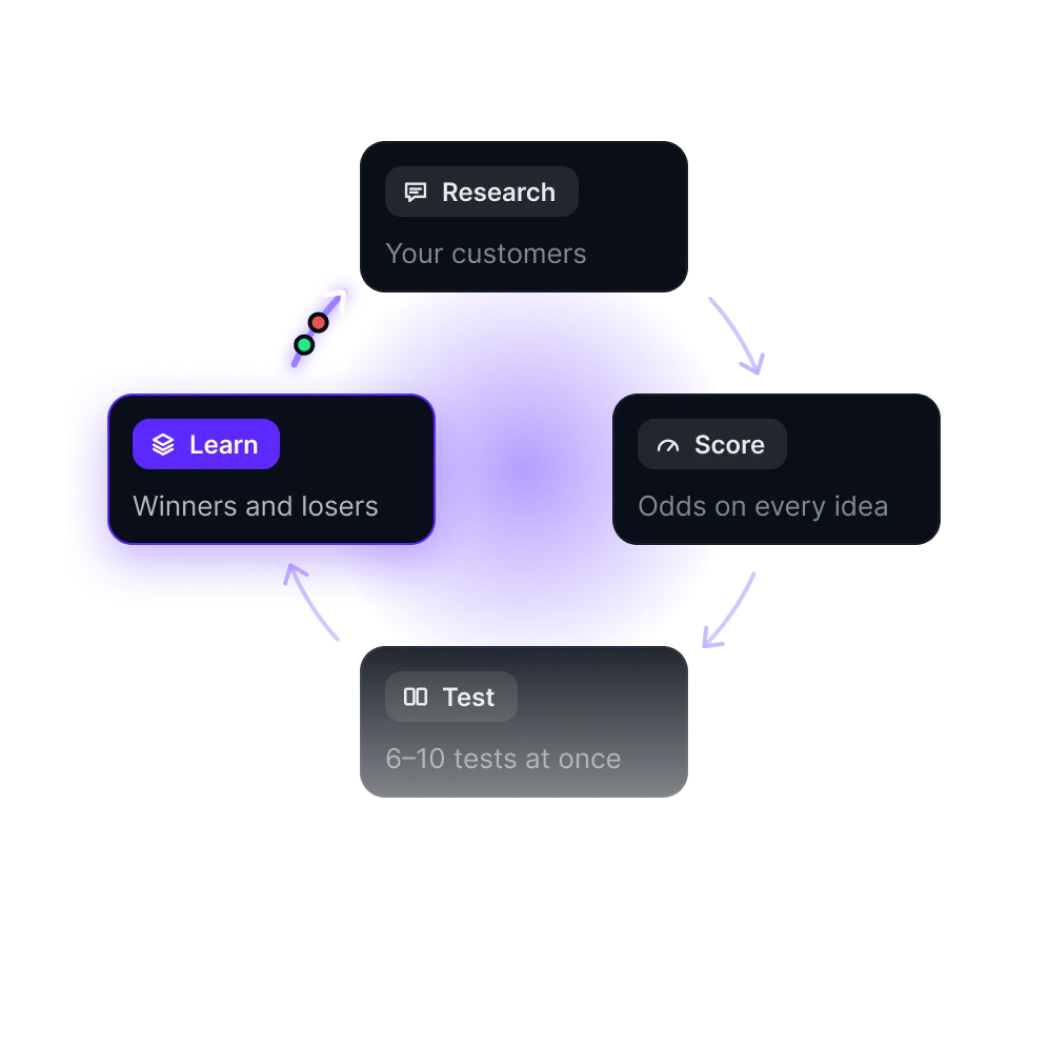
The first month is research. We read your reviews, surveys, support tickets and your competitors' reviews, and put 40+ hours into session recordings and heatmaps. With less traffic, small tweaks can't be measured, so we look for the reasons buyers hesitate that are worth a bigger change. Every idea is written as if, then, because.
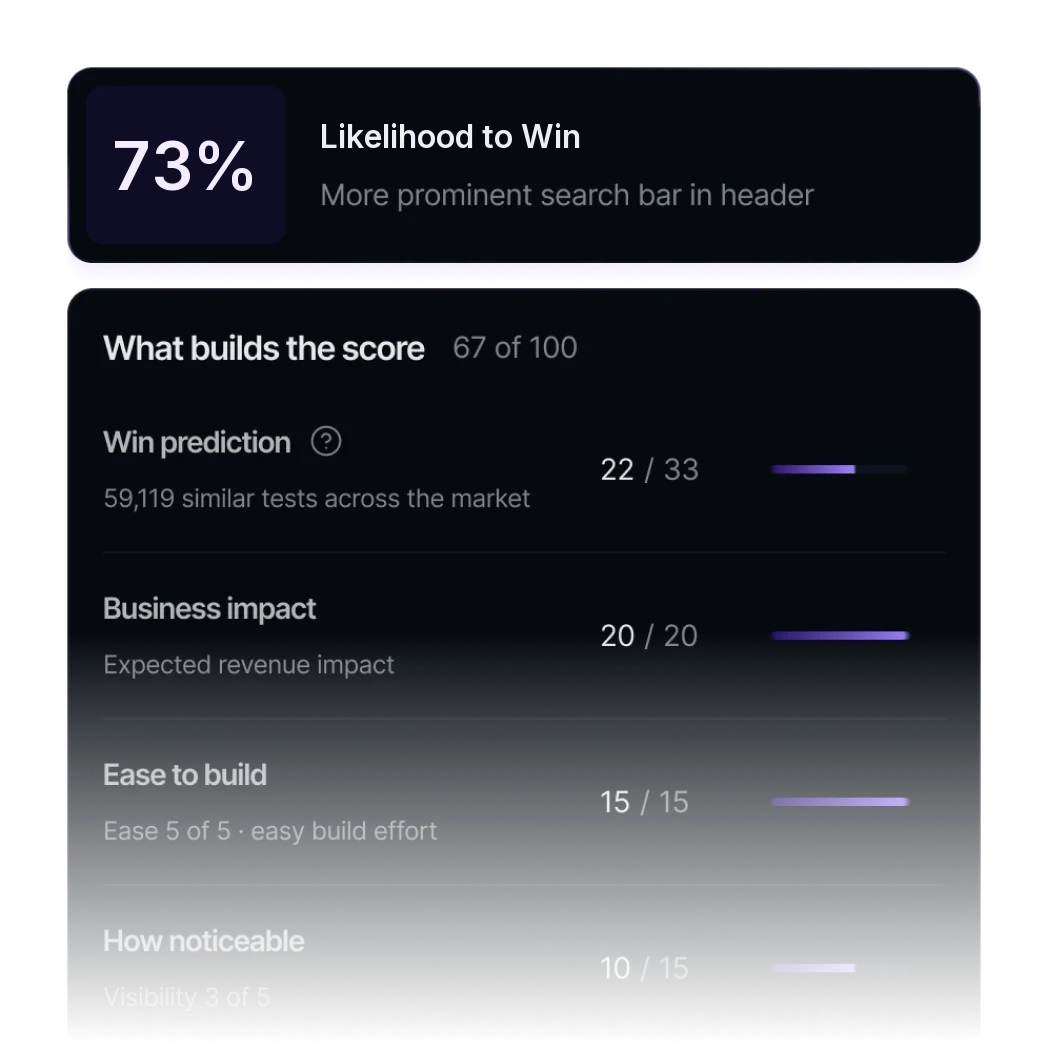
Apex, our own testing tool, gives every idea a Likelihood to Win, based on the 4.3 million tests in our database and what the research says about your shop. Each idea is scored on revenue exposure, Likelihood to Win and effort, so the pages that carry the most revenue get tested first.
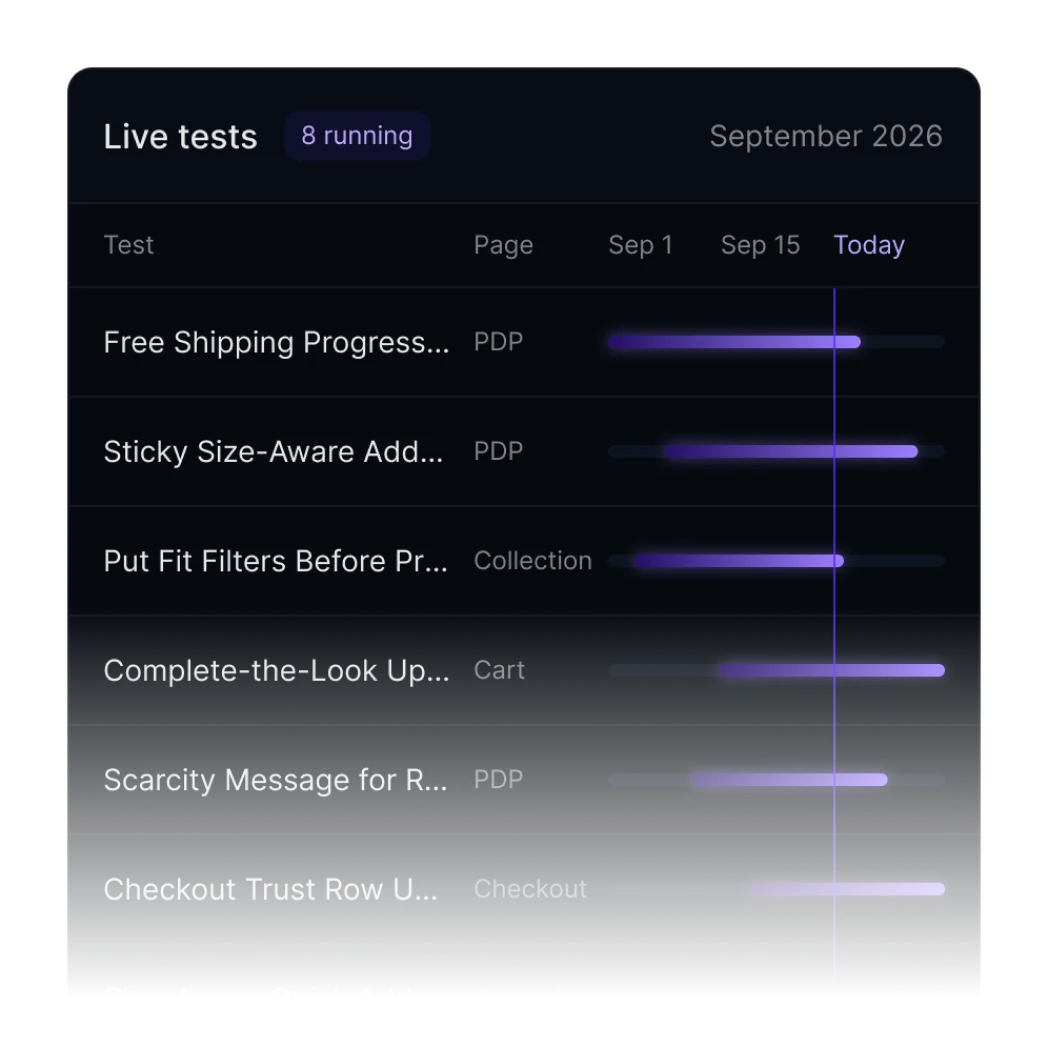
Before a test goes live, we fix the minimum detectable effect and the duration: frequentist, 80% confidence, 80% power. Then it runs to the end, no early stopping. Tests run in parallel, each visitor assigned to each test independently. How many run at once depends on how much traffic and revenue your pages carry.
We measure revenue per visitor. Winners ship. Every result, win or lose, gets filed by buyer motivation and friction point, so a flat test still tells you what doesn't move your buyers. When each test takes longer, that matters more.
That's the short version. The full method, phase by phase, is on the process page.
See the full processTwo brands where the research decided which changes were worth their traffic.
202 · Experiments

€3.2M · Generated
A full testing program, pointed at the pages where your traffic buys.

20+ pages on what drives your buyers and where your funnel leaks revenue, so tests start from real reasons.

Every idea scored on revenue exposure, Likelihood to Win and effort, recalibrated every two weeks.

Minimum detectable effect, duration, 80% confidence and 80% power, written down before a test goes live.

3 to 5 designed variants per test for mobile and desktop, your approval, and a code-level build.

Our 10-person QA team checks every variant on real devices, tracking included, so no test wastes traffic on a bug.

Dashboards with revenue per visitor and what each test taught you, plus a call with the team every two weeks.
There's no single number of sessions. It depends on the effect you want to detect, how much your revenue per visitor swings, and the confidence you need. We work with online shops from €100k a month in revenue. Below that, most tests take too long to reach a result and the program can't pay for itself. If that's you, we'll tell you on the call.
The MDE is the smallest real effect a test can reliably detect with your traffic. With less traffic, it's bigger. That doesn't mean you can't test. It means small tweaks are out, and ideas need to be big enough to move revenue in a way your traffic can see. We fix the MDE before every test, so you know upfront what a test can and can't tell you.
Bayesian tools and bandits often get sold to low-traffic shops because they seem to decide faster. They get there by loosening the error control. You make permanent changes to your shop based on test results, so we want to know how often we're wrong. That's why every test is pre-registered: frequentist, 80% confidence, 80% power, MDE and duration fixed upfront, no early stopping.
Longer than on big shops. How long depends on your traffic, how much revenue per visitor varies, and the effect we want to detect. We calculate the duration before launch and let the test run to the end. Stopping early to save time is how fake wins happen, and a fake win ships and costs you money for good.
Yes. Each visitor is assigned to each test independently, so tests don't mess with each other's results. Microsoft found that interference between parallel tests changes a decision in roughly one in 50,000 cases. How many tests run at once depends on your traffic and how many pages carry enough revenue to test on.
Then we'll be straight with you: A/B testing probably isn't the best use of your money yet. Tests would take too long to reach a result. We'd rather tell you that on a call than sell you a program that can't pay for itself.

Book a call and tell us about your shop. We'll look at your traffic and revenue and tell you straight whether testing pays off for you yet, and where we'd start.
30 minutes, and you'll know exactly where your shop stands.
The guarantee, in full
When you can predict what is likely to win, you can promise the outcome. What counts as uplift, how it's measured, and what happens if we miss is written down in plain language.
We can promise it because we know our numbers: more than 50% of our A/B tests win, across 4,000+ documented experiments. The guarantee stands when our team runs the program for you.