

€773K / monthadditional revenue
€3.2M · Generated

Not every winning test travels. We work out which winners ship to every market, which need localising and which need their own test first. Then we run those tests, six to ten at a time, with odds on every idea from a database of 4.3 million A/B tests.
For online shops from €100k a month. A free 30-minute call with the team.
















Sound familiar?
A test lifted revenue in your biggest market, so it shipped to the UK, France and the Nordics. Three months later one market is flat, one looks worse, and one might be up or might be noise. The team is confused, and the rollout plan has stalled.
The cost isn't only the lost revenue. Every rollout that fails makes the next test harder to get approved.
We call it Prediction-Based Experimentation: every idea gets its odds before it gets built, and a winner in a new market is a new idea. Four steps, repeated every month.
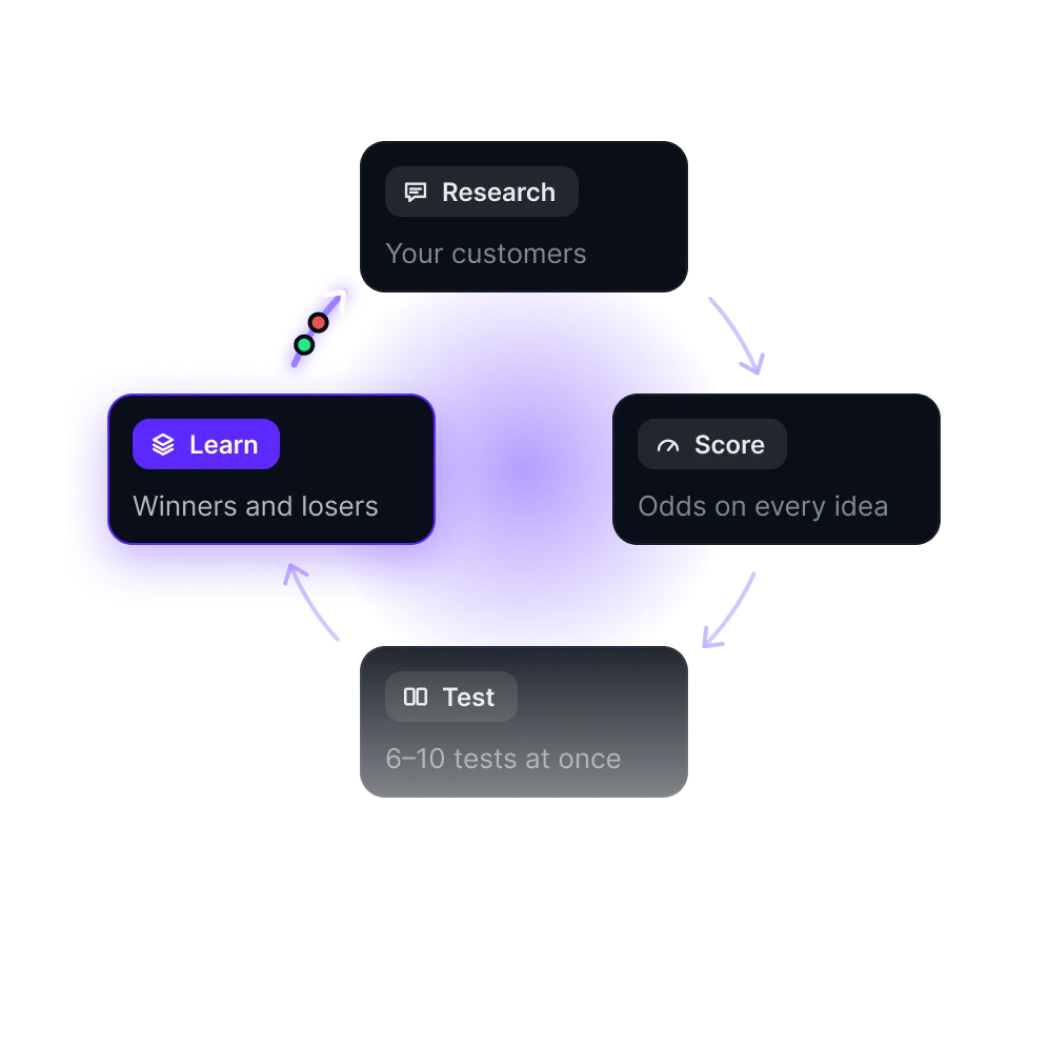
The first month is research. We read your reviews, surveys, support tickets and your competitors' reviews in the markets you sell in, and put 40+ hours into session recordings and heatmaps. Our behavioural psychologists write a 20+ page report on why your buyers buy, so you know whether the reason a test won at home exists in the next market.
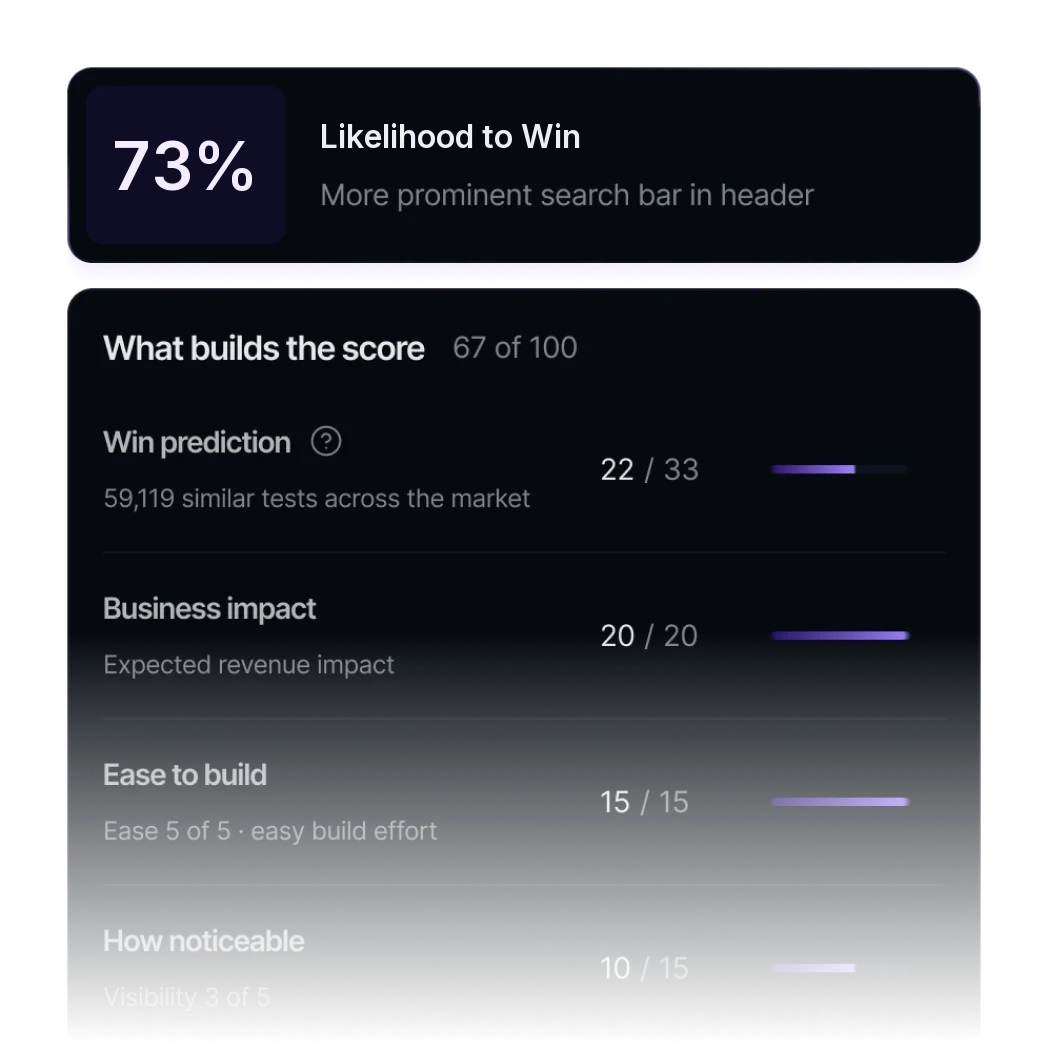
Before a winner ships to a new market, it goes back on the list as an idea for that market, with its own Likelihood to Win from Apex, our own testing tool. Changes to how something works, like a simpler checkout, tend to travel. Changes to how something is said, like trust badges or urgency, often don't. The list is ranked by revenue at stake, Likelihood to Win and effort.
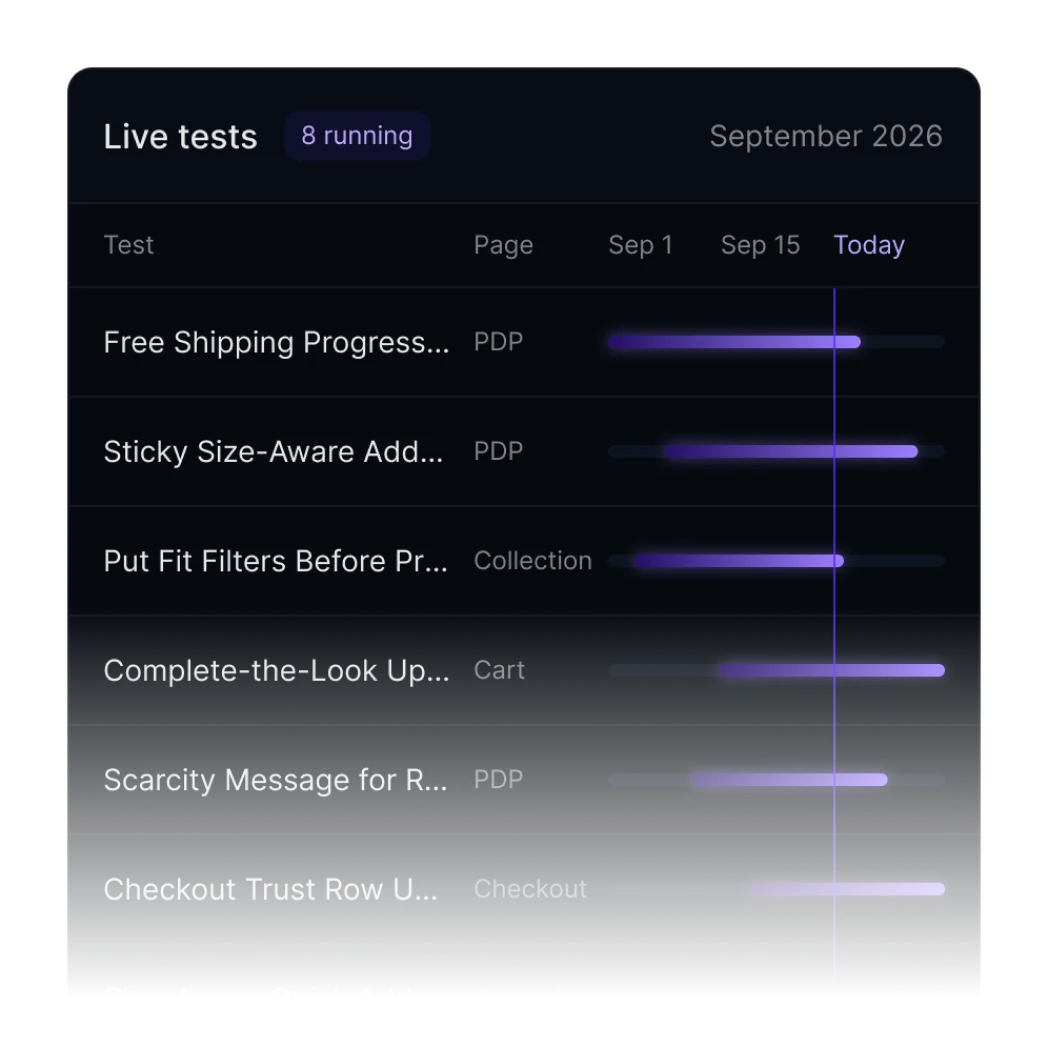
Winners that need proof run as their own A/B test in each market: localised variants, built at code level, QA'd on real devices, a 50/50 split with its own control. Six to ten tests run in parallel, each with its sample size fixed before launch: frequentist, 80% confidence, 80% power, no early stopping.
We measure revenue per visitor, not clicks. Every result gets filed by the buyer motivation and friction point it touched. After a few rollouts you know which kind of change travels in your shop and which doesn't, and the odds on the next rollout get better.
That's the short version. The full method, phase by phase, is on the process page.
See the full processTwo brands with customers across Europe and beyond, and a testing program that runs all year.
€3.2M · Generated

+10% · Session CVR
Everything an international rollout needs, from one team.

20+ pages on what drives your buyers in your target markets, where they differ and where each funnel leaks revenue.

Each winner marked as ship, localise or test first, with its Likelihood to Win in the new market.

3 to 5 designed variants per test for mobile and desktop, approved by you, then a code-level build.

Our 10-person QA team checks every variant on real devices, tracking included, before it touches your traffic.

Six to ten tests in parallel, clean 50/50 splits, sample-ratio checks and pre-registered statistics per market.

Three dashboards and a call with the team every two weeks. Every result is documented and stays yours, even if you leave.
Changes to how something works tend to travel: a simpler checkout, clearer mobile navigation, a faster path to the product. Changes to how something is said vary much more: trust badges, social proof, urgency, the way prices are shown. The rule of thumb: if the test changes how something works, it probably travels. If it changes how something is said, test it again. Your research and your results tell you which is true for your shop.
Each market runs as its own test, with its own control, sample size and duration fixed before launch. We don't pool the markets, because averaging hides the signal: a win in Germany and a loss in France can add up to a small win that quietly costs you money in France. Six to ten tests run in parallel, and smaller markets need longer to reach a result. We tell you how long upfront.
Three questions. What kind of change is it: how something works, or how something is said? Does the reason it won, the buyer motivation or friction point behind it, show up in the research for the new market? And how much revenue is at stake there? If the answers line up, it ships. If the reason differs, it gets localised and tested. If the research shows no sign of it, it becomes a fresh idea for that market, with its own odds.
Our deepest experience is in the German-speaking markets, where most of our clients are based. Many of them sell across Europe and beyond, and we test those markets too. If your main target markets are ones we know less well, we'll say so on the call.
A holdout keeps part of your traffic on the old version after a change ships, so you can see whether the change still pays. It matters because without a comparison you can't tell a working rollout from a market that was growing anyway. For a new market, we'd rather re-run the winner as a proper A/B test there: a 50/50 split with its own control and a sample size fixed upfront. That tells you more than a small holdout.
In month one the research is done, the plan is scored and the first tests are live. A test counts once it reaches the sample size we calculated before launch, and smaller markets take longer to get there. By month three you've usually run more experiments than most brands ship in a year, spread across the markets that carry the most revenue.

Book a call with the team. Tell us where you sell and what you've already rolled out, and we'll tell you where we'd start and whether we're the best use of your money.
30 minutes, and you'll know exactly where your shop stands.
The guarantee, in full
When you can predict what is likely to win, you can promise the outcome. What counts as uplift, how it's measured, and what happens if we miss is written down in plain language.
We can promise it because we know our numbers: more than 50% of our A/B tests win, across 4,000+ documented experiments. The guarantee stands when our team runs the program for you.