Drip
Case StudiesProcessApex
Done for youWe run your testing programDone with youYour team runs it in Apex, with our research
BlogResourcesArtifactsStatistical ToolsBenchmarksResearch
See if your shop is a fit
See if your shop is a fitSee if you're a fit
Tool Comparison11 min read

Apex vs Varify: 2026 Comparison for E-Commerce A/B Testing

One tool scores your test ideas against 4.3 million past experiments before you build them. The other makes no-code testing cheap and fast for marketing teams. They are built for different problems.

Fabian GmeindlCo-Founder, DRIP Agency
22 Sept 2026Published
New from DRIP

Apex by DRIP predicts which A/B tests win, before they go live.

Built on one of the largest A/B test databases in e-commerce: 4.3 million tests from 151,000 online shops, collected over eight years.

See how Apex works
This article is part of The Complete Guide to Choosing A/B Testing Tools for E-Commerce (2026)

Apex by DRIP and Varify.io are both A/B testing platforms for online shops, but they solve different problems. Apex is built around a test memory of 4.3 million A/B tests from 151,000 shops, collected over eight years, and it scores every test idea before launch, so you know which experiments are worth building. Varify.io is a no-code visual testing tool for marketing teams: browser-based editor, no developer needed, GDPR-friendly by architecture because it uses your existing analytics instead of its own tracking, and public flat-rate pricing from €149 per month. Choose Apex when the bottleneck is picking the right tests. Choose Varify when the bottleneck is shipping tests without developers.

Contents
  1. 01How Do Apex and Varify Compare at a Glance?
  2. 02What Does Apex Do That Varify Does Not?
  3. 03Where Is Varify the Better Choice?
  4. 04What Actually Predicts Whether a Test Wins?
  5. 05Who Runs the Tests, Your Team or an Expert Team?
  6. 06Our Verdict: Should You Choose Apex or Varify?
Reading progress0%
complete

01How Do Apex and Varify Compare at a Glance?

Apex by DRIP is a predictive A/B testing platform for online shops with three layers: a test memory of 4.3 million A/B tests from 151,000 shops, a testing tool that builds, launches, and evaluates tests directly in the shop, and managed execution with the DRIP team. Varify.io is a German no-code testing tool with a browser-based visual editor, no own tracking, and published flat-rate pricing from €149 per month. Apex answers which test to run. Varify answers how to ship a test today without a developer. Both are credible choices, for different teams.
Disclosure
Apex is our own product. We built it, we sell it, and we recommend it here. Everything we say about the other tools is the same assessment we published before Apex existed. Judge the reasoning, not the ranking.

Most tool comparisons treat A/B testing software as a feature checklist: editor, targeting, segments, reports. That framing hides the expensive problem. In a normal e-commerce testing program, about 1 in 5 tests produces a real winner. Every other test still costs design time, developer time, QA, and two to four weeks of traffic. The tool decides how fast you ship. Your idea selection decides how much of that shipping was worth doing.

Apex and Varify sit on opposite sides of that split. Varify.io removes the shipping bottleneck: a marketing team can build and launch a test in the browser without touching code. Apex attacks the selection bottleneck: it scores a test idea against a test memory of 4.3 million A/B tests before anyone builds it. The table below is the honest short version, including the rows where Apex has nothing public to show.

Apex by DRIP vs Varify.io, side by side
DimensionApex by DRIPVarify.io
CategoryPredictive A/B testing platform for online shopsNo-code A/B testing tool
Core argumentPredicts which tests win before they go liveMarketing teams ship tests without developers
Test memory4.3 million A/B tests from 151,000 shops, eight yearsNot part of the product
Pre-launch idea scoringYes, every idea is scored before launchNo
Test creationBuild, launch, and evaluate tests directly in the shopBrowser-based visual editor, no code required
Managed executionYes, tests built, QA’d, launched, and analyzed with the DRIP teamNo, self-service
Own trackingYes, first-party script, results computed in ApexNo, uses GA4, Matomo, or Piwik Pro
Server-side testingPartial, decide API and a deployable edge worker, no SDKsNo
PricingBook a call€149/mo Growth, €249/mo Pro, unlimited traffic, 30-day free trial
Public review profileNot publicly documentedOMR 4.8/5 (92 reviews, Top Rated), G2 4.9/5 (~19 reviews)
Best forShops where the wrong tests, not too few tests, are the problemMarketing teams that want cheap, fast, independent testing

Two rows deserve a note. Where the Apex column says “not publicly documented,” we have chosen not to fill the gap with marketing language. And the pricing row is not evasion: Apex is sold with managed execution, so the scope is set in a call rather than on a pricing page. Varify publishes its prices, which is a genuine advantage if you want to buy a tool today without talking to anyone.

02What Does Apex Do That Varify Does Not?

Apex predicts which tests win before they go live. Every test idea is scored against a test memory of 4.3 million A/B tests from 151,000 online shops, collected over eight years, which is one of the largest A/B test databases in e-commerce. Varify.io has no equivalent layer, and does not claim one: it is a tool for building and running tests, not for deciding which tests deserve traffic. Apex adds a testing tool that builds, launches, and evaluates tests in the shop, plus managed execution with the DRIP team. Prediction is the single argument for Apex.

Apex has one argument, and we would rather state it plainly than bury it in a feature list. Apex predicts which tests win before they go live, from a test memory of 4.3 million A/B tests from 151,000 shops, collected over eight years. That memory is one of the largest A/B test databases in e-commerce, and it is the only reason Apex exists as a separate product.

Concretely, that changes the order of operations in a testing program. Instead of prioritizing a backlog by gut feel or by a scoring framework where the numbers are opinions, each idea is scored against what happened when comparable changes ran on comparable shops. The output is not a promise. It is a prior: this idea class has a track record, that one does not, and this third one has a track record of quietly losing.

The three layers, and what each one is for

  • Test memory: 4.3 million A/B tests from 151,000 shops, collected over eight years. It scores every test idea before launch, so the backlog is ranked by evidence instead of enthusiasm.
  • Testing tool: build, launch, and evaluate A/B tests directly in the shop. The prediction and the execution live in the same place, so the prediction is checked against the result every time.
  • Managed execution: tests are built, QA’d, launched, and analyzed with the DRIP team. This is the part no self-service tool sells, and it is why Apex pricing is set in a call.

Varify does not compete on this axis and should not be criticized for it. A no-code editor and a test memory are answers to different questions. If your team already knows which tests are worth running, the Apex argument is worth much less to you, and a cheaper self-service tool is the rational purchase.

03Where Is Varify the Better Choice?

Varify.io wins on independence, price transparency, and privacy architecture. Marketing teams build variants in a browser-based visual editor with no developer involvement after the one-time JavaScript snippet, so time to first test is short. Pricing is public and flat: €149 per month for Growth, €249 for Pro, unlimited traffic and unlimited experiments, with a 30-day free trial. Varify is a German company hosting data in the EU, and it deliberately runs no tracking of its own, reading results from GA4, Matomo, or Piwik Pro instead. That means no extra cookies and no second source of truth.

Varify.io is a genuinely good product, and we recommended it before Apex existed. Its design decisions are coherent, and two of them are better than what most enterprise platforms offer.

No developer in the loop

The browser-based visual editor lets a marketer, CRO specialist, or product manager change text, images, layout, and colors on the live page and publish that as a variant. After the one-time snippet install, the marketing team is autonomous. If your developers are fully committed to product work, that autonomy is worth more than any statistical feature, because a test that never gets implemented has a win rate of zero.

No own tracking, which is a privacy feature

Varify deliberately does not build its own analytics engine. Results are read from Google Analytics 4, Matomo, or Piwik Pro. Three consequences follow, and all three are good ones: no additional cookie consent category on your banner, no conflicting numbers between the testing tool and the analytics tool, and one less client-side script on the page. For European shops with a strict privacy posture, that architecture removes a recurring argument with legal.

Published, flat pricing

The Growth plan is €149 per month, the Pro plan €249 per month, both with unlimited traffic and unlimited experiments, and there is a 30-day free trial. No traffic tiers, no per-user fees, no procurement cycle. Among professional testing tools that is close to the low end of the market, and it removes the budget excuse for not testing at all.

DRIP Insight
Reviewers rate Varify highly for exactly these reasons: 4.8/5 on OMR from 92 reviews with Top Rated status, and 4.9/5 on G2 from around 19 reviews. Read the reviews before you read any comparison, including this one. The praise is consistently about clarity, support, and ease of setup, not about advanced statistics, which matches what the product is built to be.

04What Actually Predicts Whether a Test Wins?

Across more than 4,000 experiments for more than 250 e-commerce brands, the strongest predictor of a winning test was never the element being changed. It was whether the same change class had already won on shops with a comparable traffic mix and price point. Industry-wide, about 1 in 5 tests wins. Our own win rate moved from 27% in 2024 to 55% in the most recent quarter, and most of that movement came from tests we decided not to run. Idea selection, not test volume or editor quality, is where win rate is made.

This is the part of a tool comparison that only volume can produce, so here is what our own data says. DRIP has run more than 4,000 experiments for more than 250 e-commerce brands. In 2024 our win rate was 27%, not far above the industry pattern where about 1 in 5 tests produces a real winner. In the most recent quarter it was 55%. We did not double the number of tests, and we did not change testing tools to get there.

What changed was the rejection rate. The lift came almost entirely from ideas we killed before they consumed design, development, QA, and traffic. The reliable signal was never the element itself. Trust badges, urgency timers, and image galleries all have both winners and losers in the record. The signal was context: had this change class already won on shops with a similar traffic mix, price point, and page type?

  • Change class beats element: “Reduce decision cost on the product page” has a track record. “Make the button green” does not, and never will, because the same element wins on one shop and loses on the next.
  • Context decides the sign: the same change frequently flips direction between a high-consideration, high-price catalog and an impulse catalog. Prior outcomes on comparable shops carry that information. A hypothesis document does not.
  • The best output is a rejection: the most valuable thing a test memory returns is the list of ideas you do not run. Nobody celebrates it, and it is where the win rate actually comes from.
Counterintuitive Finding
Faster testing can make a program worse. If your win rate sits at the industry base rate, doubling your test velocity mostly doubles the amount of work spent on tests that will not win, and it fills your roadmap with inconclusive results that block the pages you actually needed to fix. Velocity is only valuable after selection improves. That order is the whole reason we built Apex around a test memory rather than around a faster editor.

Note what this argument does not claim. A prediction is a prior, not a guarantee, and our win rate is our own program’s record rather than a promise for any single shop. It also does not make Varify’s editor less useful. It says the editor was never the constraint on results.

05Who Runs the Tests, Your Team or an Expert Team?

Varify.io is self-service by design: your marketing team builds, launches, and reads its own tests, and the vendor stays out of the workflow. Apex includes managed execution, where tests are built, QA’d, launched, and analyzed with the DRIP team, alongside a testing tool that runs tests directly in the shop. That difference decides which tool fits. Self-service is cheaper and faster to start, and it depends on in-house testing skill. Managed execution costs more and removes the QA and analysis risk that quietly ruins most small testing programs.

The operating model matters more than the feature list, and it is where these two products separate most cleanly.

With Varify, your team owns everything after the snippet is installed. That is the appeal, and it also means your team owns the failure modes: a variant that breaks on one mobile browser, a goal wired to the wrong event, a test called after nine days because the numbers looked good on day nine. None of these are Varify problems. They are the standard failure modes of any self-service testing program, and they are the reason a tool with a great editor can still produce a flat year.

Apex includes managed execution: tests are built, QA’d, launched, and analyzed with the DRIP team. In practice, that means the analysis judgment travels with the tool instead of being an internal hiring problem. It is also the honest reason we do not publish an Apex price. Managed scope is not a per-seat number, so the fit is worked out in a call.

Operating model comparison
QuestionApex by DRIPVarify.io
Who builds the variantThe DRIP team, or your team in the toolYour marketing team, in the browser
Who QA’s itThe DRIP teamYour team
Who calls the resultThe DRIP team, with the test memory as contextYour team
Developer dependencyLow, execution is managedOne-time snippet install only
Time to first testSet together with the DRIP teamFast, same-week is normal
What you need in-houseA decision maker and a roadmapTesting skill and analysis discipline

06Our Verdict: Should You Choose Apex or Varify?

We recommend Apex when the constraint on your program is which tests you run, because prediction from a test memory of 4.3 million A/B tests is the only lever we have seen move a win rate from the industry base rate of about 1 in 5 to 55% in a quarter. We recommend Varify.io when the constraint is execution: a small in-house team, a strict privacy posture, a fixed budget, and a need to ship tests this week without developers. Varify is the better buy for a self-sufficient marketing team, and that is not a consolation prize.

We sell Apex, so read the recommendation with that in mind. The reasoning is simple enough to check: if about four of five tests fail industry-wide, the highest-leverage improvement available to a shop is picking better tests, and picking better tests requires outcome data at a scale no single shop can generate. That is the case for Apex, and it is the only case we make for it.

Choose Apex if…

  • Your win rate sits near the industry base rate and more tests have not fixed it
  • You have limited traffic, so every inconclusive test is an expensive month
  • You want each idea scored against comparable shops before anyone builds it
  • You want tests built, QA’d, launched, and analyzed with an expert team
  • Your backlog is long and your confidence in its order is low

Choose Varify if…

  • Your marketing team wants to launch tests independently, starting this week
  • You need published, predictable pricing and no procurement conversation
  • You want zero additional cookies and results read from GA4, Matomo, or Piwik Pro
  • You already have in-house testing and analysis skill, so selection is not your bottleneck
  • You are running your first structured testing program and want a low-risk start
DRIP Insight
The two tools can also be sequential rather than exclusive. Plenty of shops should start with a cheap no-code tool, build the habit of shipping tests, and only move to predictive selection once the constraint has visibly shifted from “we cannot ship tests” to “our tests keep coming back flat.” Buying prediction before you can execute is the wrong order, and we will say so on the call.

One last honest note. Varify publishes its price and lets you try it for 30 days. We ask you to book a call. That is a real friction difference, and if you want to buy software without talking to a human today, Varify respects that preference and Apex does not.

Want Apex to score your test ideas before you build them? See if your shop is a fit→
Article brief
11min read
6sections
Tool Comparison
What this covers
  1. 01How Do Apex and Varify Compare at a Glance?
  2. 02What Does Apex Do That Varify Does Not?
  3. 03Where Is Varify the Better Choice?
  4. 04What Actually Predicts Whether a Test Wins?
Next step

Explore the CRO License

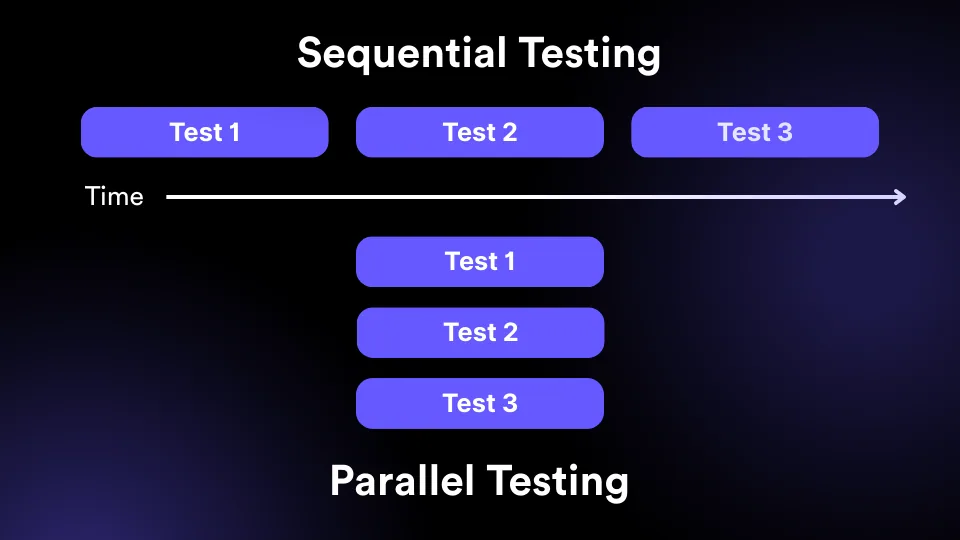
See how DRIP runs parallel experimentation programs for sustainable revenue growth.

Book a free call
Proof point

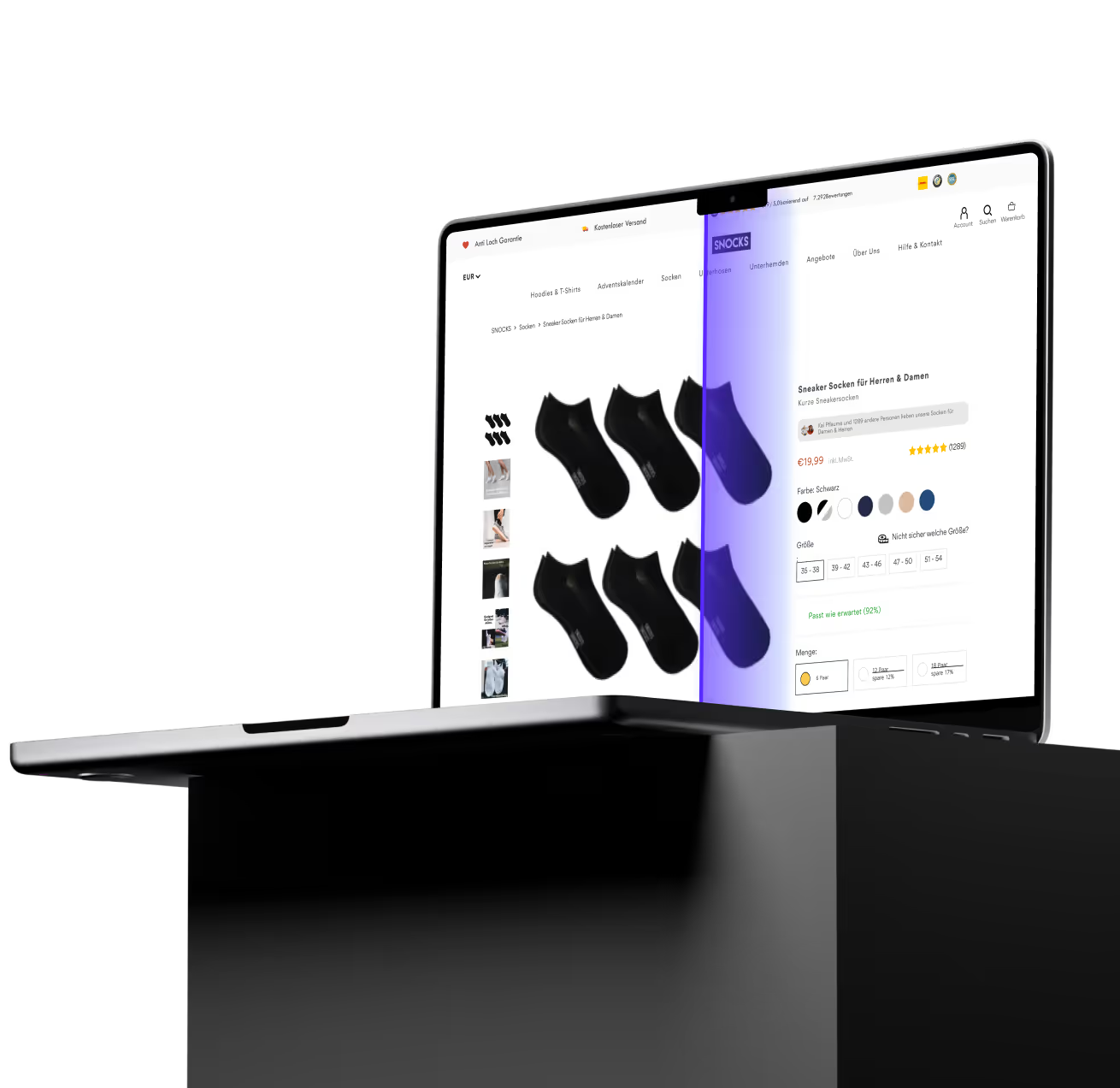
Read the SNOCKS case study

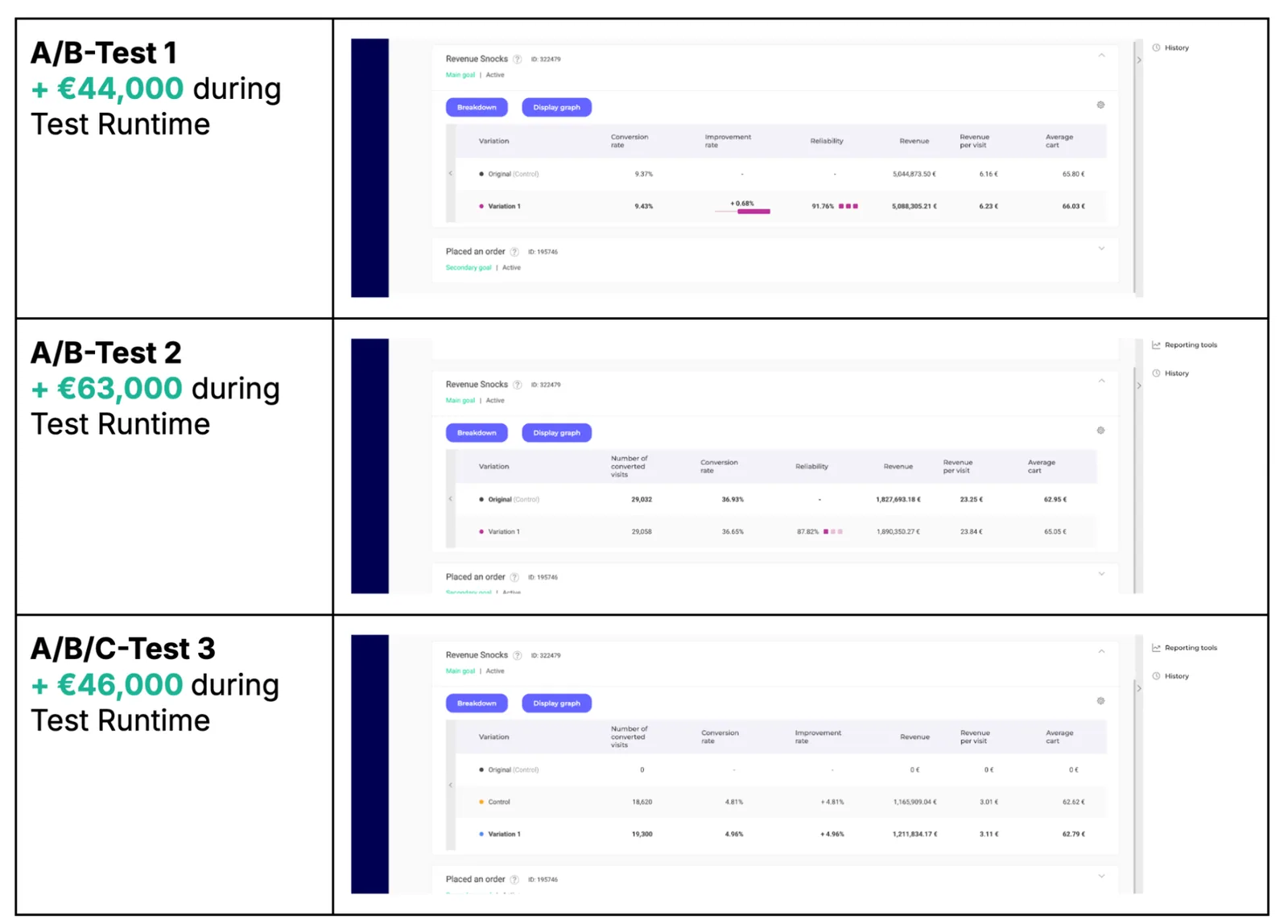
350+ A/B tests and €8.2M additional revenue through long-term experimentation.

Read the SNOCKS case study

Recommended Next Step

Explore the CRO License

See how DRIP runs parallel experimentation programs for sustainable revenue growth.

Read the SNOCKS case study

350+ A/B tests and €8.2M additional revenue through long-term experimentation.

11 · Common questions

Frequently Asked Questions.

7 questions · 1 honest answer each

Apex is DRIP’s A/B testing platform for online shops. It has three layers: a test memory of 4.3 million A/B tests from 151,000 shops collected over eight years, which scores every test idea before launch; a testing tool that builds, launches, and evaluates A/B tests directly in the shop; and managed execution, where tests are built, QA’d, launched, and analyzed with the DRIP team. The test memory is one of the largest A/B test databases in e-commerce, and prediction is the reason the product exists.

On prediction, yes: Apex scores test ideas against 4.3 million past A/B tests before they go live, and Varify has no comparable layer. On everything else, the answer depends on your team. Varify.io is a strong no-code tool with a browser-based visual editor, published flat-rate pricing, a 30-day free trial, and a privacy-friendly architecture that avoids its own tracking. If your bottleneck is shipping tests rather than choosing them, Varify is the better fit and we will tell you so.

Apex pricing is not published, because Apex is sold with managed execution and the scope depends on your test volume, traffic, and how much of the work your team keeps in-house. Book a call and we will size it against your program. For comparison, Varify.io publishes its pricing: €149 per month for the Growth plan and €249 per month for Pro, both with unlimited traffic and unlimited experiments, plus a 30-day free trial.

No. A developer installs the JavaScript snippet once, and after that the marketing team is autonomous. Variants are built in the browser by editing the live page: text, images, layout, and colors, with no code. This is Varify’s core strength and the reason it is rated 4.8/5 on OMR from 92 reviews. It also means your team owns QA and result interpretation, which is where self-service testing programs most often lose money.

Yes. Varify.io is a German company that hosts data in the EU, and it deliberately runs no tracking of its own. Results are read from your existing analytics, such as Google Analytics 4, Matomo, or Piwik Pro. The practical effect is that Varify adds no cookie consent category to your banner and creates no second source of truth for conversion numbers. For European shops with a strict privacy posture, that architecture is a genuine advantage.

Industry-wide, about 1 in 5 tests produces a real winner, so a program at about 20% is normal rather than broken. Our own win rate was 27% in 2024 and 55% in the most recent quarter, across more than 4,000 experiments for more than 250 e-commerce brands. Most of that improvement came from rejecting ideas before launch rather than running more tests. Treat those numbers as our program’s record, not as a forecast for a single shop.

Yes, and for many shops that is the right sequence. Start with a low-cost no-code tool, build the habit of shipping tests every week, and move to predictive selection when your problem changes from “we cannot get tests live” to “our tests keep coming back flat.” Your past test results are useful context in that conversation, because they show which change classes have already been tried on your shop and how they performed.

Related Articles

Tool Comparison

Best A/B Testing Tools for Europe: 2026 Guide

Apex by DRIP scores test ideas before launch against 4.3 million past A/B tests, and it is our own product. Plus the best third-party A/B testing tools for European companies, ranked by GDPR compliance, EU data residency, and performance impact.

13 Mar 2026 - Fabian Gmeindl

Tool Roundup

Best A/B Testing Tools for Shopify in 2026

Apex by DRIP scores your test ideas before launch against 4.3 million past A/B tests, and it is our own product. Plus the 6 best third-party Shopify testing tools in 2026, with real pricing and speed impact data.

26 Feb 2026 - Fabian Gmeindl

Tool Comparison

ABlyft vs Varify.io: 2026 Comparison for E-Commerce

Two German A/B testing tools compared: ABlyft’s full-stack flexibility (visual + code) vs Varify.io’s no-code accessibility. Pricing, privacy, and honest verdicts.

26 Feb 2026 - Fabian Gmeindl

DRIP and Apex

Spend the same on ads.
Make more from them.

Book a call with the team and tell us about your shop. We'll talk through where it stands, where you want it to go, and how we'd get you there. If working with us isn't the best return on your money, we'd tell you rather than take it.

Book a free call

30 minutes, and you'll know exactly where your shop stands.

The Newsletter Read by Employees from Brands like

LEGONikeTeslalululemonPelotonSamsungBoseIKEA

Join 17,000+ Ecom founders turning CRO insights into revenue

Trusted by 250+ brands

  • Strauss
  • Koro
  • Sunday Natural
  • The Body Shop
  • Grover
  • Hello Fresh
  • Natural Elements
  • AG1
  • Bluebrixx
  • Woom
  • Hornbach
  • Tourlane
  • Congstar
  • Holy
  • Junglück
  • PV
  • Wunschgutschein
  • Motel A Mino
  • Ryzon
  • Kickz
  • The Female Company
  • Livefresh
  • Schiesser
  • Horizn Studios
  • Seeberger
  • Luca Faloni
  • Zahnheld
  • Snocks
  • Bruna
  • NatureHeart
  • Priwatt
  • Jumbo
  • NKM
  • Oceansapart
  • Omhu
  • Blackroll
  • 1 Kom Ma 5
  • Purelei
  • Giesswein
  • T1tan
  • Buah
  • Ironmaxx
  • Waterdrop
  • Send a Friend
  • Fitjeans
  • Mofakult
  • Plantura
  • BGA
  • Coop
DRIP

Prediction-based experimentation for online shops from €100k a month.

See if your shop is a fit

Company

  • About us
  • Case studies
  • Process
  • Careers
  • Experts
  • Media
  • Reviews

Services

  • Done for you
  • Done with you
  • CRO agency
  • A/B testing agency
  • Shopify CRO

Apex

  • Apex
  • How we built the genome
  • Log in
  • Docs

Resources

  • Blog
  • Resources
  • Research
  • Benchmarks
  • Statistics tools
  • Best A/B testing tools
© 2026 Drip Trading GmbH
ImprintPrivacyTerms

Cookies

We use optional analytics and marketing cookies to improve performance and measure campaigns. Privacy Policy