

+€323Kper month
18 · Winning tests

A new platform moves the checkout, the navigation and the product pages your buyers had learned by heart. We find what the migration broke, put odds on every fix, and test them instead of guessing.
For online shops from €100k a month. A free 30-minute call with the team.
















Sound familiar?
You planned the migration for months. The new site looks better and runs on better tech. Then the numbers came in: conversion down, more abandoned carts, and everyone saying it'll settle in.
Maybe it will. But every week you wait costs you revenue, and the team that built the migration is busy fixing bugs, not finding out why buyers hesitate.
We call it Prediction-Based Experimentation: every fix gets its odds before it gets built. Four steps, repeated every month.
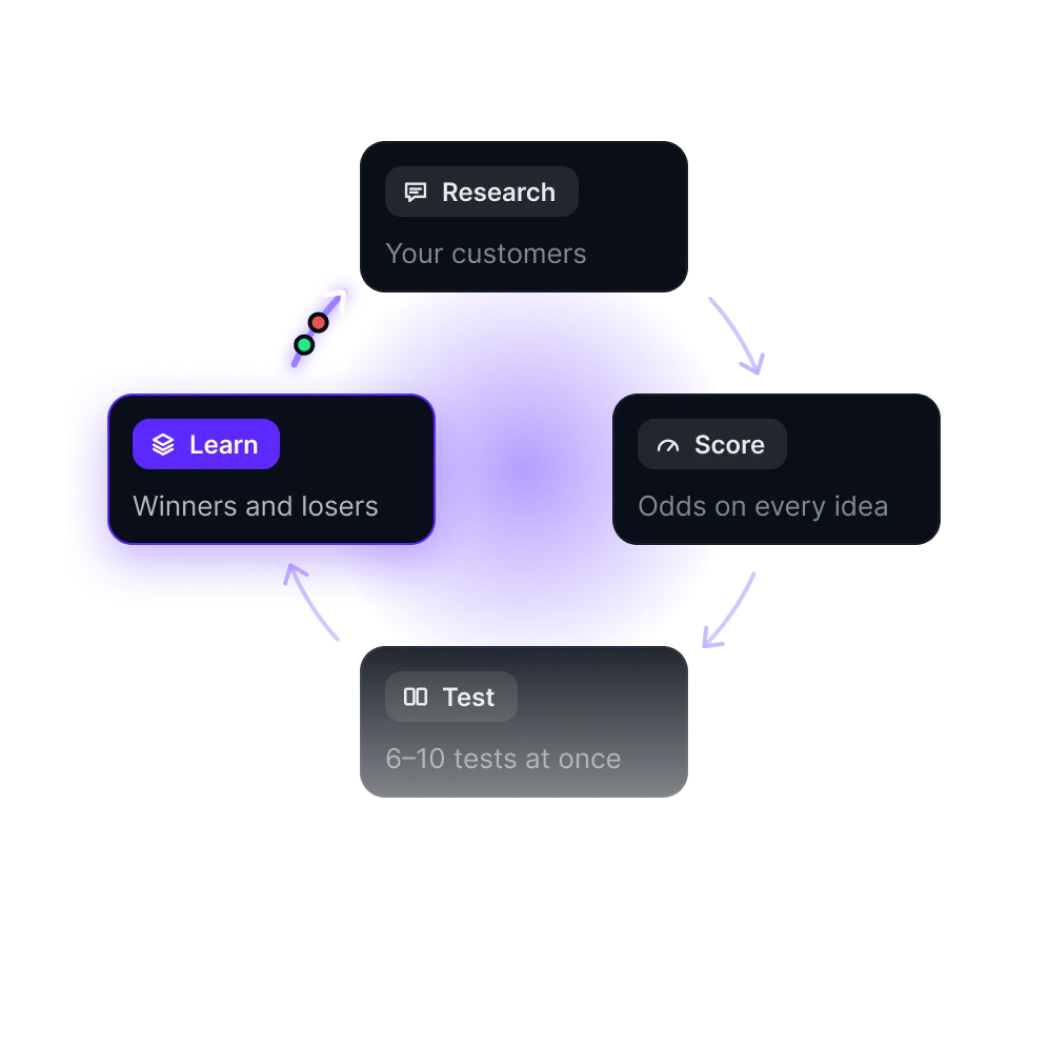
The first month is research. Where your analytics survived the move, we compare the funnel before and after, by page and device. We put 40+ hours into session recordings and heatmaps and read your reviews, surveys and support tickets. You get a 20+ page report on where revenue leaks since the switch, and why.
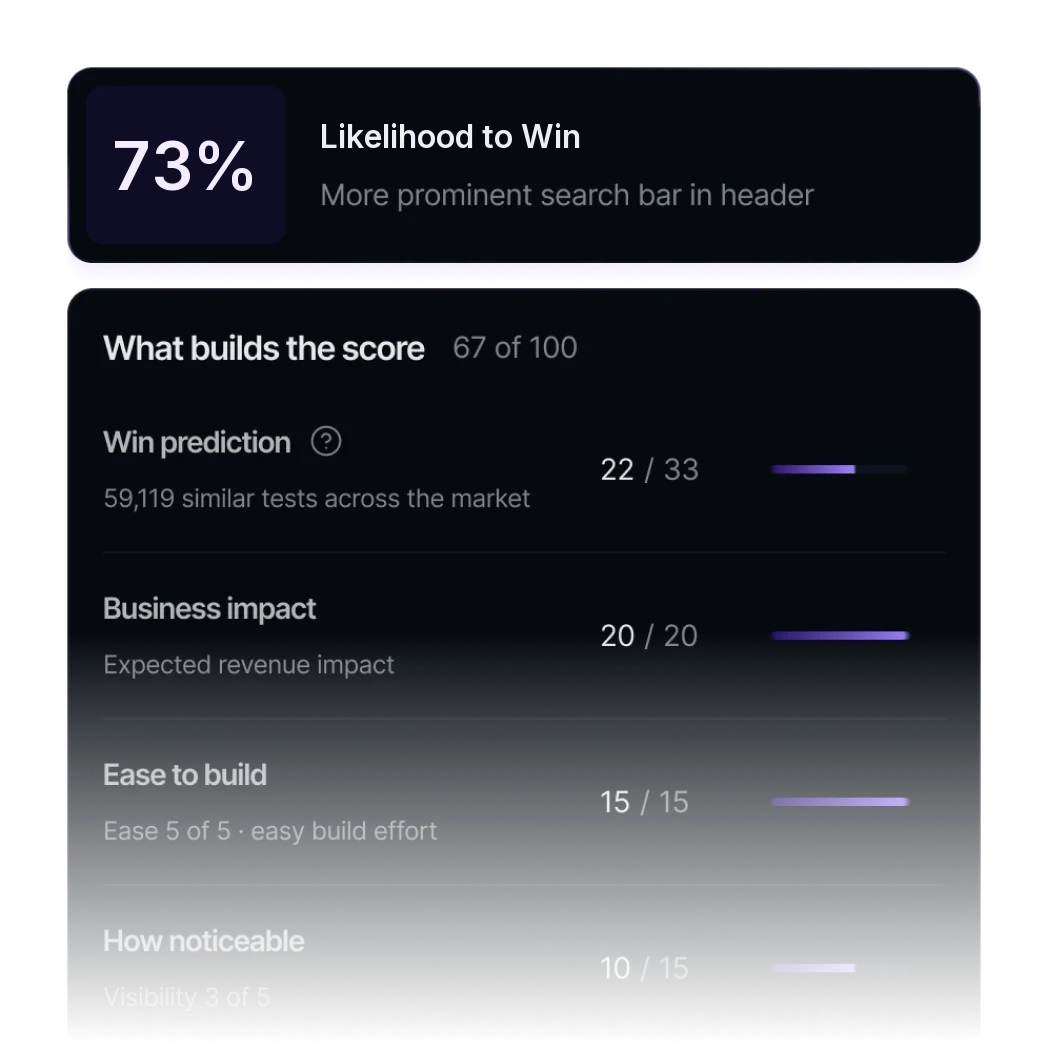
Before anything gets built, Apex, our own testing tool, gives every idea a Likelihood to Win, based on the 4.3 million tests in our database and what the research found. Each idea is scored on revenue exposure, Likelihood to Win and effort, so the biggest leaks get fixed first.
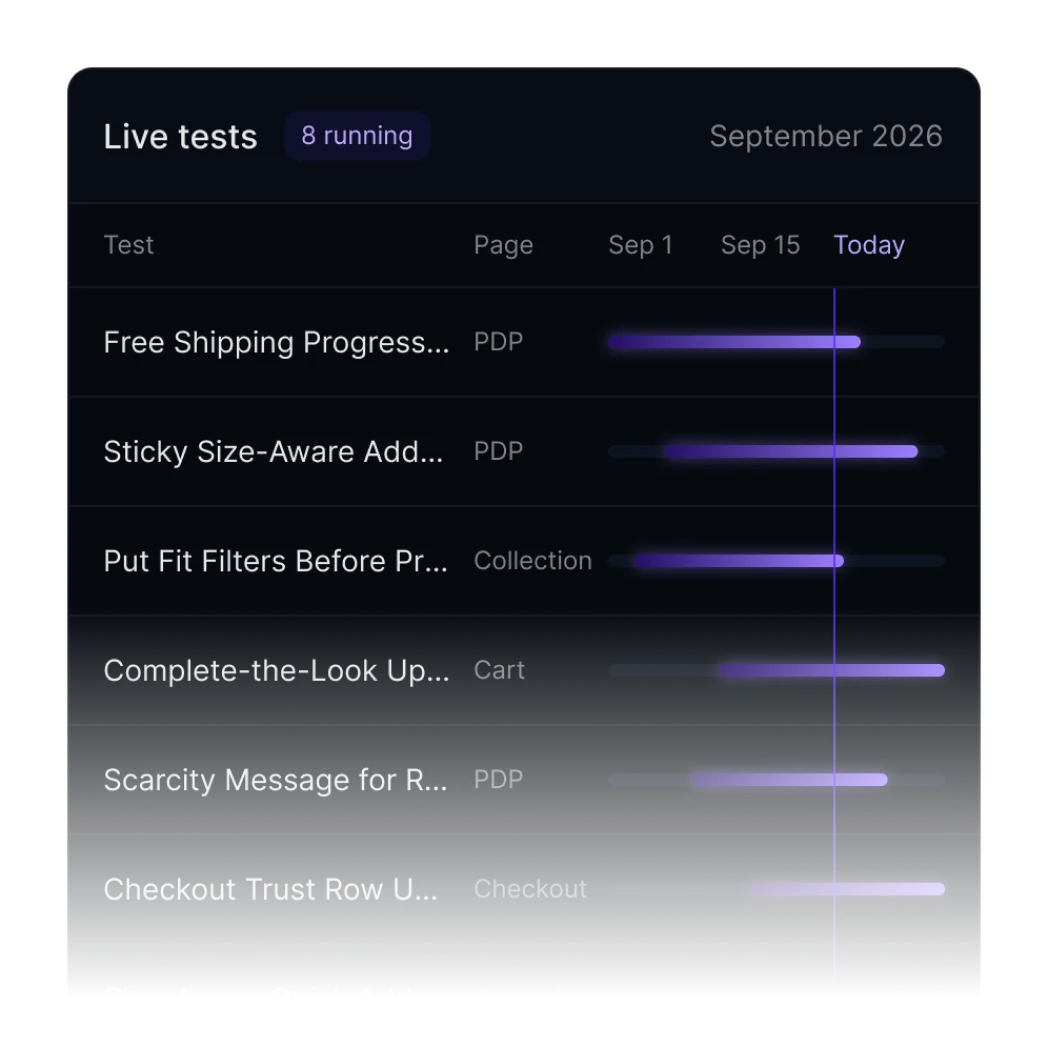
We design the variants and build them at code level, no visual editors. Our QA team checks every variant on real devices, tracking included, which matters on a platform that's still new. Then six to ten tests run in parallel, with the statistics fixed before launch: frequentist, 80% confidence, 80% power, no early stopping.
We measure revenue per visitor. Winners ship and keep earning. Every result gets filed by buyer motivation and friction point, so once the leaks are closed, the program keeps going on what your new platform can do that the old one couldn't.
That's the short version. The full method, phase by phase, is on the process page.
See the full processOne started after shop migrations had wiped its analytics. The other after a sharp revenue drop.
18 · Winning tests

25.3× · Program ROI
Everything a recovery needs, run by one team.

20+ pages on where your funnel leaks revenue since the migration and what your buyers struggle with.

Every idea with its Likelihood to Win, revenue exposure and effort, re-ranked every two weeks on your results.

3 to 5 designed variants per test for mobile and desktop, approved by you before code gets written.

Our 10-person QA team tests every variant on real devices and checks the tracking before it touches your traffic.

Clean 50/50 splits, sample-ratio checks and pre-registered statistics on every test.

Dashboards with revenue per visitor and shipped winners, plus a call with the team every two weeks.
As soon as you see the drop. Every week you wait costs revenue. In the first month, the research is done, the plan is scored and the first tests are live. Many shops come to us a few months after go-live, when the drop is already visible. That works too, it just means more revenue lost on the way.
We work with online shops, whatever they run on. We build every variant at code level rather than with visual editors, so a test doesn't depend on a platform's page builder, and our QA team checks it on real devices before launch. If you're unsure whether your setup fits, ask us on the call.
It depends on how deep the drop is and how much traffic you have. In month one, the research is done and the first tests are live. By month three, you've usually run more experiments than most brands ship in a year. When our team runs the program, our guarantee applies: at least 10% more revenue in under six months, or month seven onward is free.
Because buying is a habit. Your returning customers know where things are: how to find products, how checkout works, where the reviews sit. A migration breaks those habits, even when the new shop is better on paper. Common causes are a changed checkout, missing trust signals, a new navigation, a weaker mobile experience, and slower pages once real traffic and third-party scripts load.
Your developers can fix bugs. But most of the drop comes from changes that aren't bugs, and there you can't tell a real fix from one that just feels right without testing it. Even with good research, 40 to 50% of our tests come back negative or unclear. If you want your team to build the tests, we also work as consultants: your team builds and launches, with Apex and a call with us every two weeks.
You can, but you're betting on it. Some of the drop fades as regulars get used to the new shop. The rest, like missing trust signals or a clumsier checkout, stays until someone fixes it. Waiting doesn't tell you which part is which. Research and tests do.

Book a call and bring your numbers from before and after the switch. We'll tell you where we'd look first, and whether a program pays off for your shop.
30 minutes, and you'll know exactly where your shop stands.
The guarantee, in full
When you can predict what is likely to win, you can promise the outcome. What counts as uplift, how it's measured, and what happens if we miss is written down in plain language.
We can promise it because we know our numbers: more than 50% of our A/B tests win, across 4,000+ documented experiments. The guarantee stands when our team runs the program for you.