

+€323Kper month
18 · Winning tests

Your ads bring the visitors. Your shop decides what they're worth. We research why your buyers buy, put odds on every idea with a database of 4.3 million A/B tests, and run six to ten tests at once, measured in revenue per visitor.
For online shops from €100k a month. A free 30-minute call with the team.
















Sound familiar?
You built a good product and an ad engine that works. For a while, every euro in brought more out. Then acquisition costs crept up, returns ate into the margin, and the first order that used to pay for itself now barely breaks even.
Everyone reaches for the media plan. But the money leaks between the ad click and the order confirmation, and every leak gets bigger with every euro you spend on traffic.
We call it Prediction-Based Experimentation: every idea gets its odds before it gets built. Four steps, repeated every month.
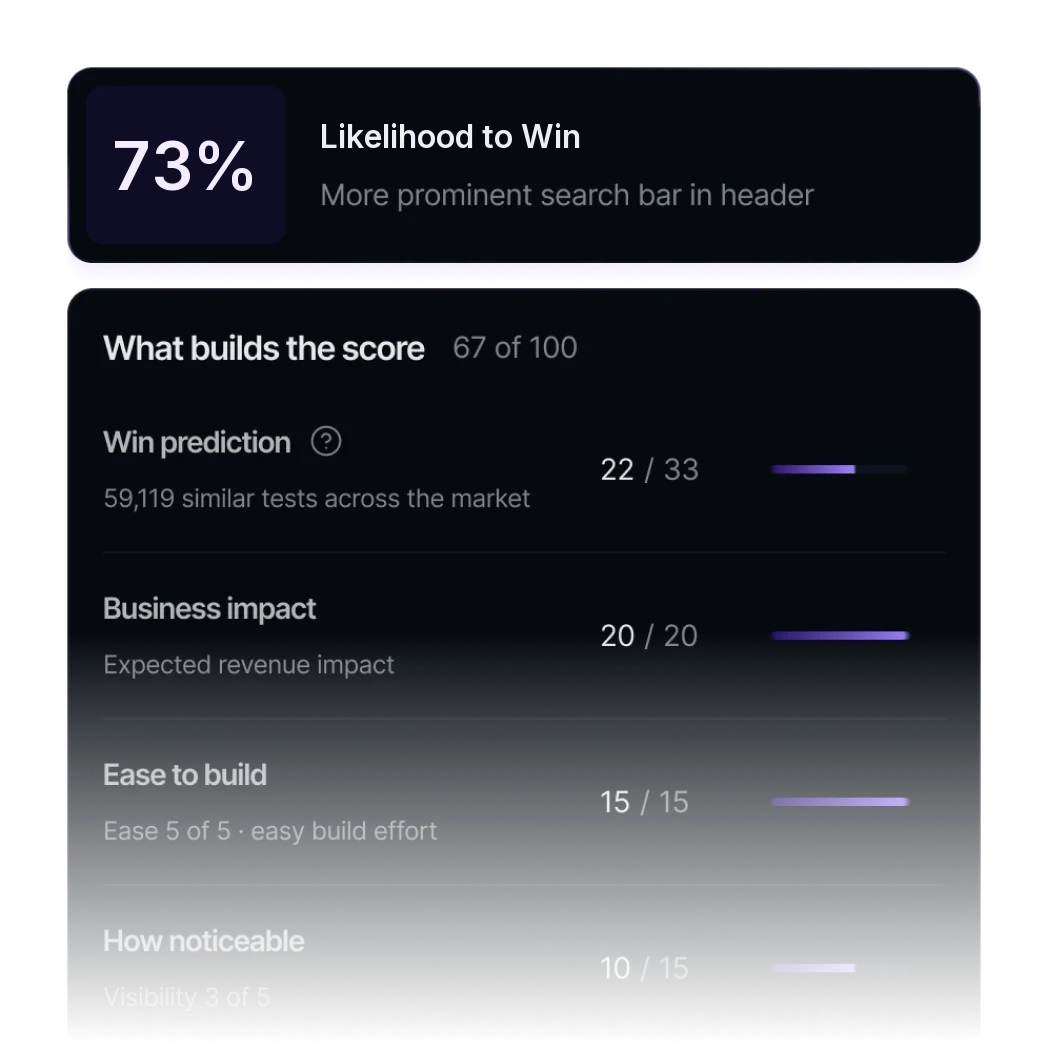
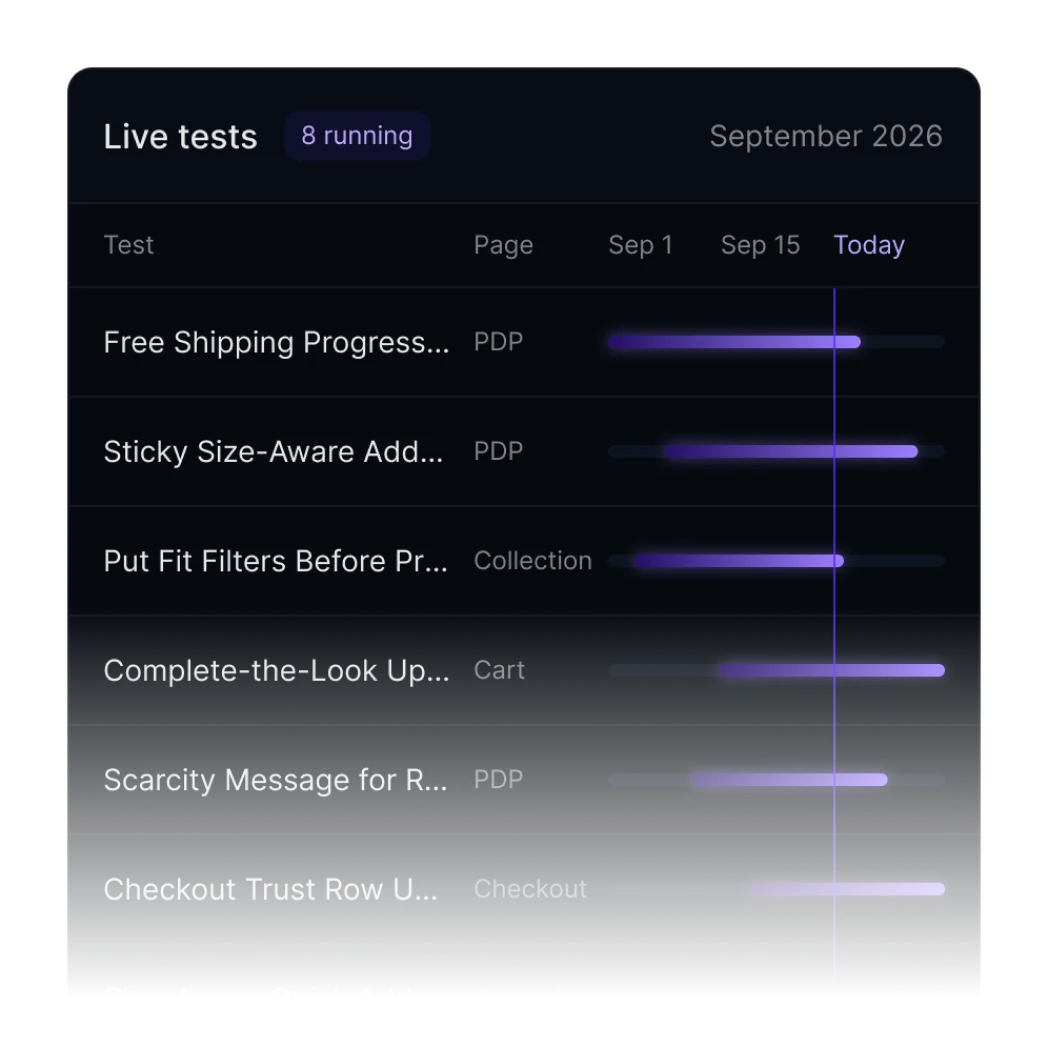
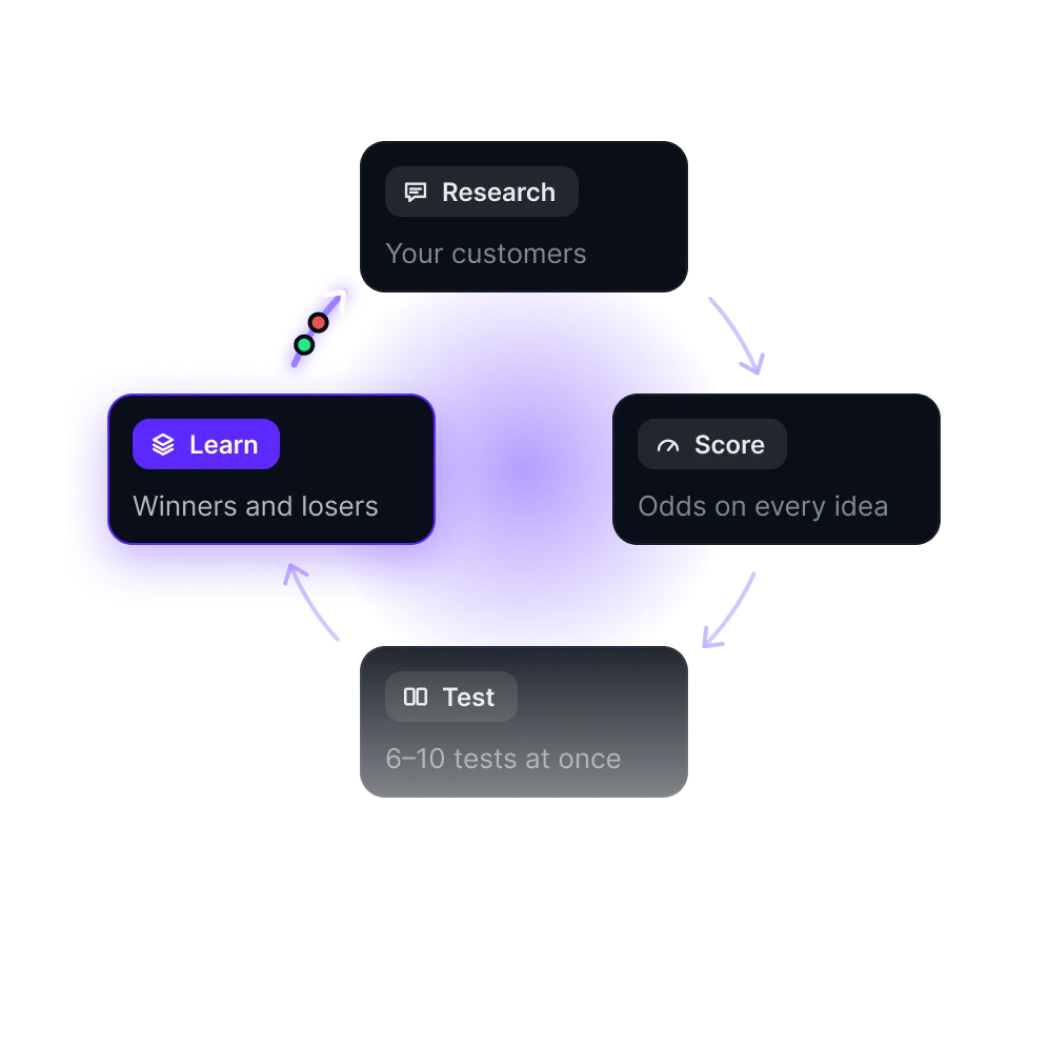
The first month is research. Reviews, surveys, support tickets, your competitors' reviews, and 40+ hours of session recordings and heatmaps. Buying from a single brand's shop takes more trust than buying on a marketplace, so we look hard at what makes your buyers believe you, and where the funnel leaks revenue between ad click and order. You get a 20+ page report, and every idea is written as if, then, because.
Apex by DRIP, our own testing tool, gives every idea a Likelihood to Win, based on the 4.3 million tests in our database, the 4,000+ we ran ourselves and what the research found about your buyers. Add revenue exposure and effort, and you get a ranked plan that recalibrates every two weeks. Weak ideas die on the list, not on your ad budget.
We design the variants, build them at code level and QA them on real devices. Then six to ten tests run in parallel across product pages, bundles and cross-sells, subscription offers, cart and checkout, so the whole funnel improves at once, not one page a quarter. The statistics are fixed before launch: frequentist, 80% confidence, 80% power, no early stopping.
We measure revenue per visitor, so a test that lifts conversion but shrinks order value doesn't count as a win. Every result, win or lose, gets filed by the buyer motivation it confirmed and the friction it exposed, so your next ideas start with better odds. Everything we learn is documented and belongs to you.
That's the short version. The full method, phase by phase, is on the process page.
See the full processTwo DTC brands: one in activewear, one in health food.
18 · Winning tests
202 · Experiments
Everything a DTC testing program needs, run by one team.

20+ pages on why people buy from your brand, what brings them into your category and where your funnel leaks revenue.

Every idea with its Likelihood to Win, revenue exposure and effort, re-ranked every two weeks on your results.

3 to 5 designed variants per test for mobile and desktop that you sign off before any code gets written.

Code-level builds, no visual editors, checked on real devices by our QA team, tracking included.

Across product pages, bundles, cart and checkout, with clean 50/50 splits and pre-registered statistics.

Research memory, experiment pipeline and an executive view in revenue per visitor, plus a call with the team every two weeks.
The economics are different. You pay for most of your visitors, so what counts is how much revenue each one brings, not only whether they convert. That's why we measure every test in revenue per visitor, which catches order value as well as conversion. And buying from a single brand's shop takes more trust than buying on a marketplace, so trust, brand story and perceived value weigh more in the research and in the test ideas.
On your shop, yes. Where the subscription offer sits, how it's framed, how much commitment it asks for up front, how bundles are built: those are tests like any other. They get researched, scored for their Likelihood to Win and measured in revenue per visitor.
We don't touch your media buying. We make the traffic you already pay for worth more. When more visitors buy and each order is worth more, every euro of ad spend brings back more revenue without changing a single campaign. That's why DTC brands with a strong ad engine have the most to gain from testing.
Fashion and underwear, activewear, food and snacks, health food, jewellery, fitness and recovery equipment, and gifting, among others. SNOCKS, Oceansapart, KoRo, Livefresh, Purelei and Blackroll are all in our case studies. The method works across categories because it starts with research into your buyers. What changes is which motives drive the purchase in yours.
In month one the research is done, the plan is scored and the first tests are live. A result counts once its test reaches the sample size we fixed before launch, never earlier. By month three your shop has usually run more experiments than most brands ship in a year. When our team runs the program, the guarantee applies: at least 10% more revenue in under six months, or month seven onward is free.
Yes. Plenty of our DTC clients run on Shopify or Shopify Plus, others on custom or headless setups. We build every test at code level, so the method doesn't depend on the platform.
Online shops from €100k a month in revenue. Below that, tests take too long to reach a result and the program can't pay for itself. If that's you, we'll tell you on the call.

Book a call and tell us about your brand: where the funnel stands and where you want it to go. We'll tell you straight whether a testing program is the best use of your money right now.
30 minutes, and you'll know exactly where your shop stands.
The guarantee, in full
When you can predict what is likely to win, you can promise the outcome. What counts as uplift, how it's measured, and what happens if we miss is written down in plain language.
We can promise it because we know our numbers: more than 50% of our A/B tests win, across 4,000+ documented experiments. The guarantee stands when our team runs the program for you.